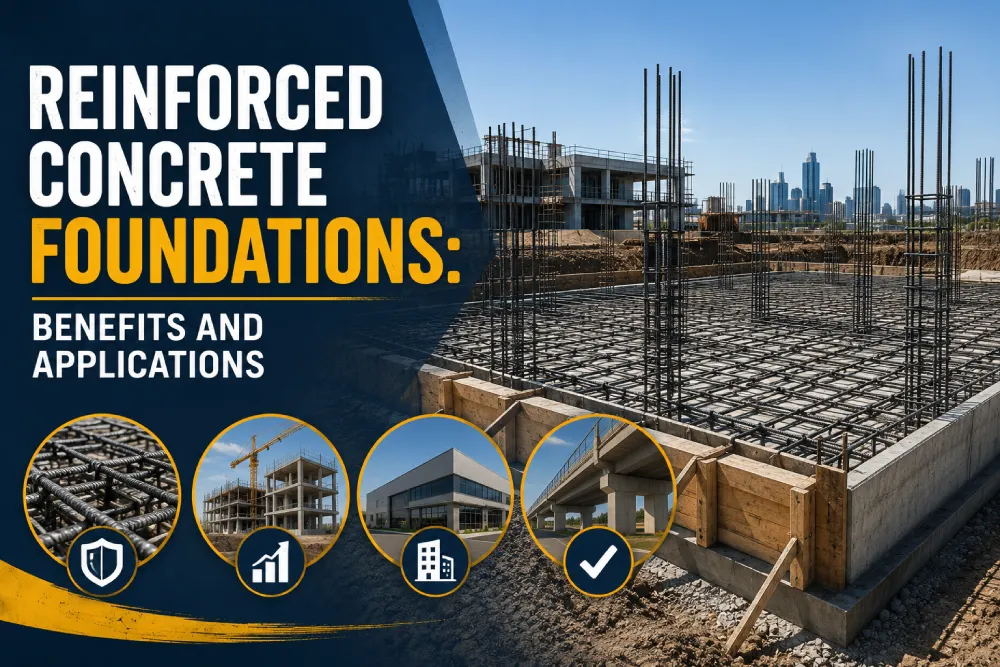
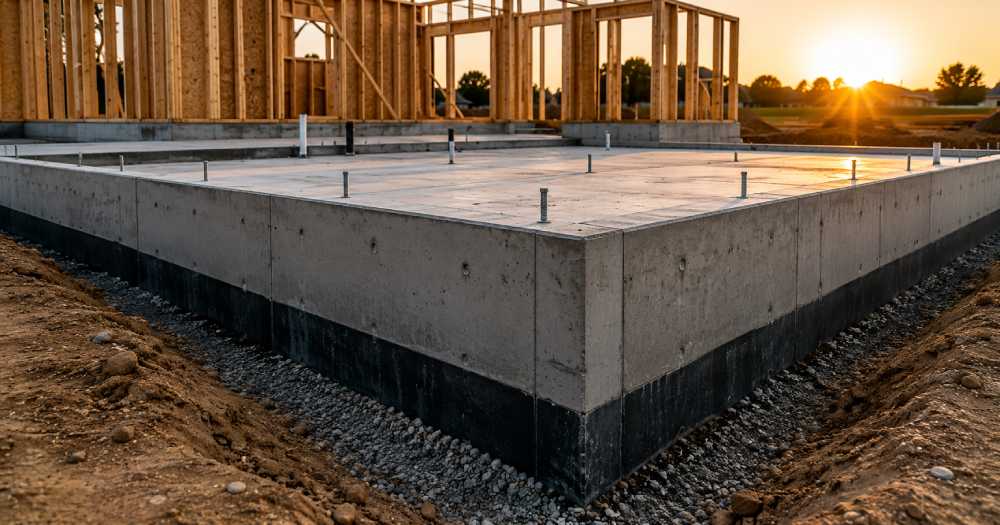
A concrete foundation is the structural base that supports a building and transfers its weight safely into the ground. Whether you are building a new home in Odessa, developing commercial property in Midland, or constructing an industrial facility in the Permian Basin, the foundation is the most critical part of the project. Every wall, column, slab, and roof system depends on it for long-term stability.
In West Texas, where soil conditions, expansive clay, and extreme temperature swings can impact building performance, properly designed and executed foundation construction is essential. Understanding how a concrete foundation works-and why it matters-can help homeowners, property managers, and developers make informed decisions before hiring a concrete contractor.
What Is a Concrete Foundation?
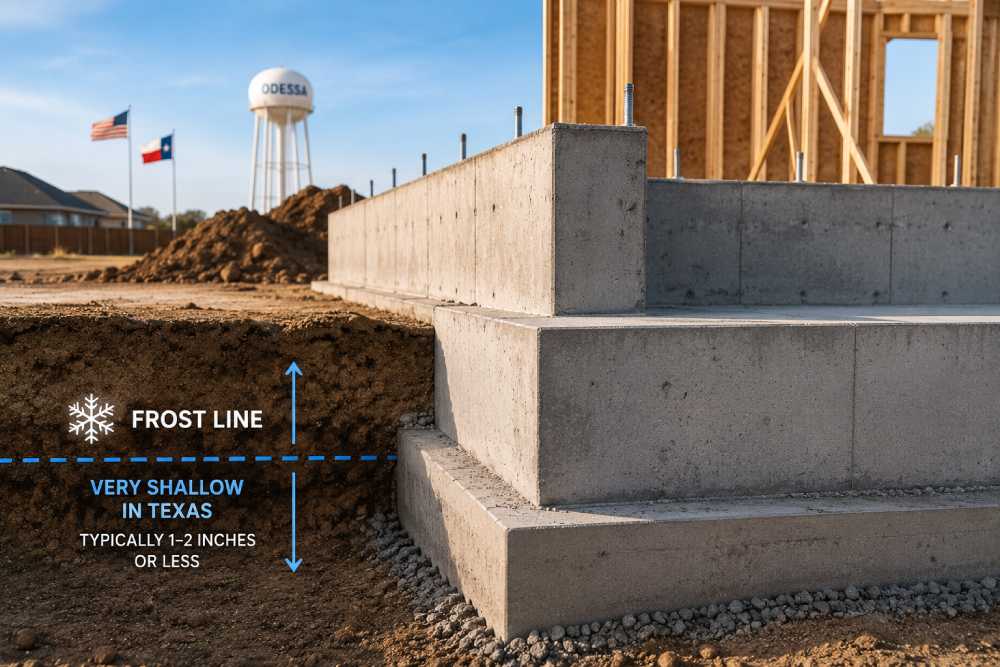
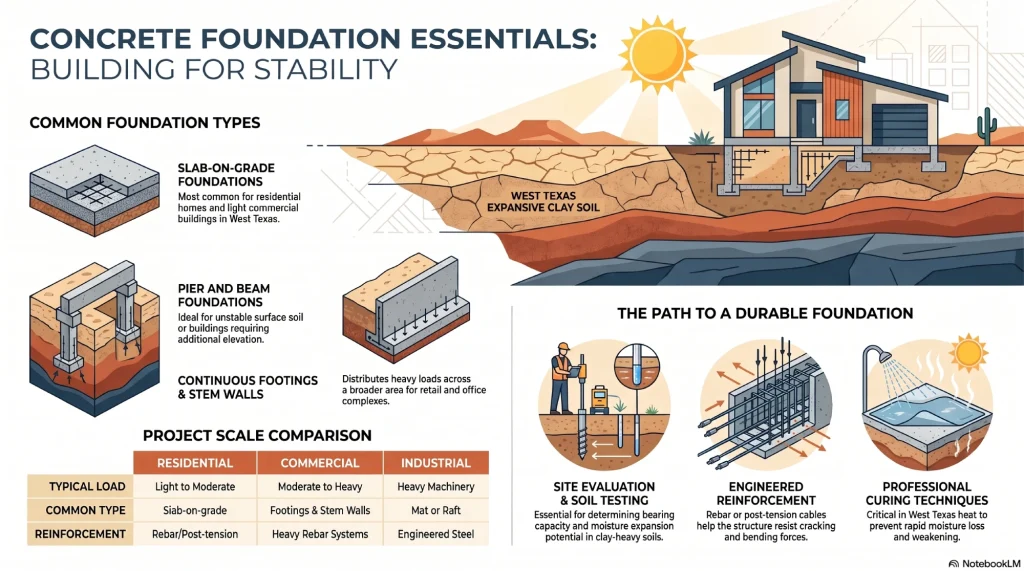
A concrete foundation is a specially engineered structural system built below or at ground level that supports a building. It spreads the weight of the structure over the soil, providing stability and preventing movement, cracking, or structural failure over time.
Every building foundation has two main responsibilities:
- Support the structural load of the building, including walls, floors, roofing, equipment, and occupants.
- Resist ground movement caused by soil expansion, moisture changes, or settling.
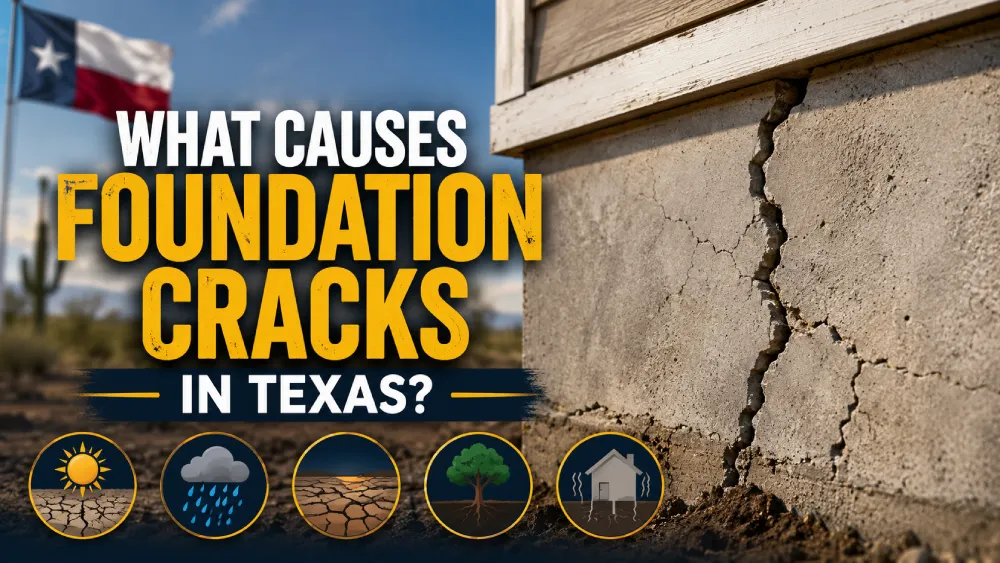
In regions like Midland and Odessa, foundation design must take into account clay-heavy soils that expand with moisture and shrink during dry periods. Without proper reinforcement and preparation, these soil movements can create cracks in slab floors, walls, and load-bearing elements.
A properly built structural foundation protects your investment from these risks while extending the life of your property.
Watch Video Overview
Types of Concrete Foundations Used in West Texas
Different projects require different types of foundation construction. The right system depends on soil conditions, building size, load requirements, and intended use.
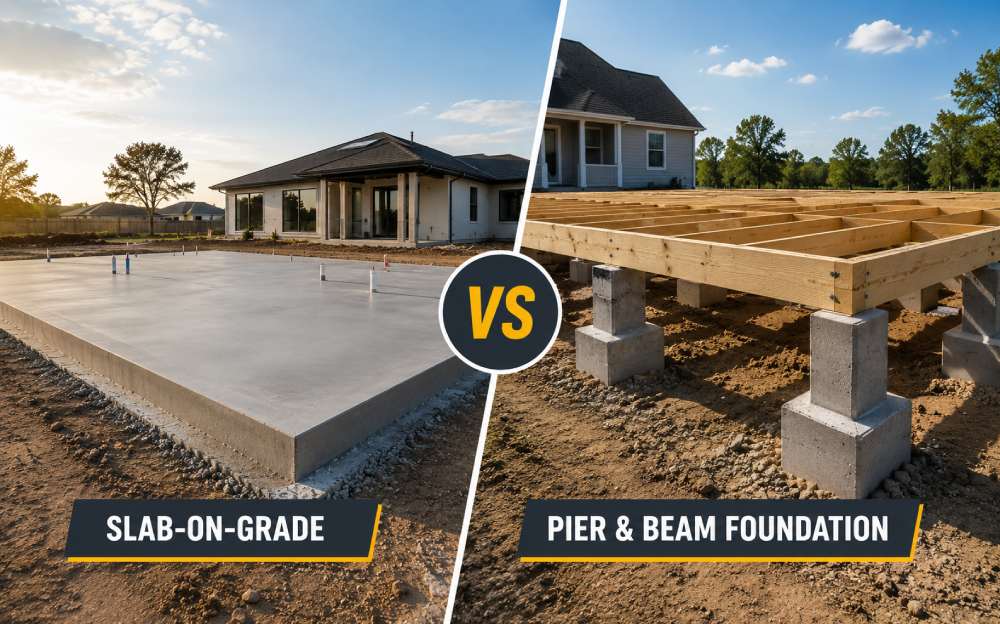
Slab-on-Grade Foundations
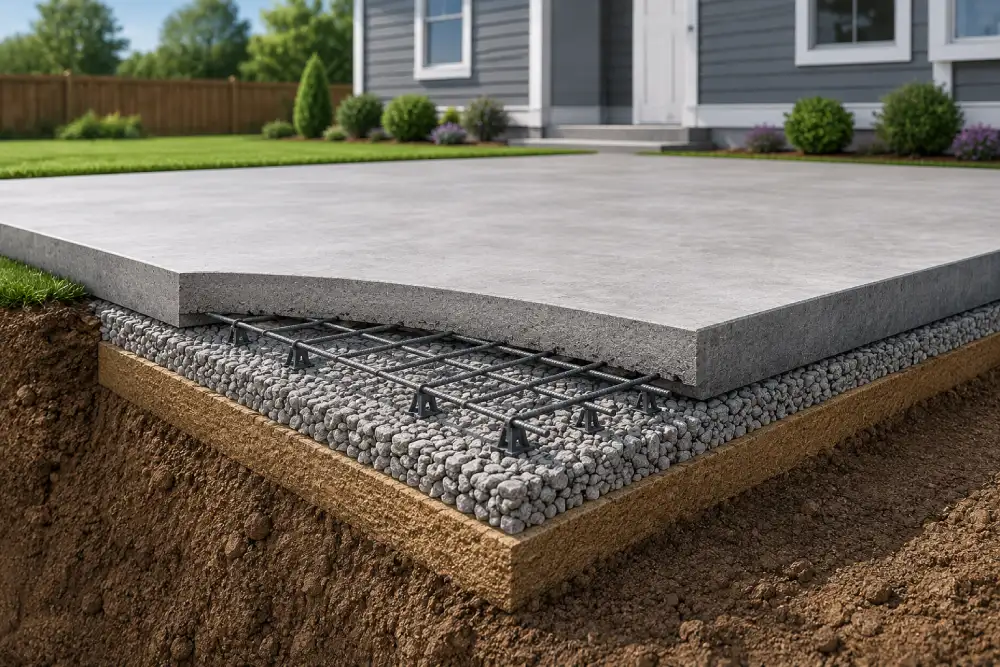
Slab-on-grade foundations are among the most common systems for residential homes and light commercial buildings in the Permian Basin. This system consists of a thick concrete slab poured directly on prepared soil, often reinforced with rebar or post-tension cables.
These foundations are cost-effective and efficient. They work well in areas with stable soil conditions when properly designed. Slab-on-grade systems are especially popular in Odessa and Midland neighborhoods where basements are uncommon.
Pier and Beam Foundations
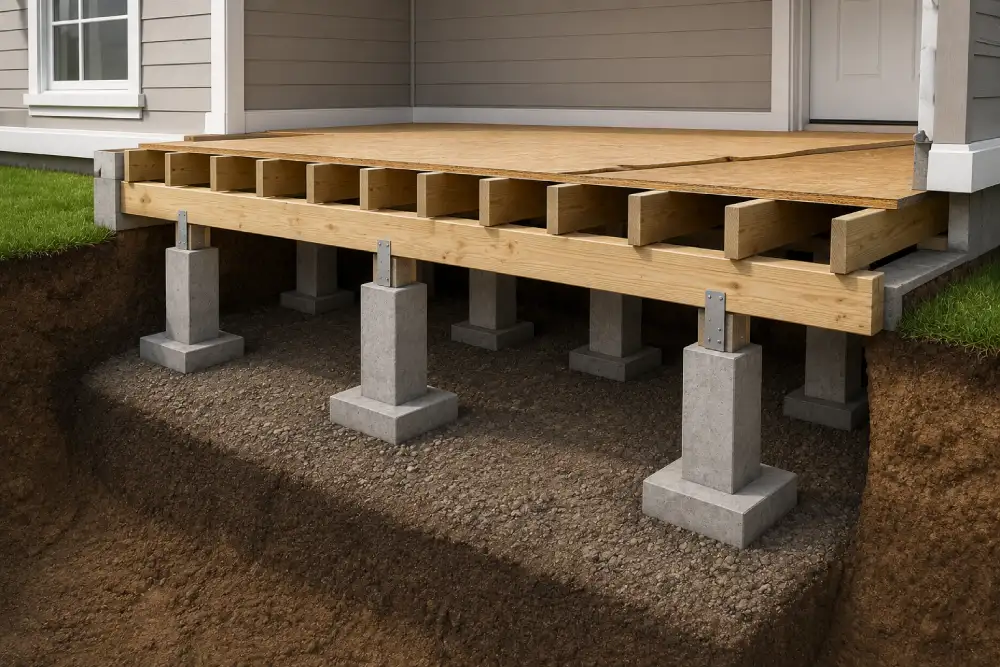
Pier and beam foundations use vertical concrete piers embedded deep into stable soil strata. Beams connect these piers and support the structure above.
This system is ideal when:
- Soil near the surface is unstable
- Buildings require elevation
- Additional flexibility is needed to accommodate potential movement
Pier systems are often used in areas where erosion or variable soil conditions may impact shallow foundations.
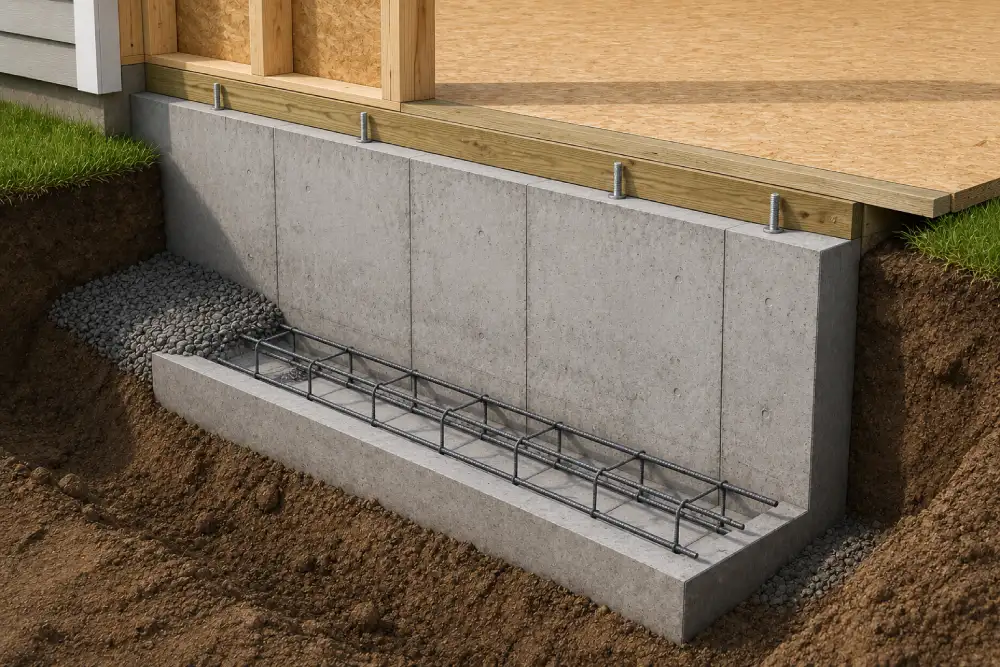
Continuous Footings and Stem Wall Foundations
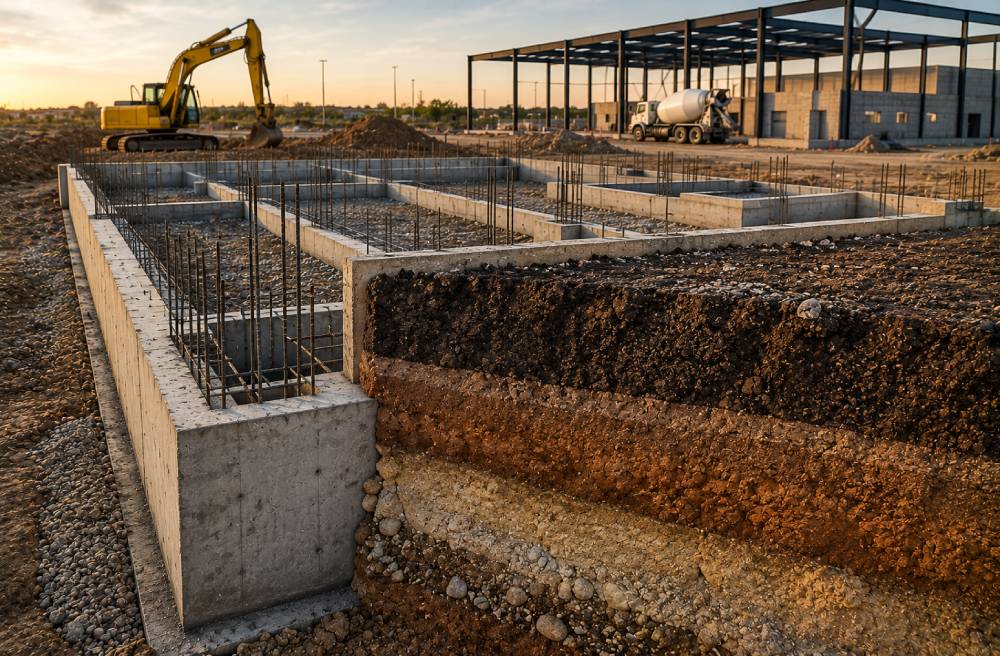
Commercial and industrial building foundation systems often use continuous footings combined with stem walls. These foundations distribute heavy loads across a broader area and provide additional structural integrity.
This system is commonly used for:
- Retail buildings
- Office complexes
- Warehouses
- Oilfield facilities
Heavy equipment and steel-framed structures require a structural foundation designed to withstand significant loads over time.
Mat (Raft) Foundations
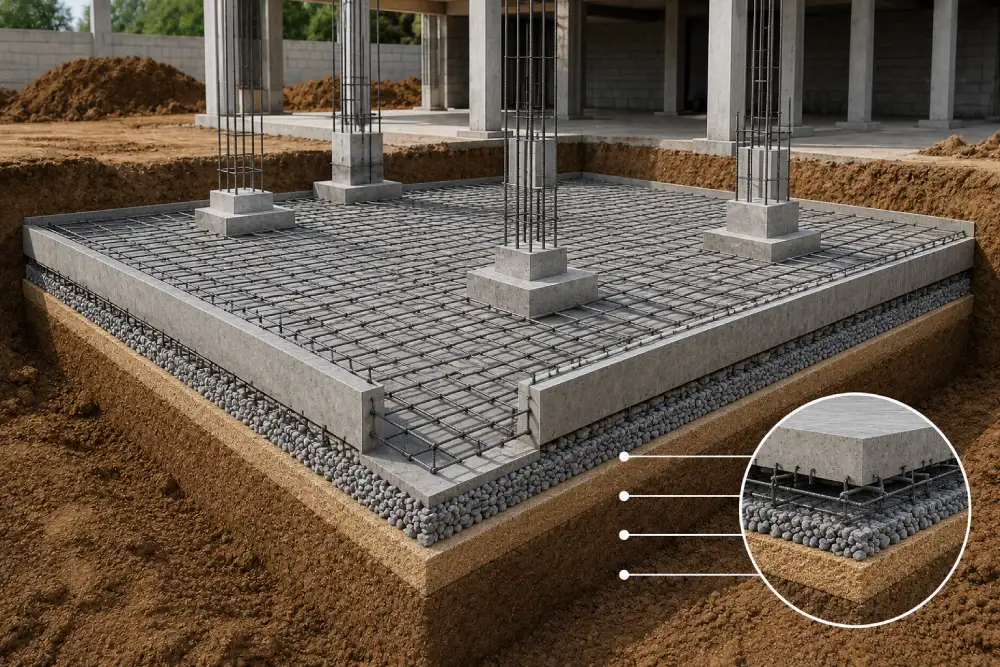
In specialized applications, such as large industrial projects, a mat foundation may be required. This type of foundation spreads the building load over a large reinforced concrete slab.
Mat foundations are engineered for situations where soil conditions need extra reinforcement or when the structure exerts substantial downward pressure.
Why a Concrete Foundation Is So Important
A building is only as strong as the foundation beneath it. Cutting corners in this phase of construction can lead to costly repairs and safety concerns later.
Structural Stability
The foundation evenly distributes loads from the building into the soil. Without that distribution, weight concentrates in certain areas and causes uneven settling.
Over time, settling can lead to:
- Cracked drywall
- Uneven floors
- Sticking doors and windows
- Structural wall damage
A well-built concrete foundation prevents these issues by maintaining consistent support.
Protection Against Soil Movement
West Texas soil expands significantly when wet and contracts during dry periods. These changes create upward and downward pressure against the foundation.
Proper foundation construction accounts for:
- Soil type analysis
- Proper subgrade preparation
- Reinforcement placement
- Adequate thickness and strength
Ignoring these factors leads to shifting foundations and long-term structural issues.
Moisture and Drainage Control
A concrete foundation also acts as a barrier against moisture intrusion. When properly sealed and graded, it reduces the risk of water pooling around the building.
This is particularly important in the Permian Basin, where sudden rainfall events can overwhelm poorly designed drainage systems. Water intrusion weakens soil and accelerates foundation deterioration.
Long-Term Property Value
A strong building foundation protects your investment. Real estate buyers and inspectors often look closely at foundation performance. Visible cracks or settlement issues can significantly reduce property value.
Investing in high-quality workmanship from an experienced concrete contractor ensures long-term durability and resale confidence.
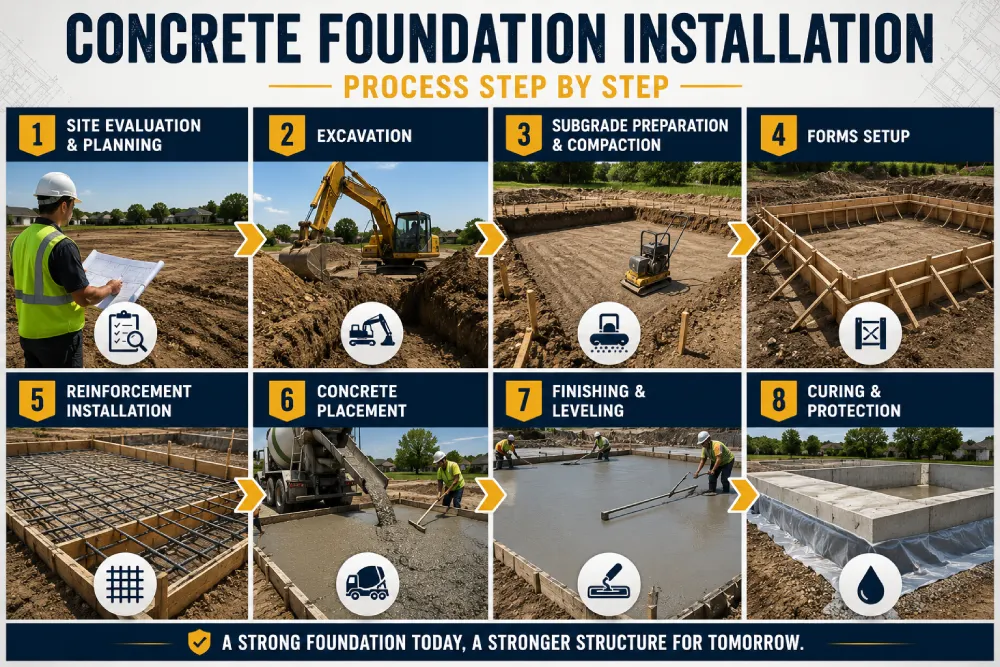
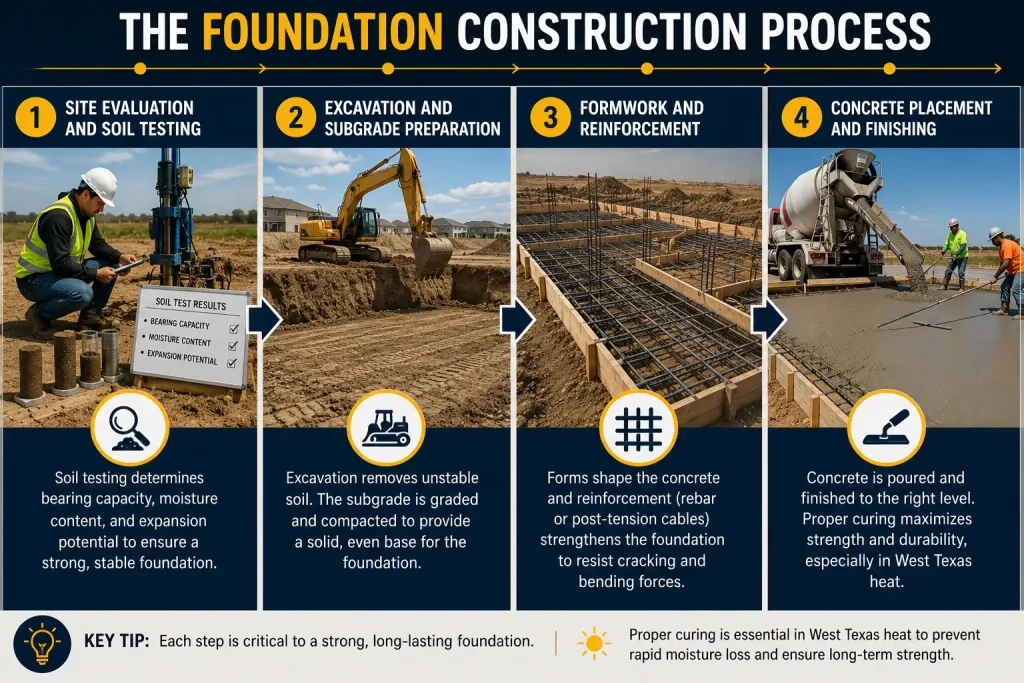
The Foundation Construction Process
Understanding how foundation construction works can help property owners evaluate contractors and project timelines.
1. Site Evaluation and Soil Testing
Before any concrete is poured, the soil must be evaluated. Geotechnical testing determines bearing capacity, moisture content, and expansion potential.
In Midland and Odessa, soil testing is especially important because of expansive clay conditions common throughout the region.
2. Excavation and Subgrade Preparation
Proper excavation ensures the foundation sits on stable, well-compacted ground. Contractors remove organic material and loose soil before grading and compacting the subgrade.
Without compaction, even the strongest concrete may settle unevenly.
3. Formwork and Reinforcement
Forms are installed to shape the concrete. Reinforcement—typically rebar or post-tension cables—is placed according to engineered plans.
Reinforcement strengthens the structural foundation by helping it resist cracking and bending forces.
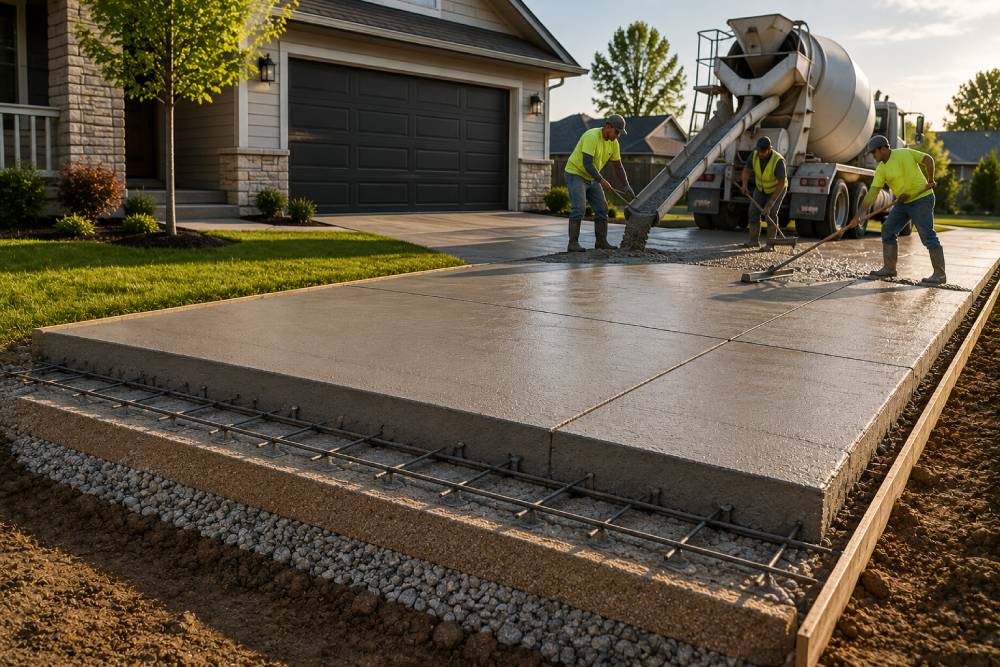
4. Concrete Placement and Finishing
The concrete is poured and carefully finished to achieve the correct level and surface condition. Proper curing techniques are then used to maximize strength and durability.
Curing is critical in West Texas heat. High temperatures can cause rapid moisture loss, reducing the concrete’s long-term strength if not managed properly.
Comparing Residential, Commercial, and Industrial Foundations
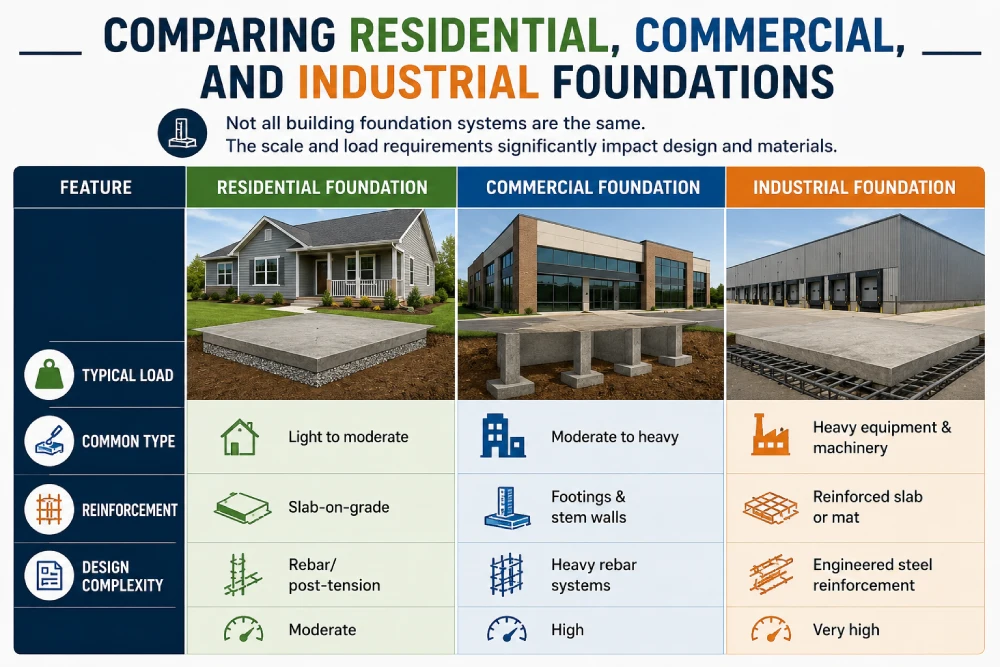
Not all building foundation systems are the same. The scale and load requirements significantly impact design and materials.
| Feature | Residential Foundation | Commercial Foundation | Industrial Foundation |
|---|---|---|---|
| Typical Load | Light to moderate | Moderate to heavy | Heavy equipment & machinery |
| Common Type | Slab-on-grade | Footings & stem walls | Reinforced slab or mat |
| Reinforcement | Rebar/post-tension | Heavy rebar systems | Engineered steel reinforcement |
| Design Complexity | Moderate | High | Very high |
Industrial facilities in the Permian Basin, particularly oilfield service yards and equipment storage areas, require high-strength concrete foundation systems capable of withstanding vibration, heavy vehicles, and extreme weight loads.
Signs of Foundation Problems
Knowing the warning signs of foundation issues can help you act quickly before damage worsens.
Interior Warning Signs
- Cracks in drywall
- Sloping floors
- Doors that won’t close properly
- Gaps between walls and ceilings
These signs may indicate movement beneath the structural foundation.
Exterior Warning Signs
- Cracks in brick or masonry
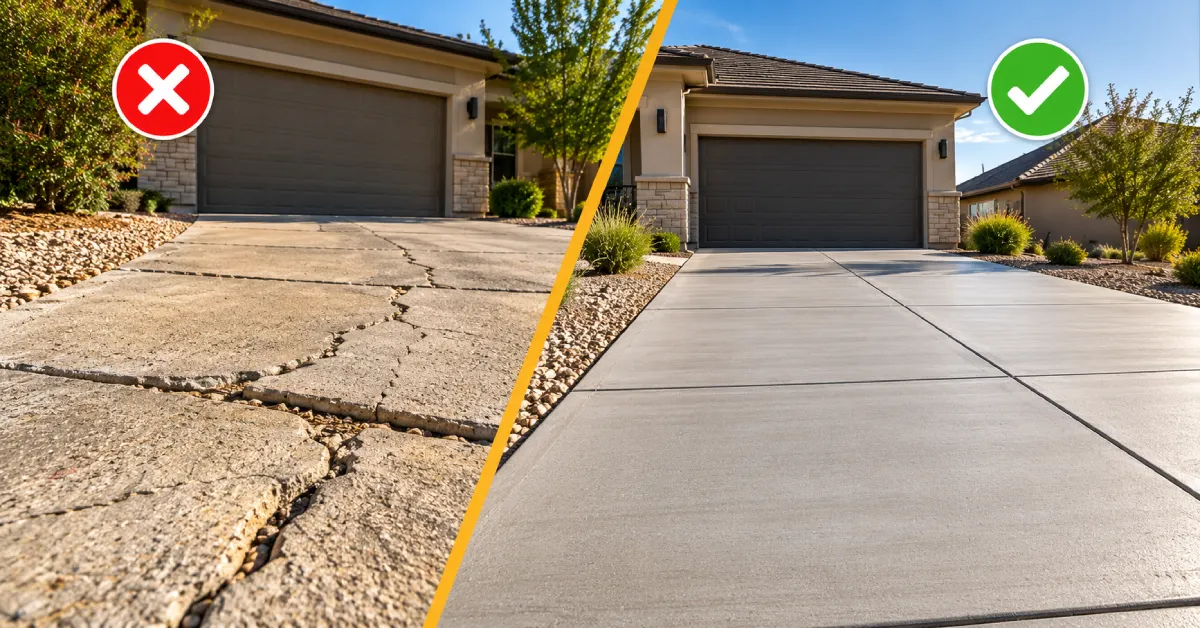
- Visible slab cracks
- Separation at expansion joints
- Drainage problems near the perimeter
If you notice these symptoms, consult an experienced concrete contractor for a professional assessment.
Choosing the Right Concrete Contractor
Selecting the right contractor is one of the most important decisions in foundation construction.
Look for a contractor who:
- Understands local soil conditions in West Texas
- Has experience with residential, commercial, and industrial projects
- Uses proper reinforcement and curing methods
- Follows engineered plans carefully
- Communicates clearly about timelines and costs
In the Permian Basin, climate and soil conditions require specialized knowledge. A contractor unfamiliar with regional challenges may overlook critical design details.
Working with an experienced team helps ensure your concrete foundation performs for decades rather than years.
How Climate in the Permian Basin Impacts Foundations
The environment in Odessa, Midland, and surrounding West Texas communities plays a major role in foundation performance.
Expansive Clay Soils
Clay soils swell when wet and shrink during drought conditions. This cycle places pressure on the building foundation.
Engineering solutions often include:
- Thicker edge beams
- Reinforcement upgrades
- Soil moisture management strategies
Extreme Temperature Swings
High summer temperatures accelerate moisture evaporation. Rapid drying during curing can weaken concrete if not monitored.
Professional foundation construction includes careful curing techniques to maintain concrete strength.
Limited Rainfall with Intense Storm Events
Although West Texas is generally dry, storms can cause sudden runoff. Proper drainage design prevents erosion and foundation undermining.
How Long Does a Concrete Foundation Last?
When correctly designed and installed, a concrete foundation can last 50 years or more. Many last the lifetime of the structure.
Factors that influence longevity include:
- Soil preparation quality
- Reinforcement adequacy
- Drainage design
- Concrete mix strength
- Ongoing maintenance
Routine inspections and good drainage practices can significantly extend the life of your structural foundation.
View Slideshow Overview
Frequently Asked Questions (FAQ)
How thick is a typical concrete foundation?
Residential slabs are often 4 to 6 inches thick, with thicker edge beams for added support. Commercial and industrial foundations may require significantly greater thickness depending on load requirements.
Is a concrete foundation better than other materials?
Concrete is widely preferred due to its strength, durability, and resistance to fire, pests, and moisture. For most building foundation applications in West Texas, reinforced concrete offers the best long-term performance.
How long does foundation construction take?
Most residential slab foundations can be completed within 1 to 2 weeks, depending on weather and site conditions. Commercial and industrial projects require longer timelines due to complexity and inspection requirements.
Can foundation cracks be repaired?
Yes, many cracks can be repaired depending on severity and cause. However, identifying the source of movement is critical before making cosmetic fixes.
When should I contact a concrete contractor?
You should contact a contractor during the planning phase of new construction or immediately if you notice signs of movement or foundation damage.
Get a Free Concrete Project Estimate
If you are planning a new build or need expert guidance on a concrete foundation, Permian Basin Concrete provides residential, commercial, and industrial concrete services throughout Odessa, Midland, and the surrounding Permian Basin region.
From initial site evaluation to final pour, our team understands the soil conditions, climate challenges, and structural demands unique to West Texas. Whether you need foundation construction for a new home, retail space, warehouse, or industrial facility, we are ready to help.
Contact Permian Basin Concrete today at info@permianbasinconcrete.com to schedule a free project consultation and estimate. Build on a foundation you can trust.