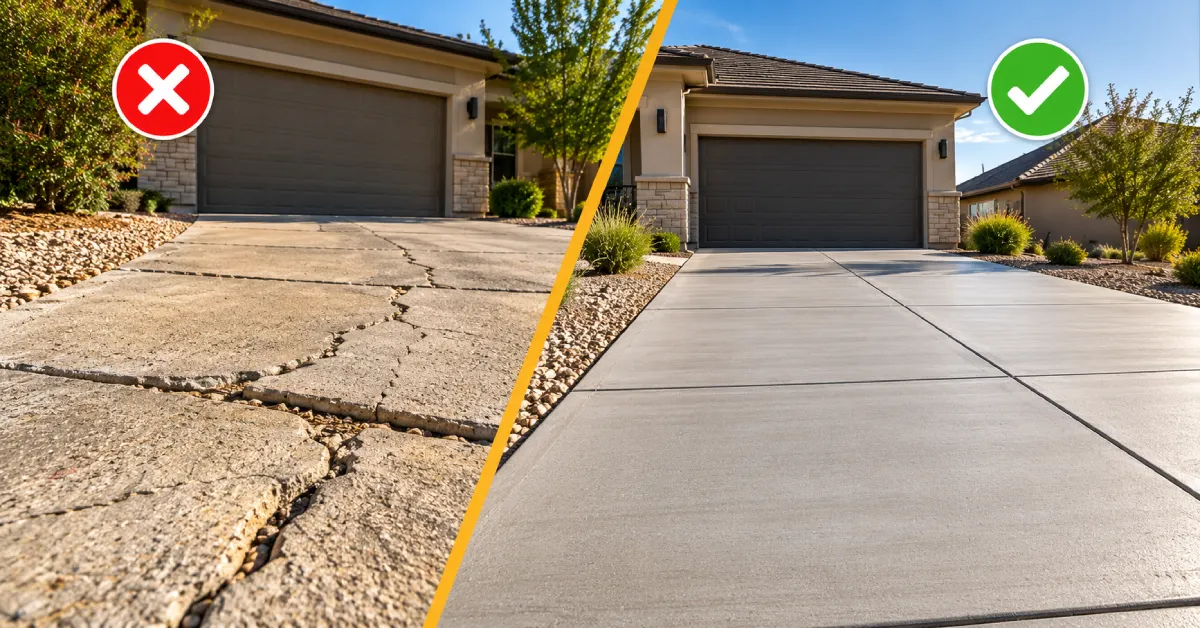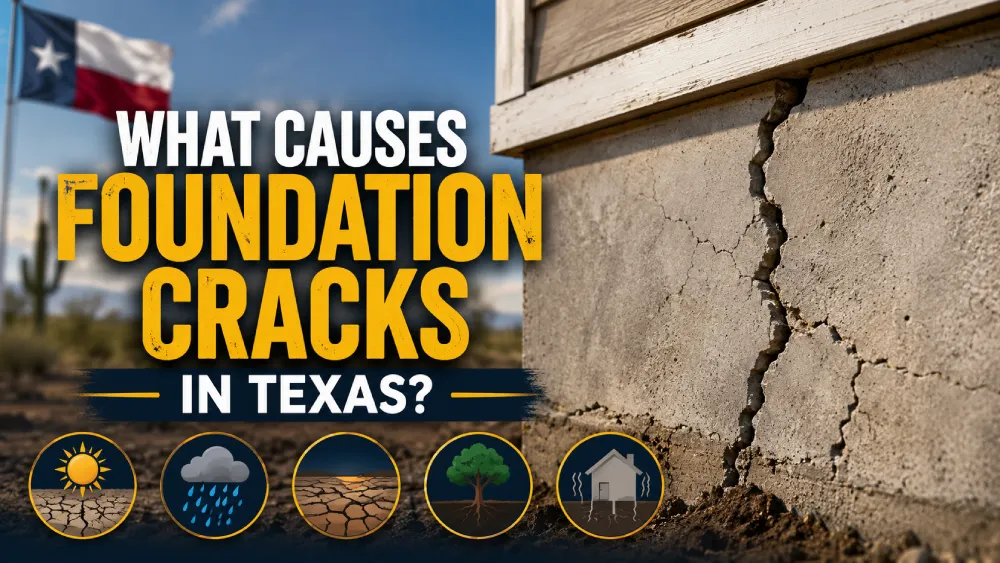
When planning a new parking lot, driveway, access road, or industrial yard, one of the first decisions property owners face is commercial concrete vs asphalt. Both materials are widely used in commercial paving projects, but they perform very differently over time—especially in the demanding climate of West Texas.
From retail centers in Odessa to oilfield facilities outside Midland, choosing the right paving material affects durability, maintenance costs, curb appeal, and long-term return on investment. In this guide, we’ll break down the real-world differences between concrete and asphalt so you can make the best decision for your property in the Permian Basin.
Understanding the Basics of Commercial Paving Materials
Before comparing performance, it helps to understand how each material is made and installed.
What Is Commercial Concrete?
Concrete is a mixture of cement, water, sand, and coarse aggregates such as gravel or crushed stone. When properly mixed and cured, it forms an extremely hard, durable surface capable of supporting heavy loads.
Commercial concrete is commonly used for:
- Concrete parking lots
- Loading docks
- Industrial yards
- Foundations and slabs
- Sidewalks and walkways
- Curbs and gutters
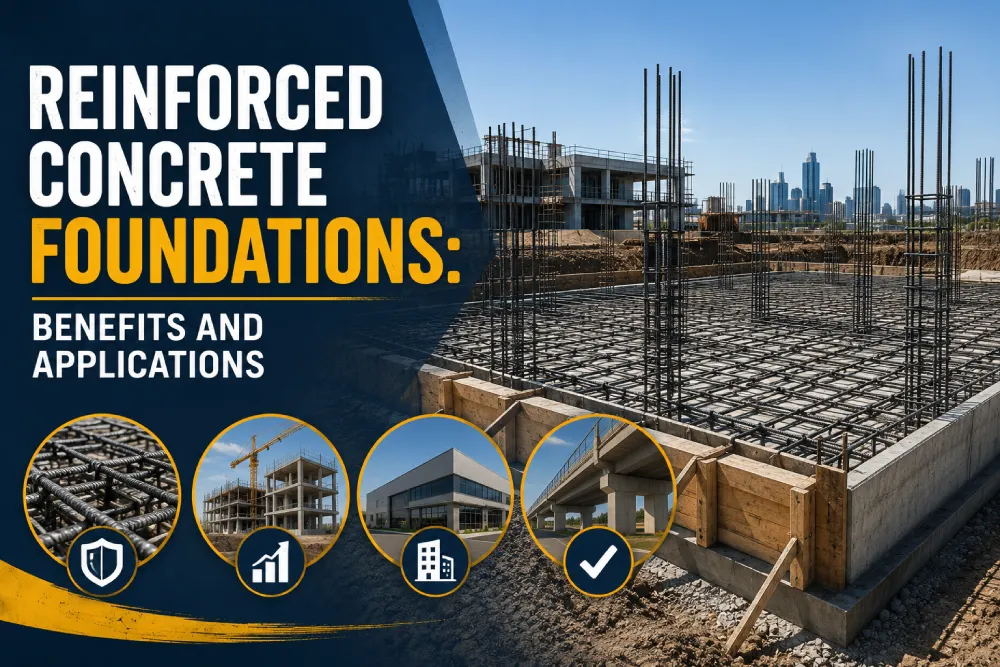
In commercial applications, concrete can be reinforced with rebar or wire mesh to increase strength and longevity, especially in high-traffic environments.
What Is Asphalt?
Asphalt is made from aggregates bound together with a petroleum-based binder known as bitumen. It is heated during installation and compacted to create a smooth surface.
Asphalt is typically used for:
- Roadways
- Commercial parking lots
- Drive lanes
- Temporary access roads
Because asphalt contains petroleum products, it behaves differently in high heat and heavy-load environments, which is especially relevant in West Texas.
Commercial Concrete vs Asphalt: Key Differences That Matter
When evaluating commercial concrete vs asphalt, the most important factors for property owners include durability, maintenance, climate performance, and long-term cost.
1. Durability and Lifespan
In the hot, dry climate of Odessa and Midland, durability is a major consideration.
Concrete Lifespan:
- 30–40+ years with proper installation
- Resists rutting and heavy equipment damage
- Less prone to softening in extreme heat
Asphalt Lifespan:
- 15–25 years with consistent maintenance
- Can soften under high temperatures
- More susceptible to heavy load deformation
For industrial yards and oilfield facilities in the Permian Basin, concrete typically performs better under constant heavy truck traffic and equipment loading.
2. Maintenance Requirements
Maintenance costs play a major role in total project lifecycle expenses.
Concrete Maintenance
Concrete generally requires:
- Occasional joint sealing
- Crack repair if movement occurs
- Periodic cleaning
It does not require regular resurfacing or sealing every few years.
Asphalt Maintenance
Asphalt typically requires:
- Sealcoating every 3–5 years
- Crack filling
- Periodic resurfacing
- Patching in high-traffic areas
Over time, these recurring costs can add up. While asphalt may have a lower initial installation cost, its maintenance requirements are higher.
Performance in the West Texas Climate
The harsh environment of the Permian Basin has a direct impact on paving materials.
High Temperatures
Summer temperatures in Midland and Odessa regularly exceed 100°F. Asphalt can soften under extreme heat, leading to:
- Tire impressions
- Rutting
- Surface deformation
Concrete, by contrast, maintains its structural integrity in high temperatures and does not soften.
Freeze-Thaw Considerations
Although West Texas winters are generally mild, freeze-thaw cycles can still occur. Properly installed concrete with control joints performs well under these conditions.
The key factor is professional installation. Poor site preparation can cause either material to fail prematurely.
Initial Cost vs Long-Term Value
Many business owners focus first on installation cost. However, long-term value is often more important.
Average Cost Comparison
| Factor | Concrete | Asphalt |
|---|---|---|
| Initial Cost | Higher | Lower |
| Lifespan | 30–40+ Years | 15–25 Years |
| Maintenance | Low | Moderate to High |
| Heat Resistance | Excellent | Moderate |
| Heavy Load Capacity | High | Moderate |
Concrete often costs more upfront in commercial paving projects. However, when you factor in lifespan and maintenance expenses, it frequently delivers a better return on investment—especially for high-traffic business properties.
For large commercial or industrial projects in West Texas, many developers determine that concrete is the more cost-effective long-term solution.
Appearance and Curb Appeal
First impressions matter for business property improvements. The material you choose sends a message to customers, tenants, and partners.
Concrete Appearance Benefits
Concrete provides:
- A clean, modern look
- Light reflective properties that improve nighttime visibility
- Compatibility with decorative finishes
- Lower heat absorption compared to dark asphalt
Decorative concrete options, including stamped or stained finishes, add versatility for retail centers and office complexes in Odessa and Midland.
Asphalt Appearance Considerations
Asphalt provides a smooth, dark finish but tends to fade and gray over time. Surface oxidation can lead to a worn appearance unless sealcoating is performed regularly.
For businesses focused on long-term aesthetics and reduced upkeep, a concrete parking lot can offer a more professional, polished impression.
Load Capacity and Industrial Applications
In the Permian Basin, many properties support heavy oilfield vehicles, delivery trucks, and industrial equipment. Not all paving materials handle this stress equally.
Why Concrete Performs Better for Heavy Loads
Concrete is often preferred for:
- Oilfield yards
- Truck terminals
- Warehouse loading areas
- Equipment storage pads
When reinforced correctly, it distributes weight effectively and resists rutting. Asphalt, especially in high heat, is more prone to depressions where trucks park or turn frequently.
For industrial facility owners in West Texas, concrete is typically considered one of the most reliable asphalt alternatives for long-term structural strength.
Environmental Considerations
Sustainability is an increasing factor in commercial paving decisions.
Concrete Sustainability
- Long lifespan reduces replacement frequency
- Light color reduces heat island effect
- Can incorporate recycled materials
Asphalt Sustainability
- Often contains recycled asphalt pavement (RAP)
- Requires petroleum-based binder
- Needs more frequent resurfacing
In high-temperature climates like West Texas, concrete’s reflective properties can also reduce surrounding surface temperatures.
Installation Timeline and Downtime
Project scheduling is critical for active commercial properties.
Asphalt Installation Advantages
- Faster installation
- Quicker initial use
In some cases, asphalt can be driven on relatively quickly after installation.
Concrete Installation Considerations
- Longer curing time
- Requires careful finishing
- Gains strength over several days
However, while asphalt may open sooner, concrete typically requires far fewer interruptions over its lifetime. For business owners evaluating commercial concrete vs asphalt, downtime over 30 years should be factored into the decision—not just the first week after installation.
Making the Right Choice for Your Property
Choosing between concrete and asphalt depends on your project goals.
Concrete May Be Ideal If You:
- Need long-term durability
- Support heavy truck or equipment traffic
- Want minimal maintenance
- Value long-term appearance
- Are investing in permanent business property improvements
Asphalt May Be Suitable If You:
- Have a limited short-term budget
- Need a faster installation timeline
- Are building a temporary or lower-traffic surface
For many commercial and industrial properties in Odessa, Midland, and the broader Permian Basin, concrete is often chosen as the higher-performing long-term solution.
Frequently Asked Questions (FAQ)
Is concrete more expensive than asphalt?
Concrete typically has a higher upfront installation cost. However, when factoring in maintenance and lifespan, it often becomes more cost-effective over 30 to 40 years.
Which lasts longer in West Texas heat?
Concrete generally performs better in extreme heat because it does not soften like asphalt. This makes it well-suited for commercial properties in the Permian Basin.
Is a concrete parking lot better for heavy trucks?
Yes. Properly reinforced concrete handles heavy truck traffic and industrial equipment more effectively than asphalt.
Does asphalt require more maintenance?
Yes. Asphalt typically requires sealcoating every few years along with crack filling and resurfacing. Concrete requires less frequent maintenance.
What is the best option for a retail shopping center?
Many retail centers choose concrete for its durability, reflective properties, and clean appearance. However, the right choice depends on traffic volume, budget, and long-term planning.
Get a Free Concrete Project Estimate
If you are weighing commercial concrete vs asphalt for your next project, professional guidance can help you make a confident, informed decision.
Permian Basin Concrete provides residential, commercial, and industrial concrete services throughout Odessa, Midland, and the surrounding Permian Basin region. Whether you need a new concrete parking lot, loading dock, industrial yard, or large-scale commercial paving project, our team brings experience and precision to every job.
To schedule your free project consultation and estimate, contact Permian Basin Concrete today:
Website: https://permianbasinconcrete.com
Email: info@permianbasinconcrete.com
We’ll help you determine the best solution for your property, budget, and long-term goals in West Texas.