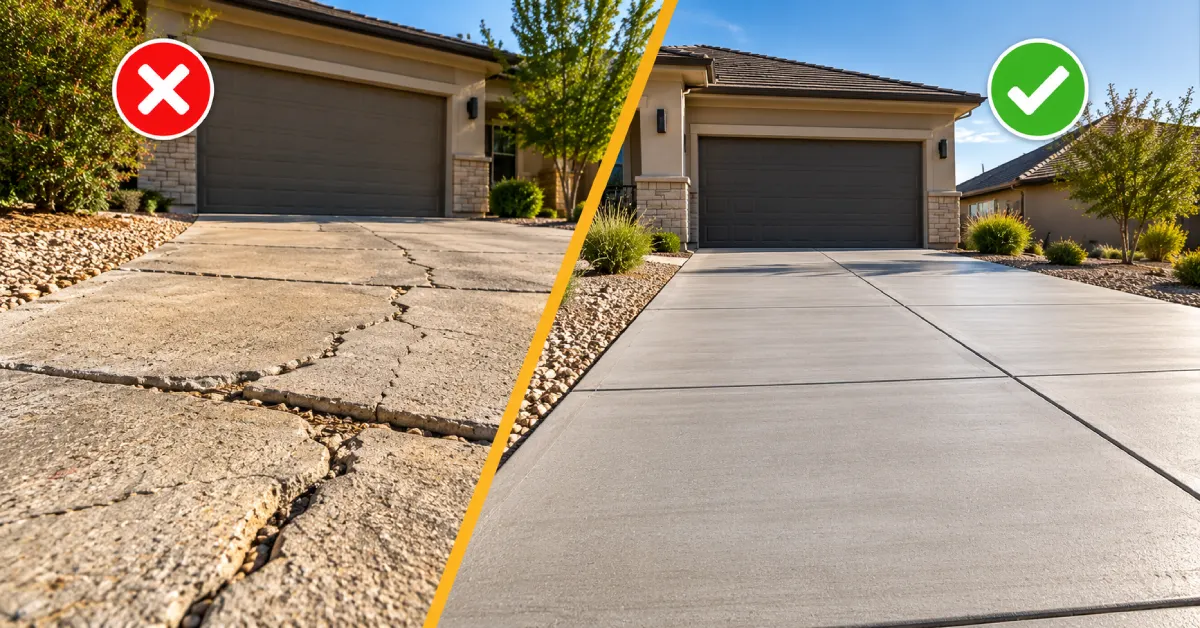
Concrete driveways are built to handle weight, weather, and years of daily use. However, many property owners in Odessa, Midland, and across the Permian Basin experience preventable issues due to common concrete driveway mistakes. From driveway cracking to full driveway failure, most problems trace back to poor planning, poor installation, or ignoring local soil and climate conditions.
Understanding these mistakes before starting your project can save thousands of dollars in repairs and help ensure your driveway performs reliably for decades. Whether you’re a homeowner, property manager, or commercial developer in West Texas, this guide explains what goes wrong, why it happens, and how to prevent it.
Why Concrete Driveways Fail in West Texas
Concrete is durable, but it is not indestructible. In the Permian Basin, several regional factors increase the risk of driveway failure when a project is not properly designed and installed.
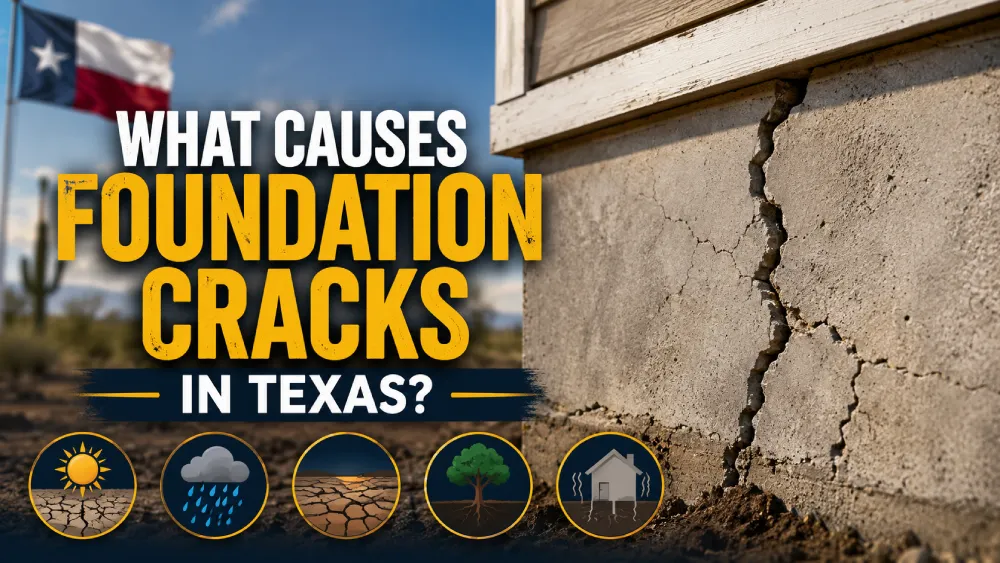
West Texas soils often contain clay, which expands and contracts significantly with moisture changes. During dry spells, soil shrinks and creates voids beneath concrete slabs. When rain eventually comes, the soil expands again, placing stress on the slab. Without proper base preparation and reinforcement, this cycle leads to cracking and uneven settlement.
Temperature extremes also contribute to stress. Hot summers combined with sudden cold snaps create expansion and contraction cycles that challenge poorly installed concrete. When you combine heavy vehicle loads, oilfield traffic, and moisture management issues, small installation errors quickly turn into major structural problems.
Most concrete driveway mistakes are avoidable, but only when the project is approached with proper planning and experienced workmanship.
Mistake #1: Poor Site Preparation and Subgrade Work
One of the most common causes of driveway failure is inadequate site preparation. The strength of a concrete driveway depends heavily on what lies beneath it.
Why Subgrade Matters
The subgrade is the soil surface under the driveway, and it must be:
- Properly graded
- Compacted uniformly
- Free of organic material
- Stabilized if necessary
When contractors rush through this step, the driveway may settle unevenly. Voids can form beneath the slab, creating weak points that eventually crack under weight.
In West Texas, expansive clay soils require careful moisture conditioning and compaction. Simply pouring concrete over native soil without proper preparation often leads to premature driveway cracking.
How to Avoid This Mistake
To prevent subgrade-related concrete driveway mistakes:
- Ensure proper excavation depth.
- Install a compacted base layer of crushed stone or caliche.
- Verify compaction using proper equipment.
- Confirm grading allows for adequate drainage away from the structure.
An experienced residential concrete contractor understands that base preparation is not an optional step—it is the foundation of long-term performance.
Mistake #2: Using the Wrong Concrete Mix
Concrete is not one-size-fits-all. The mix design must match the intended use and local environmental conditions.
Common Mix Issues
Some driveway problems stem from:
- Low compressive strength mix.
- Improper water-to-cement ratio.
- Excess water added on-site.
- No air entrainment in freeze-prone areas.
Adding too much water to improve workability weakens the slab and increases shrinkage, which contributes to driveway cracking. For driveways supporting heavy trucks, oilfield vehicles, or RVs, higher strength concrete may be required to prevent premature driveway failure.
Choosing the Right Mix for West Texas
In the Permian Basin, driveways should be designed for:
- High summer temperatures.
- Occasional freeze-thaw conditions.
- Heavy vehicle loads.
- Expansive soil movement.
Working with a professional residential concrete contractor ensures the mix is specified correctly for both performance and durability.
Mistake #3: Inadequate Thickness and Reinforcement
Concrete thickness directly impacts strength. Skimping on depth is one of the most costly concrete driveway mistakes property owners face.
Recommended Thickness Guidelines
| Type of Use | Recommended Thickness |
|---|---|
| Standard passenger vehicles | 4 inches minimum |
| Light trucks and SUVs | 5 inches |
| Heavy trucks or RV parking | 6 inches or more |
| Commercial vehicle access | Engineered thickness |
In residential neighborhoods in Midland and Odessa, some driveways fail because they were poured too thin for the vehicles they support.
The Role of Reinforcement
Reinforcement helps control cracking and improve structural strength. This may include:
- Rebar grids.
- Welded wire mesh.
- Fiber reinforcement in the mix.
Reinforcement does not eliminate cracking entirely, but it controls crack width and helps maintain slab integrity. Without it, minor movement can turn into significant structural damage.
Mistake #4: Improper Joint Placement
Concrete will crack. That is a fact. The key is controlling where it cracks.
What Control Joints Do
Control joints create intentional weak points that guide cracking in a straight, planned line. When joints are improperly spaced or cut too late, cracks develop randomly across the driveway surface.
Proper joint placement typically depends on slab thickness. A common rule is:
Joint spacing (in feet) should not exceed 2–3 times the slab thickness (in inches).
For a 4-inch slab, joints are typically spaced 8–12 feet apart.
Avoiding Random Driveway Cracking
To minimize unsightly cracking:
- Install joints at correct intervals.
- Cut joints at the appropriate time after pouring.
- Ensure joint depth is sufficient (generally ¼ the slab thickness).
- Align joints with changes in geometry and fixed structures.
Improper jointing is a classic example of poor installation that leads to unnecessary cosmetic and structural problems.
Mistake #5: Poor Drainage Design
Water is one of concrete’s biggest enemies. In the Permian Basin, heavy rains may not occur frequently, but when they do, drainage failures are exposed quickly.
Consequences of Poor Drainage
When a driveway does not slope properly:
- Water pools on the surface.
- Moisture seeps beneath the slab.
- Soil erosion occurs.
- Freeze-thaw damage increases.
Standing water also accelerates surface deterioration and scaling, especially when combined with vehicle traffic.
Proper Drainage Practices
Effective driveway drainage design involves:
- Sloping the driveway away from foundations.
- Maintaining at least a 1/8 inch per foot slope.
- Installing proper expansion joints near structures.
- Directing runoff away from garage entrances.
A knowledgeable contractor evaluates the entire site, not just the driveway footprint, to prevent drainage-related driveway failure.
Mistake #6: Rushed Curing Process
Concrete does not reach full strength overnight. In fact, curing plays a major role in long-term durability.
Why Curing Is Critical
Curing allows concrete to:
- Develop strength properly.
- Reduce shrinkage cracking.
- Improve surface durability.
- Enhance long-term performance.
In hot West Texas summers, moisture evaporates quickly. Without proper curing techniques, the surface may dry too fast, leading to shrinkage cracks and weakened top layers.
Proper Curing Methods
Professional contractors may use:
- Water curing methods.
- Curing compounds.
- Moisture-retaining blankets.
- Controlled scheduling to avoid extreme heat.
Rushing the process to complete projects quickly often results in long-term driveway cracking and reduced lifespan.
Mistake #7: Hiring the Wrong Contractor
Perhaps the most significant of all concrete driveway mistakes is choosing an inexperienced or underqualified installer.
Signs of Poor Installation
Warning signs include:
- No written estimate or scope of work.
- Lack of proof of insurance.
- Vague explanations about base preparation.
- Unwillingness to discuss mix design or reinforcement.
Driveways may look smooth when first poured, but poor installation practices only reveal themselves months or years later.
What to Look for in a Residential Concrete Contractor
When selecting a contractor in Odessa or Midland, consider:
- Experience in West Texas soil conditions.
- Knowledge of commercial and industrial load requirements.
- Detailed project planning.
- Clear communication about thickness, reinforcement, and curing.
Concrete is a long-term investment. Choosing the right contractor helps protect that investment.
How to Spot Early Warning Signs of Driveway Failure
Addressing issues early can prevent major structural repairs.
Look for:
- Hairline cracks widening over time.
- Uneven slab edges.
- Pooling water.
- Surface flaking or scaling.
- Gaps forming along expansion joints.
If you notice these issues, a professional evaluation can determine whether repairs, overlays, or partial replacement are necessary.
Preventative Steps for a Long-Lasting Driveway
To extend the life of your concrete driveway:
- Seal the surface periodically if recommended.
- Keep joints clean and sealed.
- Avoid parking extremely heavy equipment on residential slabs not designed for it.
- Repair minor cracks promptly.
- Maintain proper drainage around the property.
Routine maintenance combined with proper installation significantly reduces the risk of driveway failure.
Frequently Asked Questions (FAQ)
How long should a properly installed concrete driveway last?
A properly designed and installed driveway in the Permian Basin can last 25 to 35 years or more. Longevity depends on soil conditions, load requirements, maintenance, and installation quality.
Is some driveway cracking normal?
Yes, minor shrinkage cracks can occur even with proper installation. However, large, widening, or uneven cracks often indicate base issues or structural stress.
What causes concrete driveway failure most often?
The most common causes are poor installation, inadequate base preparation, improper drainage, and insufficient slab thickness for intended loads.
Can driveway failure be repaired, or does it require replacement?
Some surface-level problems can be repaired. However, significant settlement or structural cracking typically requires partial or full replacement.
When is the best time to pour a driveway in West Texas?
Moderate weather conditions in spring and fall are ideal. However, experienced contractors can schedule and manage projects successfully throughout much of the year with proper techniques.
Get a Free Concrete Project Estimate
Avoiding concrete driveway mistakes starts with working with the right team. Permian Basin Concrete provides residential, commercial, and industrial concrete services throughout Odessa, Midland, and the surrounding Permian Basin region.
Whether you need a new driveway, replacement for a failing slab, or a large-scale commercial or industrial project, our team understands the soil, climate, and performance demands unique to West Texas. We focus on proper site preparation, engineered solutions, quality materials, and professional installation practices that stand the test of time.
If you’re planning a concrete project or concerned about driveway cracking or potential driveway failure, we encourage you to schedule a free project consultation and estimate.
Contact Permian Basin Concrete today:
Email:
Website: https://permianbasinconcrete.com
Let’s build concrete that lasts.