A strong building starts below ground level. The concrete foundation installation is one of the most important phases of any construction project, whether you are building a home in Odessa, expanding a warehouse in Midland, or developing an industrial site in the Permian Basin. When done correctly, your foundation provides structural stability, moisture protection, and long-term durability in West Texas’s demanding climate.
In this guide, we walk through the entire concrete foundation installation process step by step. You’ll learn what happens before concrete is poured, how site preparation works, what to expect during inspections, and how to choose the right foundation contractor for your project.
Why Concrete Foundation Installation Is So Important
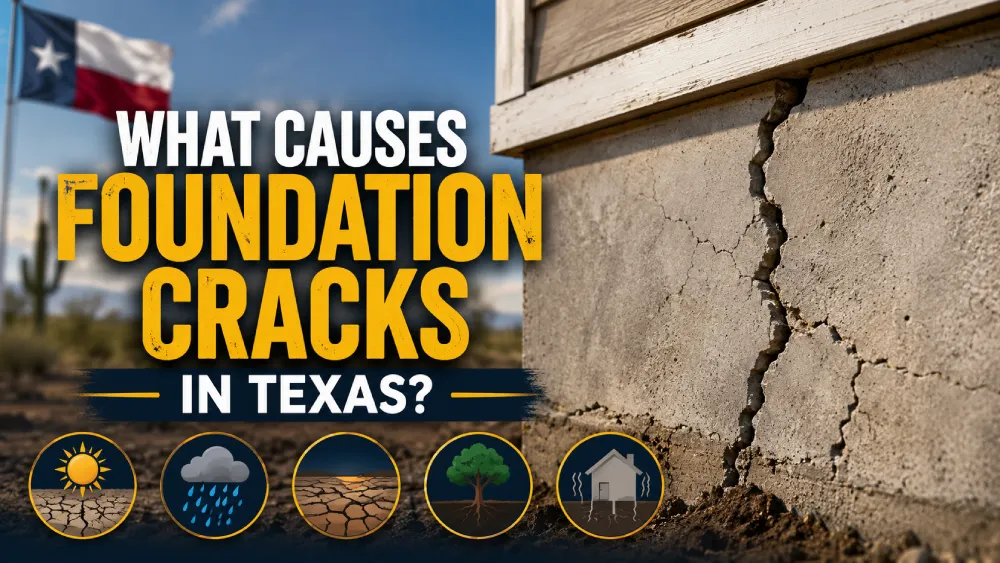
A properly built foundation does more than support the weight of a structure. It anchors the building to stable soil, resists movement caused by expansive Texas clay soils, and protects against moisture intrusion. In West Texas, foundations must also withstand high heat, dry spells, and occasional heavy rains that can shift ground conditions.
When foundations fail, the consequences can include:
- Wall cracks and uneven floors
- Doors and windows that won’t close properly
- Plumbing line damage beneath slabs
- Costly structural repairs
Investing in professional concrete foundation installation ensures your structure will perform as designed for decades. Whether it’s a residential slab-on-grade or a reinforced industrial pad, following the right foundation construction process is critical.
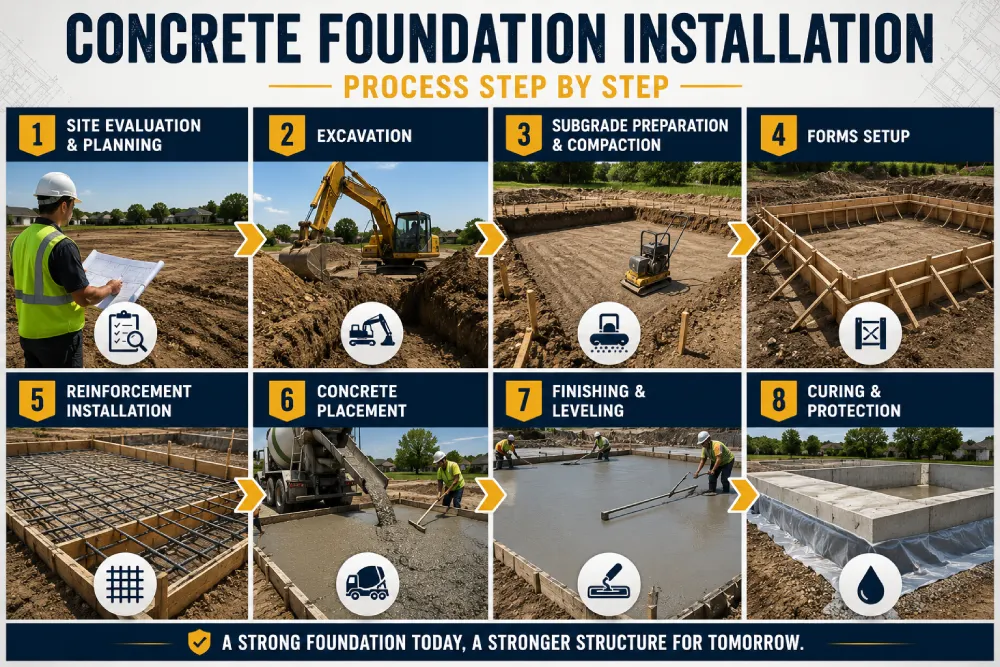
Step 1: Site Evaluation and Planning
The process begins long before any concrete arrives on site. Planning, engineering, and soil evaluation all happen first to ensure the foundation meets building codes and load requirements.
Soil Testing and Engineering
In the Permian Basin region, soil conditions vary significantly. Some areas have caliche layers, while others have expansive clay that swells and shrinks with moisture changes. A geotechnical soil test determines:
- Soil bearing capacity
- Moisture levels
- Shrink-swell potential
- Drainage characteristics
Engineers use this data to design a foundation that resists settlement and movement. For residential homes in Midland or Odessa, this often means a reinforced slab with beams and footings. Industrial projects may require deeper or heavily reinforced foundations.
Permits and Layout
Before work begins, permits must be secured and building plans reviewed. Local building departments in Odessa and Midland require inspections at specific stages of the foundation construction process. The site is then surveyed and marked to ensure accurate placement of the structure.
Proper planning prevents delays, costly redesigns, and structural issues later in the project.
Step 2: Site Preparation and Excavation
Site preparation is one of the most critical steps in concrete foundation installation. If the groundwork is not done properly, even high-quality concrete cannot compensate for unstable soil.
Clearing and Grading
The first stage of site preparation involves:
- Removing vegetation and debris
- Clearing topsoil
- Grading the land to ensure proper drainage
Proper grading directs water away from the future structure. Standing water near foundations is a leading cause of long-term damage in West Texas properties.
Excavation and Compaction
After grading, crews excavate the area according to foundation design specifications. For slab-on-grade foundations, this may be relatively shallow. For commercial foundations, deeper footings may be required.
Compaction is essential. Soil is compacted in layers to increase density and stability. Without adequate compaction, the foundation may settle unevenly over time, leading to cracks and structural stress.
Step 3: Formwork and Reinforcement Installation
Once the site is properly prepared, forming and reinforcement begin. This step creates the structural “skeleton” of the foundation.
Installing Forms
Formwork is typically constructed from wood or engineered forms that outline the shape of the slab and footings. Forms must be:
- Level
- Securely braced
- Precisely aligned
Even small alignment errors can cause issues during framing later in construction.
Reinforcement Placement
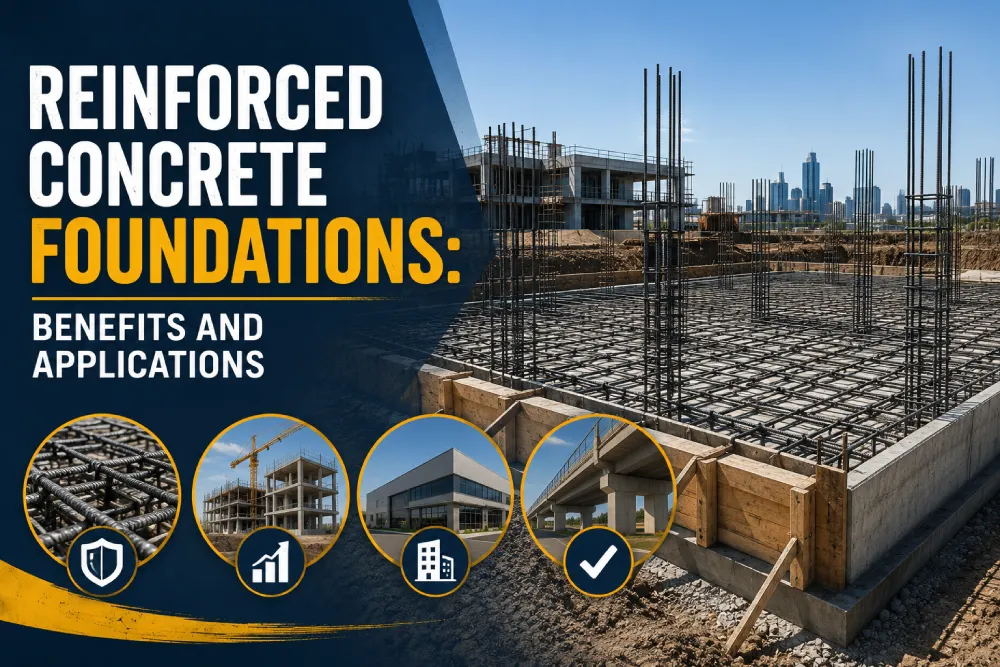
Reinforcement adds tensile strength to concrete, which naturally performs well in compression but not in tension. Steel reinforcement typically includes:
- Rebar grids
- Post-tension cables (in some residential applications)
- Wire mesh
For industrial and oilfield facilities in the Permian Basin, reinforcement may be significantly heavier to support equipment loads and vehicle traffic.
Plumbing and Utility Rough-Ins
Before concrete pouring begins, underground plumbing, conduit, and utility lines are installed. Rechecking placement at this stage is crucial because correcting mistakes after pouring is extremely costly.
Step 4: Concrete Pouring and Placement
Concrete pouring is the most visible phase of the concrete foundation installation process, but it must be carefully coordinated and timed.
Scheduling the Pour
Weather plays a significant role in West Texas. High summer temperatures in Midland and Odessa can accelerate curing, while cold snaps require protective measures. Experienced contractors adjust mix designs and timing accordingly.
Pouring the Concrete
During concrete pouring:
- Concrete is delivered by ready-mix trucks.
- The mix is poured into prepared forms.
- Workers use tools to distribute and level concrete evenly.
- Air pockets are removed through vibration.
Consistency in placement prevents weak spots and voids. Skilled crews work quickly but carefully to ensure uniform coverage.
Finishing the Surface
After leveling, the surface is finished using specialized tools. For slab foundations, the finish must be flat and smooth to support flooring installation later. Industrial slabs may require specific textures or additional hardeners for durability.
Step 5: Curing and Protection
Curing is often misunderstood, but it is essential to long-term strength. Concrete does not simply “dry”; it undergoes a chemical reaction that requires proper moisture and temperature control.
Why Proper Curing Matters
Incorrect curing can result in:
- Surface cracking
- Reduced strength
- Increased permeability
In hot Permian Basin conditions, moisture can evaporate too quickly. Contractors may apply curing compounds or use moisture-retaining coverings to control the process.
Typical Curing Timeline
- Initial set: 24–48 hours
- Light foot traffic: 3–7 days
- Full design strength: Around 28 days
Although framing may begin after initial curing, heavy loads should not be applied prematurely.
Step 6: Inspections and Quality Assurance
Before proceeding with vertical construction, the foundation must pass required inspections. Building officials in Odessa and Midland check:
- Reinforcement placement (before pouring)
- Dimensions and depth
- Anchor bolts and connections
In addition to municipal inspections, reputable foundation contractors perform internal quality checks to ensure compliance with engineering plans and local codes.
Quality assurance at this stage prevents future liability and structural issues.
Types of Concrete Foundations
Different projects require different foundation systems. Here is a comparison of common types used in West Texas:
| Foundation Type | Best For | Key Benefits |
|---|---|---|
| Slab-on-Grade | Residential homes, small offices | Cost-effective, low maintenance |
| Pier and Beam | Expansive soils, elevated homes | Easier access to utilities |
| Post-Tension Slab | Residential in shifting soils | Added crack resistance |
| Reinforced Mat Slab | Commercial and industrial sites | Supports heavy structural loads |
Choosing the right system depends on soil conditions, building load, and long-term use.
Common Questions About the Foundation Construction Process
Property owners and developers often have similar concerns before starting a project. Understanding these issues helps you make informed decisions.
How Long Does Concrete Foundation Installation Take?
Most residential foundations in Midland or Odessa take one to two weeks from site preparation to initial cure. Larger commercial or industrial foundations may take several weeks, depending on complexity and weather conditions.
How Much Does It Cost?
Costs depend on:
- Foundation size and thickness
- Soil conditions
- Reinforcement requirements
- Site accessibility
An experienced foundation contractor can provide a detailed estimate based on engineered drawings and site conditions.
What Can Go Wrong?
Common mistakes include poor compaction, incorrect reinforcement placement, and rushed curing. Working with a qualified contractor significantly reduces these risks.
Choosing the Right Foundation Contractor
Selecting a contractor for your concrete foundation installation is one of the most important decisions in the project.
Look for a contractor who:
- Has experience in the Permian Basin region
- Understands local soil and climate conditions
- Follows engineered foundation construction process standards
- Is licensed and insured
- Provides detailed written estimates
Residential, commercial, and industrial foundations each require specific expertise. An oilfield equipment pad in West Texas has very different load demands than a residential slab.
A knowledgeable contractor ensures your foundation performs reliably for decades.
Long-Term Maintenance and Performance
Although concrete foundations are low maintenance, property owners should still monitor conditions over time. Early detection of problems prevents larger structural damage.
Best practices include:
- Maintain proper drainage around the building
- Avoid overwatering landscaping near foundations
- Seal cracks promptly
- Schedule periodic professional inspections
In the dry and sometimes extreme conditions of West Texas, managing moisture around the foundation is particularly important.
Frequently Asked Questions (FAQ)
What is the most important step in concrete foundation installation?
Site preparation and soil compaction are among the most critical. Even perfectly poured concrete cannot compensate for poorly prepared soil.
Can foundations be poured year-round in West Texas?
Yes, but weather impacts mix design and curing time. Experienced contractors adjust methods to accommodate heat, wind, or cold.
How thick should a concrete slab be?
Residential slabs are typically 4–6 inches thick with deeper beams. Industrial slabs are often thicker and heavily reinforced to support equipment and traffic.
Do I need reinforcement in a residential foundation?
Most residential foundations in Midland and Odessa use rebar or post-tension systems to resist cracking caused by soil movement.
When can construction begin after pouring?
Light framing may start after several days, but full structural loads should wait until concrete reaches sufficient strength.
Get a Free Concrete Project Estimate
If you are planning a building project in Odessa, Midland, or anywhere in the Permian Basin, working with an experienced team makes all the difference. Permian Basin Concrete provides residential, commercial, and industrial concrete services tailored to the demands of West Texas soil and climate.
Whether you need a home slab, commercial foundation, equipment pad, or large-scale industrial concrete foundation installation, our team is ready to help. We’ll review your plans, evaluate site conditions, and provide a detailed project consultation and estimate.
To get started, contact Permian Basin Concrete today at permianbasinconcrete@gmail.com or visit https://permianbasinconcrete.com to request your free estimate. Let’s build your project on a foundation that lasts.