When planning a new driveway, one of the most important decisions you’ll make is concrete driveway thickness. Thickness directly impacts strength, durability, load-bearing capacity, and long-term performance. Whether you’re a homeowner in Odessa, a business owner in Midland, or managing an industrial site in the Permian Basin, getting the thickness right can prevent costly cracking and premature repairs.
Driveway construction in West Texas requires careful consideration of soil conditions, climate extremes, and traffic loads. In this guide, we’ll explain standard driveway specifications, when thicker concrete is necessary, and how reinforcement plays a role in long-term performance. By the end, you’ll have a clear understanding of what your project needs and what to discuss with your contractor before pouring begins.
Why Concrete Driveway Thickness Matters
Concrete is incredibly strong in compression, but its performance depends heavily on proper installation and adequate thickness. If a driveway is poured too thin, it may crack under vehicle weight, develop settlement issues, or fail prematurely.
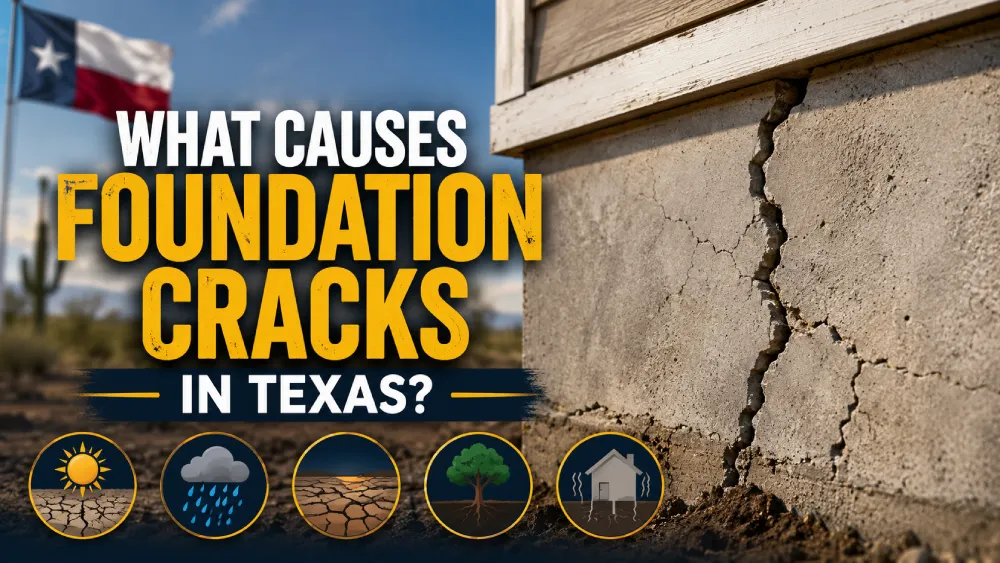
In areas like Midland and Odessa, soil movement and expansive clay can also affect driveway performance. West Texas experiences extreme temperature swings, which cause expansion and contraction in concrete slabs. A properly designed and installed driveway accounts for both structural loads and environmental conditions.
Correct concrete driveway thickness ensures:
- Proper load distribution
- Reduced risk of cracking and surface damage
- Longer lifespan
- Lower long-term maintenance costs
- Improved structural reliability
Choosing the right specifications at the beginning is significantly more affordable than repairing or replacing a failed slab.
Standard Concrete Driveway Thickness for Residential Properties
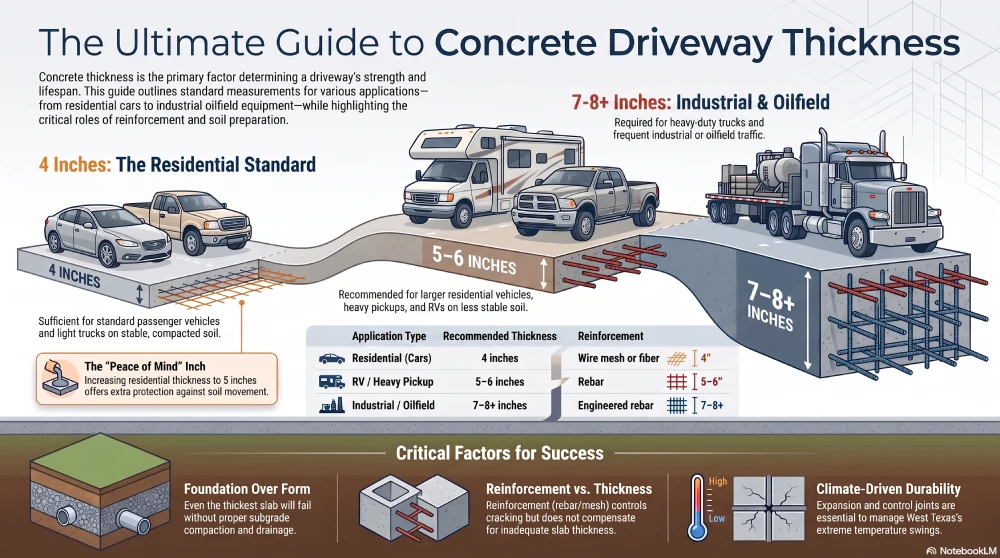
For most homes, residential concrete driveways are poured at a standard thickness of 4 inches. This specification is widely accepted for normal passenger vehicles and light trucks under typical use conditions.
However, not all residential driveways are created equal. Factors such as subgrade quality, reinforcement, and expected vehicle weights can influence the final design.
When 4 Inches Is Typically Enough
A 4-inch slab is generally appropriate when:
- The driveway supports cars and light pickup trucks
- Soil is properly compacted and stable
- The driveway is not used for RV or heavy trailer parking
- Reinforcement is included where required
If properly installed with a compacted base and control joints, a 4-inch residential driveway can last 25–30 years or more.
When to Consider 5 Inches or More
Increasing thickness to 5 inches can offer added durability in situations where:
- Larger SUVs or heavy-duty trucks are parked regularly
- The driveway has poor soil conditions
- There are concerns about long-term stress
- The owner wants extra structural protection
Many homeowners in the Permian Basin opt for 5 inches for additional peace of mind, especially in areas experiencing soil movement.
Concrete Driveway Thickness for Commercial and Industrial Use
Commercial and industrial driveway construction requires a different approach. Businesses, oilfield facilities, warehouses, and fleet operations often demand significantly thicker slabs.
Typical Commercial Driveway Specifications
For commercial properties, concrete driveway thickness often ranges between:
- 6 inches for moderate commercial traffic
- 7–8 inches for heavier vehicles
- 8+ inches for industrial equipment or oilfield trucks
The exact requirement depends on load weight and frequency of traffic. A retail parking lot has very different requirements than a heavy-equipment staging yard in West Texas.
Industrial and Oilfield Considerations
The Permian Basin sees substantial industrial activity, including drilling operations and service fleets. These applications often require:
- Engineered subgrade preparation
- Reinforced driveway systems
- Increased slab thickness
- Higher PSI concrete mixes
In these environments, thin slabs simply do not perform. Proper engineering ensures safe, reliable load-bearing performance over time.
Factors That Influence Driveway Thickness
Selecting the correct concrete driveway thickness involves more than a one-size-fits-all measurement. Several key factors must be evaluated during planning.
1. Soil and Subgrade Conditions
The soil beneath your driveway provides the foundational support. Expansive clay soil, common in parts of Midland and Odessa, can shrink and swell with moisture changes.
Proper driveway construction includes:
- Excavation of unstable soil
- Compaction of subgrade
- Installation of a compacted base layer
- Ensuring proper drainage
Even the thickest slab can fail if the base preparation is inadequate.
2. Vehicle Load and Traffic Frequency
A driveway supporting occasional passenger vehicles requires less thickness than one carrying:
- Delivery trucks
- Construction vehicles
- RVs
- Heavy-duty oilfield trucks
Weight and frequency both matter. Repeated loads over time create stress cycles that can weaken thinner slabs.
3. Reinforcement Methods
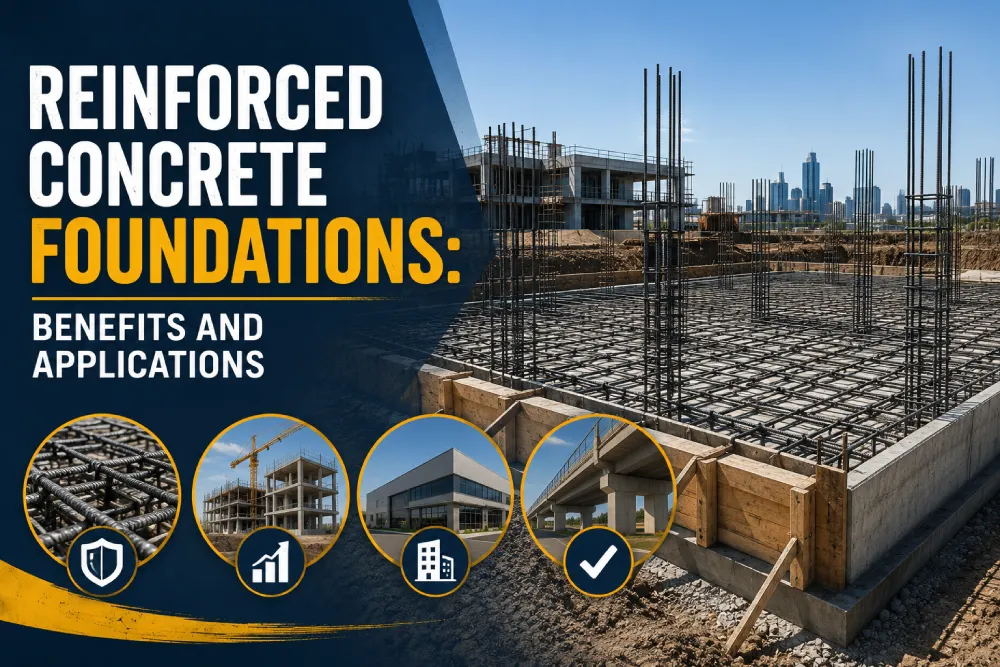
A reinforced driveway can significantly enhance durability. Reinforcement does not replace thickness, but it complements it.
Common reinforcement options include:
- Steel rebar
- Wire mesh
- Fiber reinforcement
Rebar is typically preferred for heavier loads, as it provides structural strength throughout the slab. Wire mesh and fiber additives help control shrinkage cracking.
4. Climate and Temperature Swings
West Texas experiences intense summer heat and cooler winter temperatures. This expansion and contraction create stress within the concrete.
Proper thickness, combined with expansion joints and control joints, helps manage cracking and movement.
Reinforced Driveway vs. Non-Reinforced Driveway
Reinforcement is often misunderstood. While thicker concrete improves load capacity, reinforcement helps control cracking and spread loads across the slab.
Benefits of a Reinforced Driveway
A reinforced driveway provides:
- Improved structural strength
- Better crack control
- Greater longevity under repeated loads
- Reduced risk of separation at stress points
In many residential projects, wire mesh or fiber reinforcement may be sufficient. However, for commercial driveway construction, rebar grids are commonly recommended.
When Reinforcement Is Essential
Reinforcement becomes essential when:
- The slab exceeds 4 inches in thickness
- Heavy trucks will regularly use the driveway
- Soil movement is likely
- The project involves commercial or industrial use
For many properties in the Permian Basin, reinforcement is a wise investment rather than an optional upgrade.
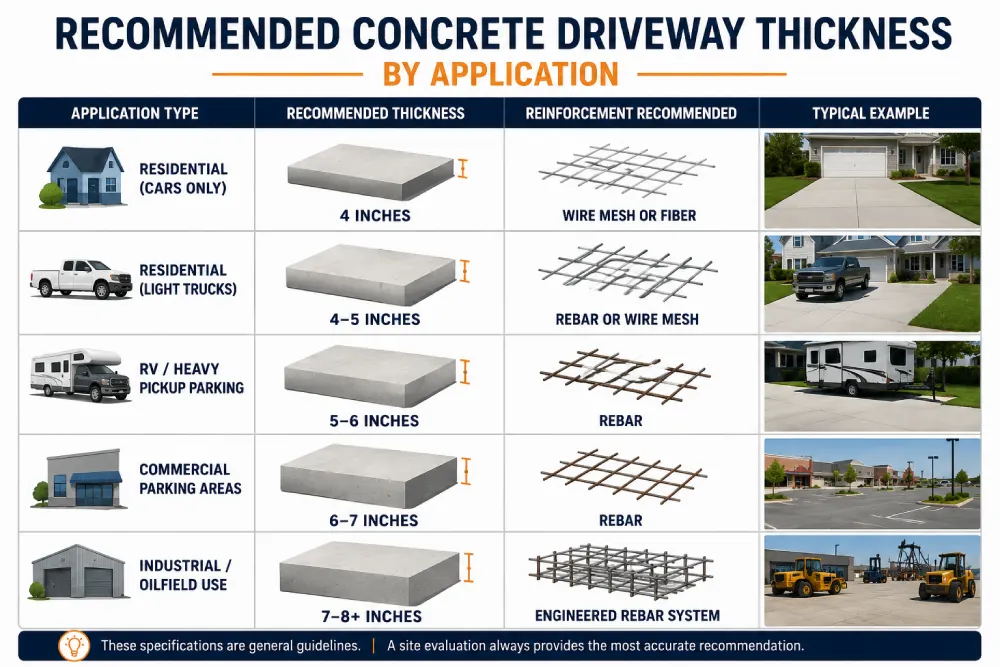
Recommended Concrete Driveway Thickness by Application
| Application Type | Recommended Thickness | Reinforcement Recommended |
|---|---|---|
| Residential (cars only) | 4 inches | Wire mesh or fiber |
| Residential (light trucks) | 4–5 inches | Rebar or wire mesh |
| RV / Heavy Pickup Parking | 5–6 inches | Rebar |
| Commercial Parking Areas | 6–7 inches | Rebar |
| Industrial / Oilfield Use | 7–8+ inches | Engineered rebar system |
These specifications are general guidelines. A site evaluation always provides the most accurate recommendation.
What Happens If a Driveway Is Too Thin?
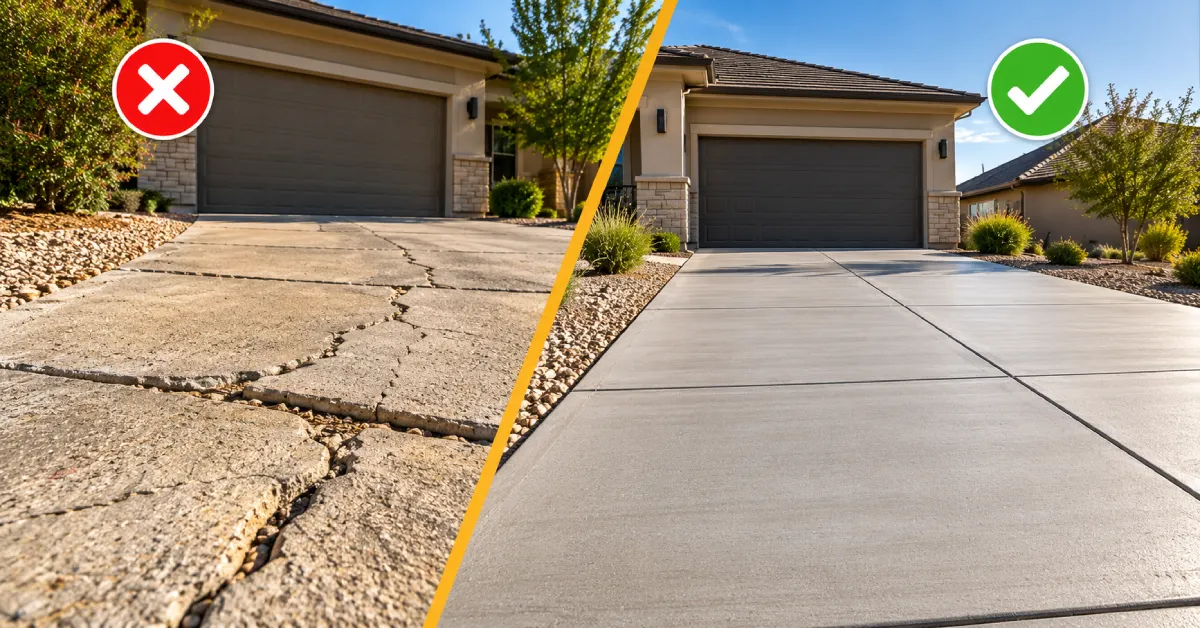
A driveway that lacks proper concrete thickness may show signs of failure within just a few years. Common problems include structural cracking, surface scaling, and settlement.
Warning signs of insufficient driveway thickness include:
- Cracks wider than 1/8 inch
- Uneven slab sections
- Surface flaking or spalling
- Visible deflection under heavy loads
In severe cases, complete removal and replacement becomes necessary. This is why correct driveway construction from the beginning is critical.
The Importance of Proper Installation
Thickness alone does not guarantee durability. Installation practices play an equally important role in long-term performance.
Key Steps in Professional Driveway Construction
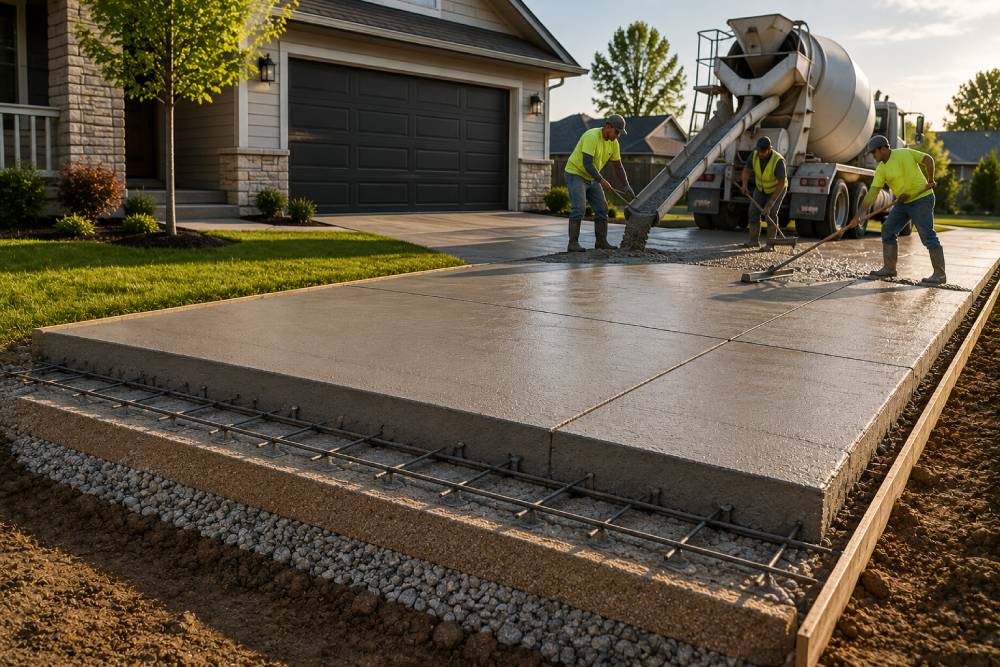
- Site evaluation and soil testing
- Proper excavation and grading
- Compaction of base materials
- Accurate form setting
- Reinforcement placement at correct depth
- Correct concrete mix selection
- Finishing, joint cutting, and curing
Proper curing is especially important in West Texas heat. Rapid moisture loss can weaken the slab surface and increase cracking.
Professional contractors understand regional soil conditions and climate factors specific to Odessa, Midland, and the broader Permian Basin. Experience in the local environment often makes a significant difference in slab longevity.
Frequently Asked Questions (FAQ)
Is 4 inches thick enough for a concrete driveway?
For standard residential use with passenger vehicles, 4 inches is typically sufficient when installed over a properly prepared base. However, if heavier vehicles are expected, increasing to 5 inches may be advisable.
Should I choose a thicker driveway if I own a heavy truck?
Yes. Heavy-duty pickup trucks and RVs place greater stress on concrete. A thickness of 5–6 inches with rebar reinforcement is generally recommended for these situations.
Does reinforcement replace the need for thicker concrete?
No. Reinforcement improves strength and crack control but does not compensate for inadequate slab thickness. Both thickness and reinforcement must work together.
How long should a properly installed driveway last?
A well-installed residential concrete driveway can last 25–30 years or more. Commercial and industrial projects can last decades when properly engineered and maintained.
Are soil conditions in the Permian Basin challenging for concrete?
Some areas of West Texas have expansive soils that can affect slabs. Proper subgrade preparation and thickness planning are essential to long-term performance.
Get a Free Concrete Project Estimate
Choosing the correct concrete driveway thickness is one of the most important decisions in driveway construction. Whether you need a new residential concrete driveway, commercial parking area, or reinforced industrial slab, starting with the right specifications ensures long-lasting results.
Permian Basin Concrete provides residential, commercial, and industrial concrete services throughout Odessa, Midland, and the surrounding Permian Basin region. Our team understands the soil conditions, climate challenges, and load requirements unique to West Texas projects.
If you’re planning a new driveway or replacing an existing one, contact Permian Basin Concrete today for a free consultation and project estimate. Reach out to us at info@permianbasinconcrete.com to discuss your project and get expert guidance on the right driveway specifications for your property.