When planning a new home, commercial building, or industrial facility, one of the most important structural questions is concrete foundation depth. The depth of your foundation directly impacts the safety, longevity, and performance of the entire structure. If it is too shallow, the building may shift, crack, or settle unevenly. If it is deeper than necessary, you may overspend on excavation and materials.
In West Texas communities like Odessa and Midland, soil conditions and climate play a major role in determining proper foundation requirements. At Permian Basin Concrete, we work with property owners, developers, and contractors across the Permian Basin to ensure foundations are built to meet structural demands and local building codes. This guide explains how foundation depth is determined, what affects footings, and what you should know before starting your project.
What Determines Concrete Foundation Depth?
There is no one-size-fits-all answer to how deep a concrete foundation should be. Instead, the proper depth depends on several structural and environmental factors.
1. Type of Structure
The weight and design of the building heavily influence foundation requirements.
- Single-family homes typically require shallower foundations.
- Multi-story commercial buildings require deeper, reinforced structural foundations.
- Industrial or oilfield facilities may need heavy-duty foundations to support equipment, tanks, or machinery.
The heavier the load, the deeper and stronger the footing depth must be to distribute weight safely into the soil.
2. Soil Conditions
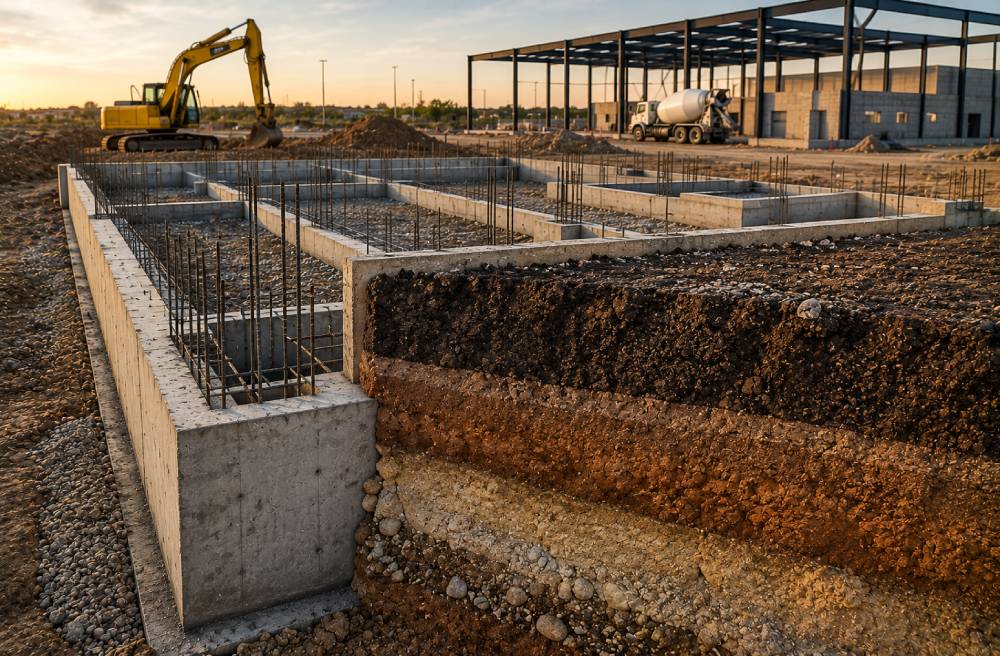
Soil composition across the Permian Basin varies widely. Clay-heavy soils, common in parts of West Texas, can expand when wet and shrink during dry periods. Sandy soils drain better but may require wider footings.
Before determining concrete foundation depth, contractors often perform:
- Soil classification testing
- Compaction tests
- Bearing capacity evaluations
If the soil has low bearing capacity, deeper foundations or soil stabilization may be necessary.
3. Frost Line Considerations
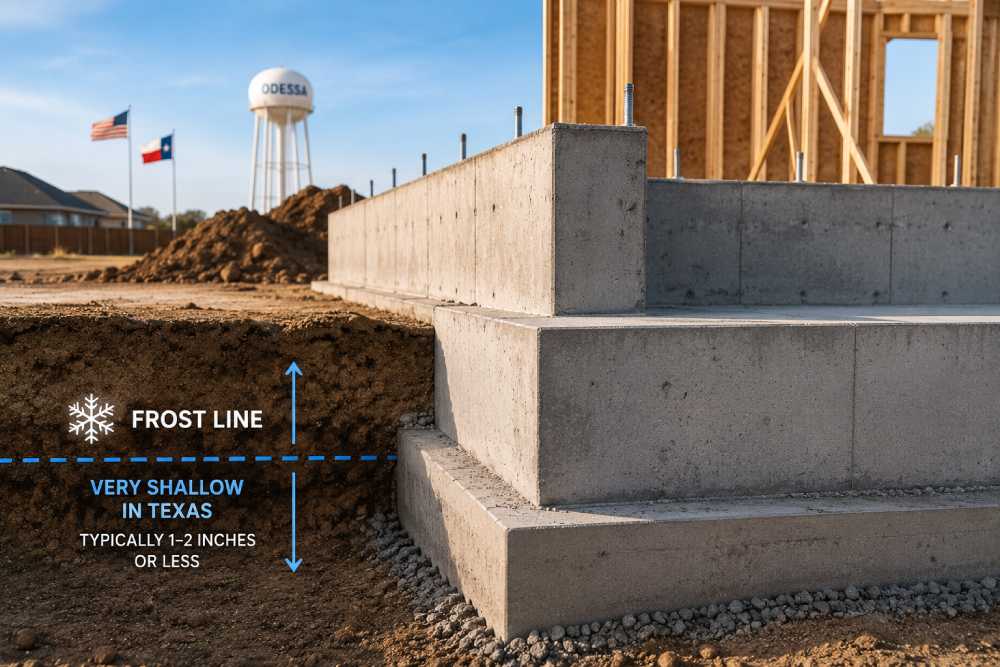
In colder climates, foundations must extend below the frost line to prevent frost heave. While Midland and Odessa experience milder winters than northern states, foundation depth must still meet local building codes for frost protection.
In most parts of West Texas, frost depth requirements are significantly shallower than in colder climates, but they still exist and must be verified before construction begins.
Read More: What Is the Frost Line in a Concrete Foundation?
4. Building Codes and Regulations
Every city and county enforces specific building codes that influence footing depth and structural reinforcement. These codes are designed to ensure safety and long-term performance.
In Odessa and Midland, foundation requirements typically follow International Residential Code (IRC) and International Building Code (IBC) standards, along with local amendments. Failing to comply can result in failed inspections or costly modifications.
Standard Concrete Foundation Depth Guidelines
Although exact requirements depend on engineering specifications, here are general depth ranges you might expect.
Typical Residential Foundations
For standard residential construction in West Texas:
- Slab-on-grade foundations: 12 to 24 inches (including thickened edge beams)
- Pier and beam foundations: 18 to 36 inches or deeper
- Footing depth below grade: Often at least 12 inches
Slab-on-grade foundations are common in the Permian Basin due to soil conditions and regional construction practices.
Commercial Foundation Depth
Commercial buildings typically require:
- Deeper continuous footings
- Reinforced grade beams
- Structural piers where necessary
Footing depth can range from 24 inches to 48 inches or more, depending on load calculations.
Industrial and Heavy Equipment Foundations
Industrial projects often demand:
- Deep reinforced footings
- High-strength concrete
- Specialized structural foundation systems
For equipment pads or oilfield facilities, concrete foundation depth may be engineered specifically to handle vibration and concentrated loads.
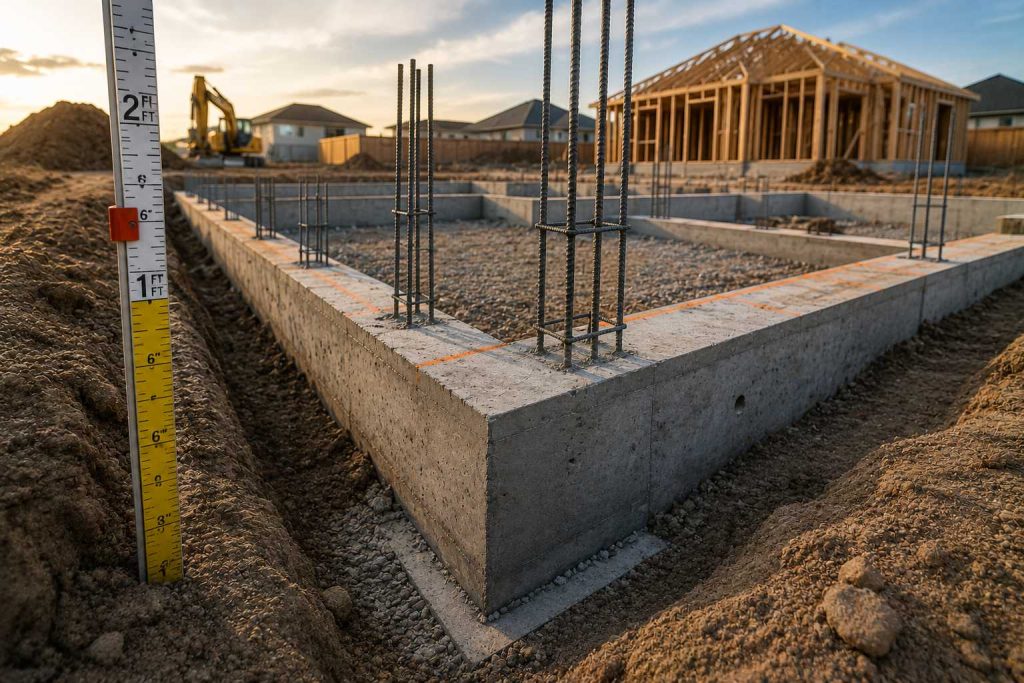
Understanding Footing Depth vs. Foundation Depth
Many property owners use these terms interchangeably, but they are slightly different.
| Term | Definition | Why It Matters |
|---|---|---|
| Foundation Depth | Total vertical distance from ground surface to bottom of foundation | Impacts stability and compliance |
| Footing Depth | Depth of the widened base that supports foundation walls | Distributes structural loads |
Footings are typically wider than foundation walls and are critical for spreading loads evenly. If the footing depth is inadequate, the entire structure can suffer settlement problems.
How Soil in West Texas Impacts Structural Foundation Design
The Permian Basin presents unique soil challenges. Much of the region contains expansive clay soils, which move significantly with moisture changes.
Expansive Clay Risks
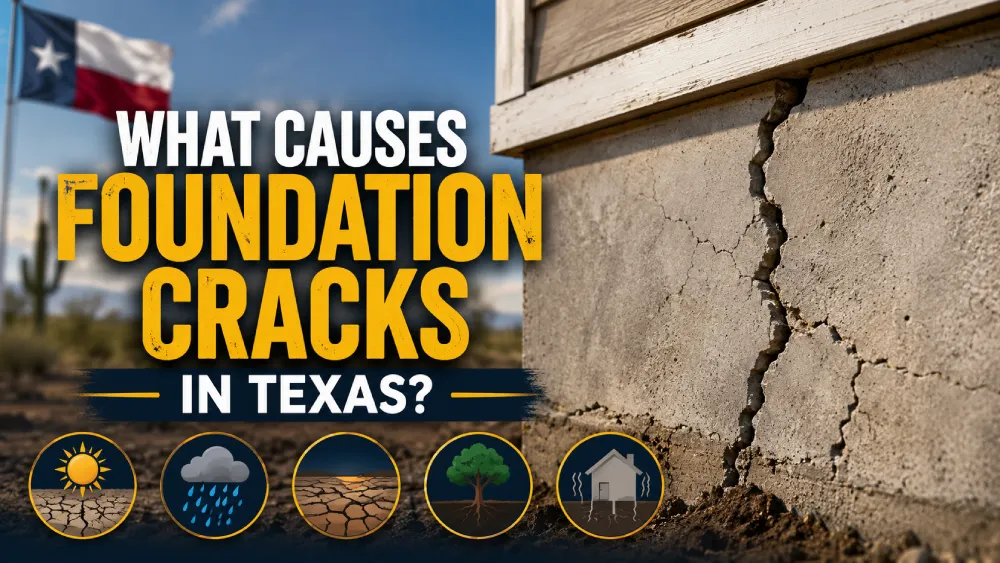
Expansive soils can:
- Swell after heavy rains
- Shrink during drought conditions
- Cause slab cracking
- Lead to uneven settlement
To address this, contractors often design deeper or reinforced structural foundation systems that resist soil movement.
Mitigation Strategies
In areas with problematic soil, your foundation plan may include:
- Post-tension slab systems
- Pier and beam systems
- Moisture barriers
- Soil stabilization measures
These proactive design choices protect your investment and extend the lifespan of your building.
How Engineers Calculate Proper Foundation Requirements
Concrete foundation depth is not guessed. It is calculated based on engineering principles and site data.
Step 1: Soil Testing
Geotechnical engineers perform soil borings to determine:
- Soil bearing capacity
- Moisture content
- Density
- Composition
These values inform foundation design decisions.
Step 2: Load Calculations
Engineers determine total structural load, which includes:
- Dead loads (weight of building materials)
- Live loads (occupants, furniture, equipment)
- Environmental loads (wind, seismic forces)
In West Texas, wind loads can significantly influence foundation requirements, particularly for commercial structures.
Step 3: Code Compliance
The design must comply with local building codes in Odessa, Midland, and surrounding municipalities. Plans are typically reviewed before permits are issued.
Minimum Concrete Foundation Depth Under Building Codes
While each project is unique, building codes usually establish minimum requirements.
Generally:
- Footings must extend at least 12 inches below undisturbed soil.
- Foundations must bear on stable, compacted ground.
- Reinforcement must meet specified standards.
However, minimum code requirements are not always optimal. In many cases, engineers recommend exceeding minimum footing depth for better long-term stability.
Signs Your Foundation May Not Be Deep Enough
If a foundation was improperly designed or installed, warning signs often appear over time.
Structural Indicators
- Cracks in walls or ceilings
- Doors and windows that stick
- Uneven floors
- Visible slab cracks
These issues can indicate inadequate concrete foundation depth or poor soil preparation.
Drainage and Soil Movement Problems
Improper grading around a structure may worsen foundation movement. Surface water pooling near the building increases soil expansion, which can undermine even properly designed foundations.
Routine inspections and proper drainage planning are essential in the Permian Basin’s climate.
Choosing the Right Foundation for Your Project
Selecting the appropriate structural foundation involves balancing cost, soil conditions, and building type.
Common Foundation Types in the Permian Basin
Slab-on-Grade
- Cost-effective
- Common for residential homes
- Works well with proper reinforcement
Pier and Beam
- Elevates structure above ground
- Easier access to utilities
- Suitable for variable soils
Deep Pier Foundations
- Used in commercial or industrial projects
- Transfers loads deeper into stable soil layers
- Handles heavier structural demands
Each option requires careful evaluation of foundation requirements and expected building loads.
Cost Considerations of Deeper Foundations
Some property owners hesitate when they hear that deeper footings increase costs. While it is true that excavation and materials add expense, inadequate foundation depth can lead to far higher repair costs in the future.
Factors That Impact Price
- Excavation depth
- Soil stabilization needs
- Reinforcement steel requirements
- Concrete strength specifications
- Engineering design
Investing in proper concrete foundation depth from the beginning protects your structure and reduces the risk of expensive structural remediation.
Frequently Asked Questions (FAQ)
How deep should a concrete foundation be for a house in West Texas?
Most homes in Odessa and Midland use slab-on-grade foundations with thickened edges that extend 12 to 24 inches below grade. Exact depth depends on soil conditions and engineering designs.
What is the minimum footing depth required by building codes?
Minimum footing depth typically starts at 12 inches below undisturbed soil, but local building codes and structural loads may require deeper installations.
Does clay soil require a deeper foundation?
Clay soil does not always require greater depth, but it often requires reinforced or specially engineered structural foundation systems to handle expansion and contraction.
Can foundation depth affect resale value?
Yes. A properly designed and documented foundation that meets building codes adds confidence for buyers, inspectors, and lenders.
Do commercial buildings require deeper foundations than residential homes?
In most cases, yes. Commercial projects usually demand greater footing depth and reinforcement due to increased loads and occupancy requirements.
Get a Free Concrete Project Estimate
Determining the correct concrete foundation depth for your project is not something you should guess or leave to chance. Whether you are building a new home, expanding a commercial property, or constructing an industrial facility, proper foundation requirements are critical to long-term success.
Permian Basin Concrete provides residential, commercial, and industrial concrete services throughout Odessa, Midland, and the surrounding Permian Basin region. Our team understands local soil conditions, regional building codes, and the structural demands specific to West Texas projects.
If you are planning a concrete foundation or need expert guidance on footing depth and foundation design, contact Permian Basin Concrete today at info@permianbasinconcrete.com to schedule a free project consultation and estimate. We are ready to help you build on a solid foundation.