A properly designed commercial concrete foundation is the backbone of any successful commercial construction project. Whether you are building a retail space in Odessa, a warehouse in Midland, or an industrial facility anywhere in the Permian Basin, the foundation determines how well the entire structure performs over time. Poor foundation design can lead to cracking, settlement, water intrusion, and costly structural repairs.
In West Texas, foundation performance is even more critical due to expansive soils, temperature swings, and heavy industrial loads. Business owners, developers, and property managers must understand how commercial foundations are engineered, reinforced, and constructed to ensure long-term durability. This guide explains the essential design considerations and requirements involved in commercial concrete foundation systems, so you can make informed decisions before starting your next project.
Understanding the Role of a Commercial Concrete Foundation
A commercial concrete foundation distributes structural loads safely into the ground while providing a stable base for the building above. Unlike light residential slabs, commercial foundations must accommodate heavier loads, stricter building codes, and more complex structural engineering requirements.
Load Distribution and Structural Stability
Every building exerts vertical and lateral forces on its foundation. These forces include:
- Dead loads (the weight of the structure itself)
- Live loads (people, inventory, equipment, vehicles)
- Environmental loads (wind and seismic forces)
Commercial construction projects in West Texas often involve steel-framed buildings, masonry walls, or tilt-wall panels, all of which require careful load calculations. Structural engineering professionals design foundations to prevent excessive settlement or differential movement, which can compromise the building envelope and internal systems.
Long-Term Performance and Durability
A well-built building foundation must perform for decades with minimal maintenance. Commercial properties cannot afford downtime due to foundation repairs. Reinforced concrete systems are commonly used because they resist compression, accommodate tensile stresses, and offer excellent durability when properly installed and cured.
Types of Commercial Concrete Foundations
Not all commercial projects use the same foundation type. Soil conditions, building use, and structural loads determine the most appropriate solution.
1. Slab-on-Grade Foundations
Slab-on-grade foundations are common in:
- Retail buildings
- Office spaces
- Warehouses
- Light industrial facilities
This type of foundation consists of a thickened reinforced concrete slab poured directly over prepared subgrade. In the Permian Basin, slab-on-grade systems are often paired with soil stabilization techniques to mitigate expansive clay movement.
Advantages include cost-effectiveness, faster installation, and simplified construction processes. However, proper soil preparation and reinforcement are critical to avoid cracking and uneven settlement.
2. Pier and Beam Foundations
Pier-supported foundations use drilled concrete piers or piles that transfer structural loads deeper into stable soil layers. This method is often used when surface soils are unstable or expansive.
In parts of Odessa and Midland, where clay soils can expand and contract significantly with moisture changes, drilled piers provide additional long-term stability. This system reduces the risk of foundation heaving and movement.
3. Mat (Raft) Foundations
Mat foundations consist of a thick reinforced concrete slab supporting multiple columns and load-bearing walls. These are common in larger commercial construction projects, including:
- Multi-story buildings
- Industrial processing facilities
- Equipment-intensive structures
Mat foundations distribute loads evenly and are suitable where soil bearing capacity is limited.
4. Deep Foundations and Pile Systems
For heavy industrial or oilfield facilities across West Texas, deep foundations may be required. These include driven piles, caissons, or drilled shafts designed to transfer loads deep into competent strata.
Industrial projects handling heavy equipment or large tanks often rely on deep foundation systems to prevent settlement under concentrated loads.
Key Design Considerations for a Commercial Concrete Foundation
Designing a commercial foundation involves more than pouring reinforced concrete. Several critical factors influence performance and code compliance.
Soil Conditions in the Permian Basin
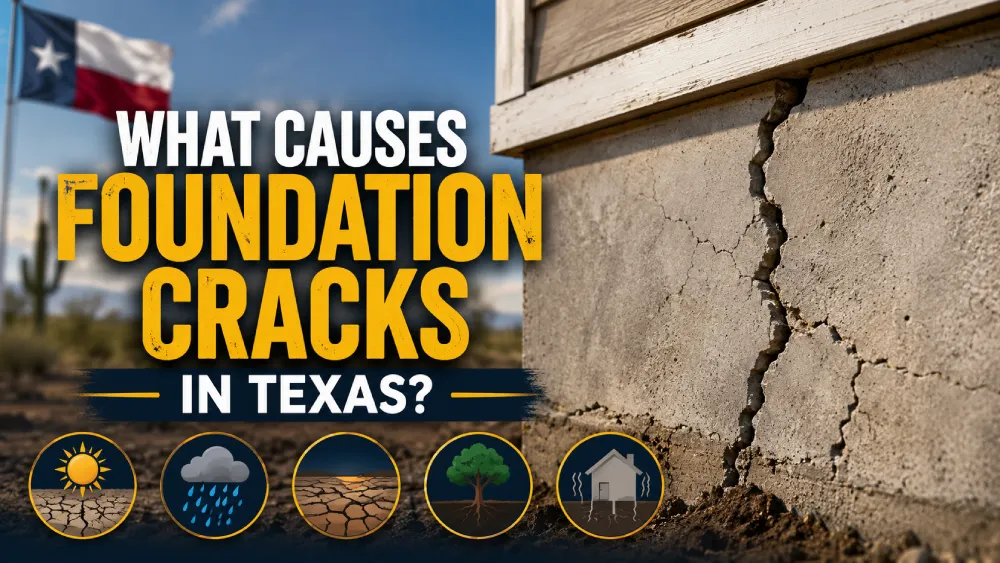
The Permian Basin region is known for expansive clay soils that shrink during dry periods and swell when moisture increases. Without proper mitigation, this movement can cause:
- Slab cracking
- Uneven floors
- Structural misalignment
- Door and window frame distortion
Geotechnical testing is essential before commercial construction begins. Soil reports guide structural engineering teams in selecting the right foundation type, depth, and reinforcement design.
Load Requirements and Building Use
Different buildings have different structural demands. A small professional office has far different load requirements than an equipment storage warehouse or oilfield service yard.
Design considerations include:
- Expected occupancy loads
- Storage and racking systems
- Machinery weight
- Vehicle traffic (forklifts, delivery trucks)
- Wind uplift forces
Accurate load calculations ensure the building foundation meets both safety and longevity standards.
Reinforced Concrete Specifications
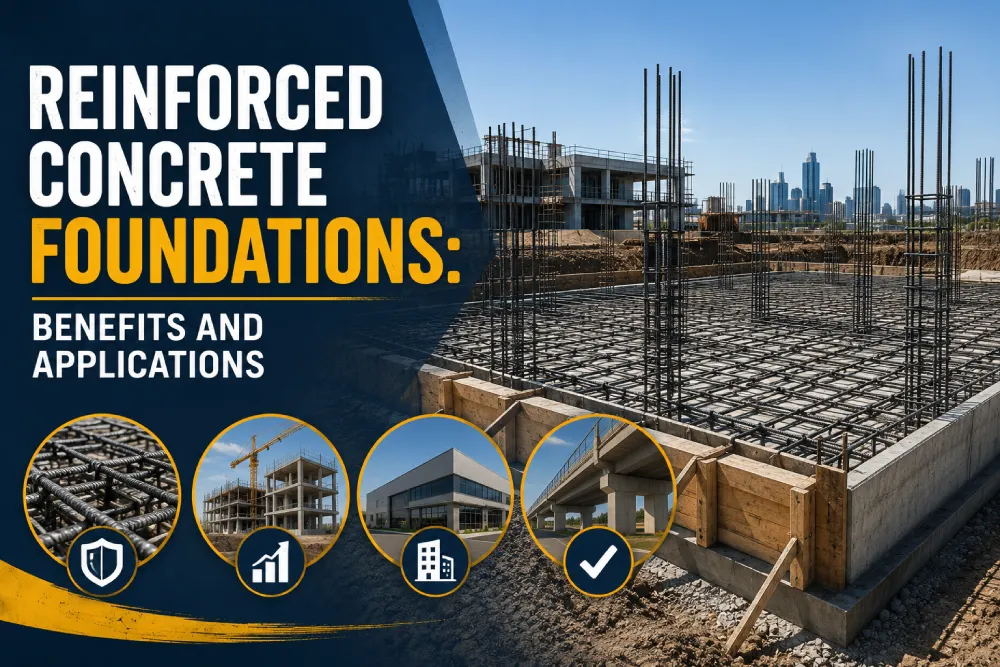
Reinforced concrete combines compressive strength with steel reinforcement to resist tensile forces. Commercial foundations often include:
- Rebar grids
- Post-tension cables
- Thickened slab edges
- Grade beams
The reinforcement layout must comply with engineering drawings and local building codes. Improper spacing, insufficient coverage, or poor placement can weaken the entire structural system.
Moisture Control and Drainage
West Texas may be dry, but heavy rains can still impact foundation stability. Proper site grading and drainage planning prevent water from pooling around the foundation.
Moisture control strategies include:
- Vapor barriers beneath slabs
- Perimeter drainage systems
- Proper slope away from structures
- Waterproofing where needed
Effective moisture management protects both the concrete and interior finishes.
Structural Engineering & Code Requirements
Commercial construction projects are governed by stricter standards than residential builds. A commercial concrete foundation must meet:
- International Building Code (IBC) requirements
- Local city regulations in Odessa and Midland
- Fire resistance ratings
- Load-bearing and safety standards
Structural engineering plans provide detailed specifications for:
- Footing dimensions
- Rebar sizes and spacing
- Concrete compressive strength (PSI rating)
- Anchor bolt placement
- Expansion joints
Inspections at various stages ensure compliance before vertical construction begins.
Concrete Strength Requirements
Commercial foundations typically require higher compressive strengths than residential slabs. Depending on use, PSI ratings may range from 3,000 to 5,000+ PSI. Industrial floors subject to heavy loads may require specialty mixes and surface hardeners.
High-quality concrete batching, placement, and curing directly impact final performance.
The Commercial Foundation Construction Process
Understanding the construction sequence helps property owners and developers plan timelines and budgets.
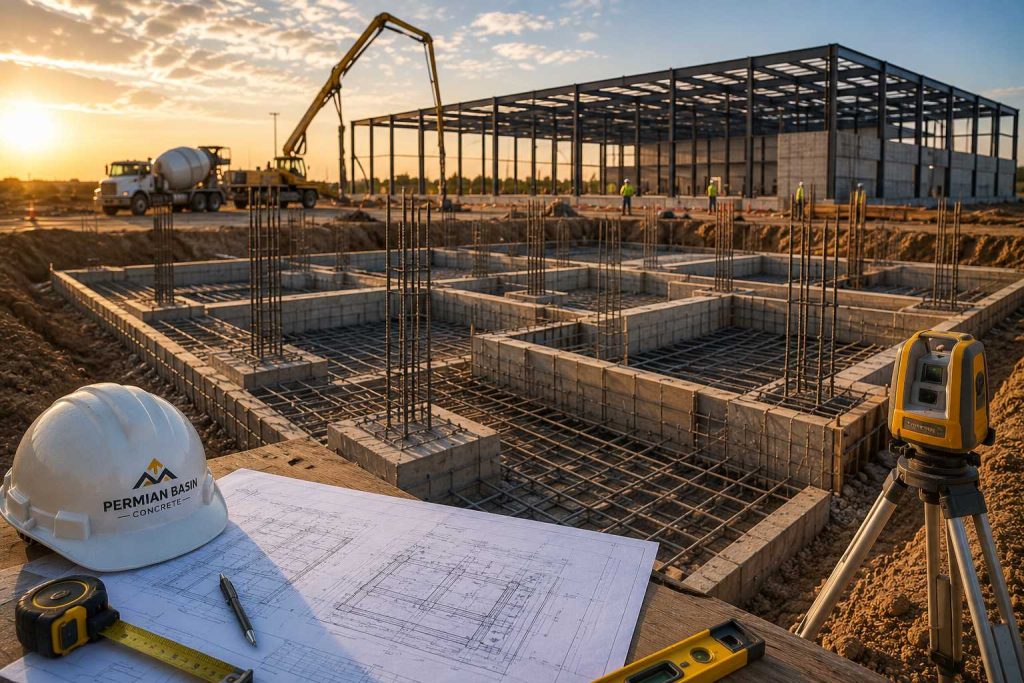
Step 1: Site Preparation
The construction team clears debris, grades the site, and compacts the soil. In areas with unstable soils, stabilization methods such as lime treatment may be implemented.
Compaction testing ensures the subgrade meets engineering specifications.
Step 2: Formwork and Reinforcement Installation
Form boards define slab edges and footings. Crews then install rebar grids, post-tension cables, and embedments according to structural engineering plans.
Accurate placement at this stage is critical. Even minor deviations can affect structural integrity.
Step 3: Concrete Placement and Finishing
Concrete is placed, spread, and consolidated to eliminate voids. Surface finishing depends on building use and may include troweling, broom finishes, or specialized coatings.
Proper curing techniques reduce shrinkage cracking and improve long-term strength.
Step 4: Inspection and Approval
Local inspectors review reinforcement, anchor bolts, and overall compliance before and after the pour. Approval is required before framing or steel erection can begin.
Comparing Foundation Types for Commercial Projects
| Foundation Type | Best For | Pros | Considerations |
|---|---|---|---|
| Slab-on-Grade | Retail, offices, warehouses | Cost-effective, faster build | Requires excellent soil prep |
| Pier and Beam | Expansive soil areas | Greater stability, reduced movement | Higher upfront cost |
| Mat Foundation | Large, heavy structures | Even load distribution | More concrete and steel required |
| Deep Pile Systems | Industrial and oilfield facilities | Handles extreme loads | Complex engineering |
Each project in the Permian Basin requires evaluation based on soil, structural demands, and budget constraints.
Common Challenges in West Texas Commercial Construction
Building in Odessa, Midland, and surrounding areas presents unique challenges that influence foundation performance.
Expansive Soils
Soil movement remains one of the biggest threats to building foundation integrity in the region. Professional soil analysis and proper reinforcement significantly reduce risks.
Temperature Extremes
West Texas heat accelerates evaporation during concrete placement. Without proper curing methods, rapid moisture loss can weaken the slab and cause surface cracking.
Industrial Equipment Loads
Oilfield and industrial facilities often include heavy tanks, compressors, or service vehicles. These concentrated loads require specialized design, thicker slabs, and engineered reinforcement systems.
Frequently Asked Questions (FAQ)
How thick should a commercial concrete foundation be?
Thickness varies depending on building size and use. Slab-on-grade commercial floors commonly range from 4 to 8 inches thick, while industrial applications may require thicker reinforced concrete sections.
Do I need soil testing before commercial construction?
Yes. Geotechnical testing identifies soil composition, bearing capacity, and expansion potential. This information is essential for structural engineering design and long-term performance.
How long does it take to install a commercial foundation?
Project timelines depend on size and complexity. Smaller foundations may take one to two weeks, while large commercial construction projects can take several weeks including preparation, reinforcement, pouring, and inspections.
What causes cracks in commercial foundations?
Common causes include soil movement, shrinkage during curing, inadequate reinforcement, and improper drainage. Cracks do not always indicate structural failure, but they should be evaluated by professionals.
How do I choose the right foundation type?
The right solution depends on soil conditions, load requirements, and building design. Consulting with experienced concrete contractors and structural engineers ensures the foundation matches the project’s demands.
Get a Free Concrete Project Estimate
Choosing the right commercial concrete foundation is one of the most important decisions you will make in any commercial construction project. Proper design, reinforced concrete installation, and adherence to structural engineering specifications ensure your building foundation performs reliably for decades.
Permian Basin Concrete provides residential, commercial, and industrial concrete services throughout Odessa, Midland, and the surrounding Permian Basin region. Whether you are developing a retail center, warehouse, industrial facility, or office building in West Texas, our team has the experience and equipment to handle projects of all sizes.
To discuss your project and receive a free consultation and estimate, contact Permian Basin Concrete today at info@permianbasinconcrete.com or visit Permian Basin Concrete. Our team is ready to help you build on a solid foundation.