Your foundation is the most important structural component of your home or building. When it begins to fail, the entire structure is at risk. Understanding the early warning signs of concrete foundation repair needs can prevent costly structural damage and safety concerns down the road.
In West Texas, where expansive soils, shifting ground, and temperature extremes are common, foundation movement is not unusual. Property owners in Odessa, Midland, and across the Permian Basin frequently encounter foundation cracks, foundation settlement, and other structural issues that require professional attention. Knowing what to look for—and when to schedule a foundation inspection—can save you significant time and money.
Below, we’ll walk through the most common signs your concrete foundation may need repair, what causes these problems, and what steps to take next.
Why Concrete Foundations Fail in West Texas
Concrete foundations are designed to be strong and long-lasting, but they are not immune to environmental stress and soil movement. In the Permian Basin, several factors contribute to foundation problems.
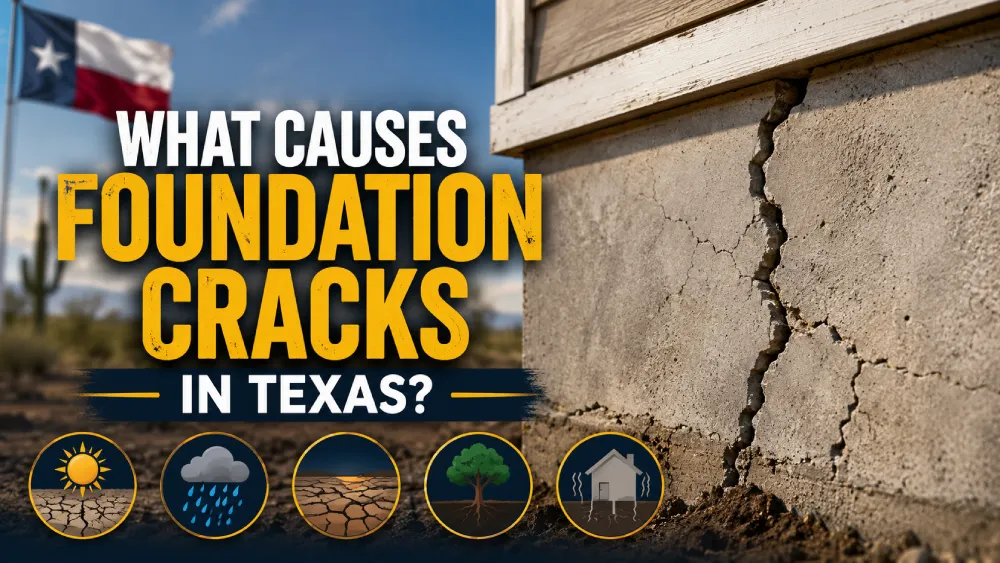
Expansive Clay Soils
Many areas in Midland and Odessa sit on clay-heavy soils. Clay expands when it absorbs moisture and shrinks when it dries out. This repeated cycle creates constant pressure changes beneath your foundation.
Over time, this movement can lead to:
- Foundation settlement
- Uneven slab movement
- Cracks in walls and floors
- Structural issues in load-bearing areas
These soil conditions make consistent foundation inspection especially important for property owners in West Texas.
Extreme Temperature Changes
The Permian Basin experiences intense heat, dry spells, and occasional freezes. Rapid temperature fluctuations cause materials to expand and contract. Concrete can handle some movement, but repeated stress increases the risk of cracking and structural fatigue.
Poor Drainage Around the Foundation
Improper grading, clogged gutters, and pooling water near the slab can accelerate foundation movement. Water saturation weakens supporting soil, leading to uneven support and eventual concrete foundation repair needs.
Visible Foundation Cracks: What’s Normal and What’s Not
Not all cracks indicate major structural issues. However, understanding the difference between cosmetic and structural cracks is essential.
Hairline Cracks
Small, hairline cracks in concrete are common during curing. These typically measure less than 1/8 inch wide and do not widen over time. While they should be monitored, they often do not require immediate concrete foundation repair.
Still, regular foundation inspection helps ensure minor cracks do not evolve into larger structural concerns.
Horizontal or Stair-Step Cracks
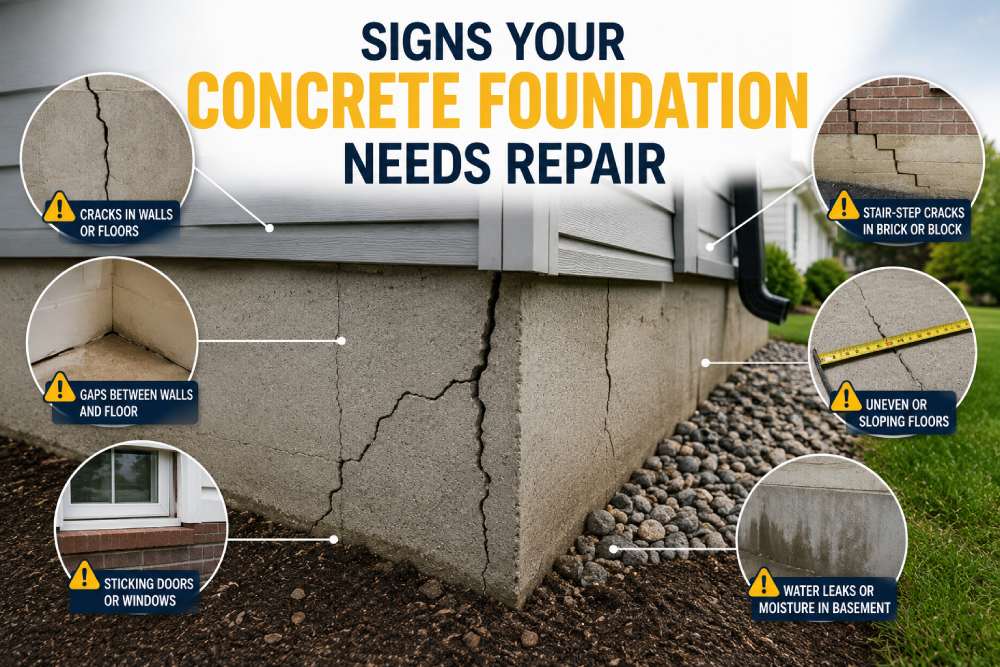
Horizontal cracks or stair-step patterns along masonry walls are more serious. These often indicate lateral pressure from soil movement and may point to deeper structural issues.
If you notice:
- Cracks wider than 1/4 inch
- Growing crack patterns
- Cracks accompanied by wall bowing
It’s time to call a professional for evaluation.
Vertical Cracks that Widen Over Time
Vertical foundation cracks are common, but widening cracks may indicate foundation settlement. If one side of the crack is offset from the other, this suggests uneven movement that requires expert evaluation.
Uneven Floors and Foundation Settlement
One of the most common signs of concrete foundation repair needs is uneven flooring. Foundation settlement occurs when soil beneath the slab shifts or compresses.
Signs of Foundation Settlement
Pay attention to:
- Floors that slope noticeably
- Tiles cracking repeatedly
- Gaps forming between flooring and baseboards
- Doors that swing open or shut on their own
Even small levels of settlement can worsen if left untreated. In commercial and industrial facilities, settlement can affect equipment alignment, safety, and daily operations.
How Settlement Affects Structural Integrity
When a foundation settles unevenly, the weight of the structure is redistributed. This leads to stress on load-bearing walls, beams, and columns. Over time, these structural issues can compromise the building’s stability.
A professional foundation inspection can determine whether settlement is minor or requires structural correction.
Doors and Windows That Stick or Won’t Close
Door and window issues are often mistaken for framing problems, but foundation movement is frequently the root cause.
When a foundation shifts, the framing above it shifts too. This can cause:
- Doors that rub against frames
- Windows that won’t open smoothly
- Gaps between frames and walls
- Cracking around interior door trim
If multiple doors and windows throughout the building show similar problems, foundation settlement may be the underlying issue.
In homes and office buildings across Odessa and Midland, this is one of the earliest warning signs property owners notice.
Cracks in Interior and Exterior Walls
Wall cracks are a visible and concerning symptom of structural issues.
Interior Drywall Cracks
Look for:
- Diagonal cracks from corners of windows and doors
- Cracks along ceiling joints
- Nail pops appearing repeatedly
While some drywall cracking is normal in newer homes, persistent or widening cracks can signal foundation movement.
Exterior Brick or Masonry Cracks
Exterior stair-step cracks in brick or masonry are often directly related to foundation settlement. Because masonry is rigid, even minor shifts in the foundation can cause visible cracking.
Ignoring these signs can lead to more expensive concrete foundation repair later.
Moisture Problems and Water Intrusion
Water and foundations do not mix well. Persistent moisture can weaken soil and erode structural support.
Signs of Foundation-Related Water Issues
- Pooling water near the slab after rain
- Damp or musty odors indoors
- Mold growth along lower walls
- Efflorescence (white powdery residue) on concrete surfaces
In West Texas, sudden storms can quickly saturate soil around a property. Without proper drainage, these conditions may accelerate foundation settlement and structural damage.
Addressing water management early can reduce the need for major structural repairs.
Gaps Around Windows, Doors, or Exterior Walls
When a foundation shifts, gaps may form between structural elements. These separations often appear between:
- Garage frames and walls
- Window frames and brick
- Exterior walls and roofing lines
These gaps are more than cosmetic. They allow moisture intrusion, reduce energy efficiency, and may indicate ongoing structural issues.
If you notice expanding gaps, it’s wise to schedule a professional foundation inspection to evaluate the severity of movement.
When to Schedule a Professional Foundation Inspection
Knowing when to bring in professionals can make the difference between minor repairs and major reconstruction.
Consider a Foundation Inspection If:
- You notice multiple cracks developing over time.
- Floors feel uneven or unstable.
- Doors and windows stick throughout the building.
- Exterior brick shows stair-step cracking.
- You plan to buy, sell, or renovate a property.
For commercial and industrial property owners in the Permian Basin, inspections are especially important before heavy equipment installation or major expansions.
What a Professional Evaluation Typically Includes
A qualified concrete contractor will:
- Assess visible foundation cracks
- Measure elevation differences in the slab
- Identify signs of foundation settlement
- Evaluate drainage conditions
- Recommend appropriate repair options
This thorough process ensures that you receive practical solutions tailored to your building’s specific conditions.
Common Concrete Foundation Repair Solutions
| Problem | Potential Solution | Purpose |
|---|---|---|
| Minor cracks | Crack sealing or epoxy injection | Prevent moisture intrusion |
| Uneven slabs | Slab leveling or lifting | Restore level surface |
| Significant settlement | Pier systems | Stabilize foundation |
| Drainage problems | Grading and drainage improvements | Reduce soil movement |
The right solution depends on soil conditions, building load, and severity of movement. An experienced contractor will determine whether stabilization, reinforcement, or full-depth repair is necessary.
Risks of Ignoring Foundation Problems
Delaying concrete foundation repair can lead to escalating costs and safety risks.
Structural Risks
Untreated foundation settlement can compromise:
- Load-bearing walls
- Roof support systems
- Concrete slabs in industrial spaces
- Equipment stability in warehouses
Financial Impact
Early intervention is typically far less expensive than major reconstruction. What begins as a small crack may evolve into significant structural issues requiring extensive work.
Property values may also decline when visible foundation problems are present.
Protecting Your Property in the Permian Basin
Ongoing maintenance reduces foundation stress and extends the lifespan of your structure.
Preventative Steps
- Maintain consistent soil moisture levels around the foundation.
- Ensure proper drainage and grading.
- Repair plumbing leaks immediately.
- Schedule periodic foundation inspection assessments.
In the shifting soils of West Texas, proactive maintenance is one of the most effective ways to prevent serious concrete foundation repair needs.
Frequently Asked Questions
How serious are foundation cracks?
Not all foundation cracks are structural. Hairline cracks can be cosmetic, but wide, horizontal, or expanding cracks often indicate deeper issues. A professional evaluation is the best way to determine severity.
What causes foundation settlement?
Foundation settlement typically results from soil movement, water intrusion, poor compaction, or drainage problems. In the Permian Basin, expansive clay soils are a leading cause.
How do I know if I need concrete foundation repair or just cosmetic fixes?
If cracks widen, floors slope, or doors and windows misalign, structural movement is likely involved. Cosmetic surface issues do not usually affect structural alignment.
How long does foundation repair take?
The timeline depends on severity and repair type. Minor crack repairs may take a day, while structural stabilization can take several days.
Is foundation repair disruptive?
Most modern repair methods are designed to minimize disruption. Professional contractors use specialized equipment to stabilize foundations efficiently and safely.
Get a Free Concrete Project Estimate
If you’ve noticed signs of foundation cracks, foundation settlement, or other structural issues, the team at Permian Basin Concrete is here to help. We provide residential, commercial, and industrial concrete services throughout Odessa, Midland, and the surrounding Permian Basin region.
Our experienced professionals can evaluate your property, perform a thorough foundation inspection, and recommend practical, cost-effective concrete foundation repair solutions tailored to your needs.
Whether you own a home, manage commercial property, oversee industrial facilities, or are planning new development in West Texas, we’re ready to assist.
Contact Permian Basin Concrete today at permianbasinconcrete@gmail.com to schedule your free project consultation and estimate. Protect your investment and ensure your structure remains safe, stable, and built to last.