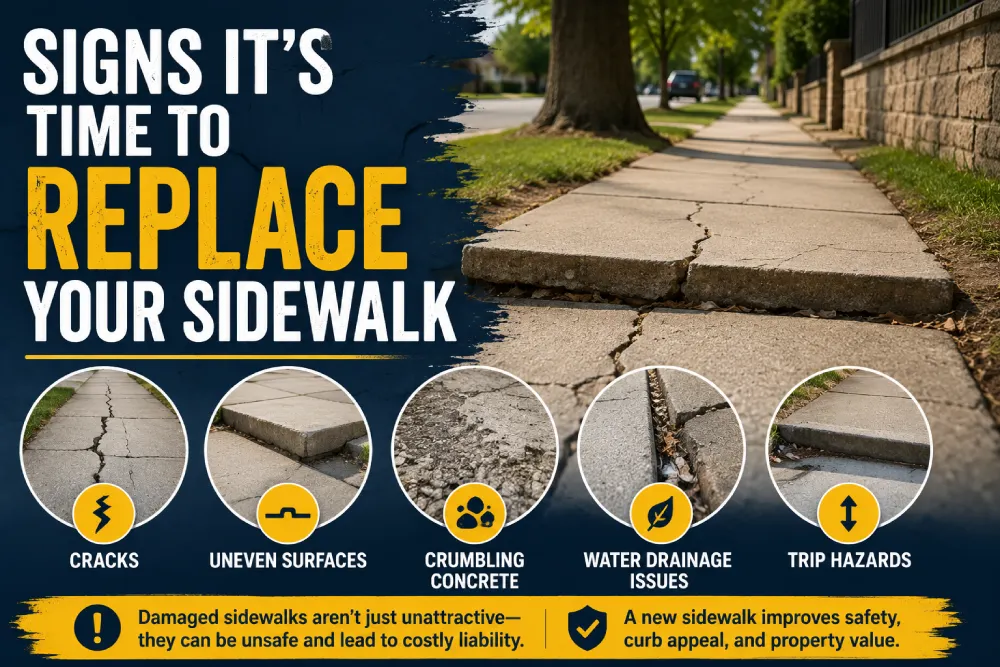
A sidewalk may not seem like a major structure on your property, but it plays a critical role in safety, accessibility, and curb appeal. Over time, exposure to West Texas heat, shifting soil, heavy use, and poor drainage can all lead to sidewalk damage that goes beyond simple cosmetic issues. Knowing when you need sidewalk replacement—instead of a temporary patch—can help you avoid liability risks, costly repairs, and structural concerns down the road.
Whether you’re a homeowner in Odessa, a commercial property manager in Midland, or overseeing an industrial site in the Permian Basin, understanding the warning signs of a failing sidewalk can help you make informed decisions. Below, we’ll break down the most common indicators that it’s time to call an experienced concrete contractor and consider a full replacement.
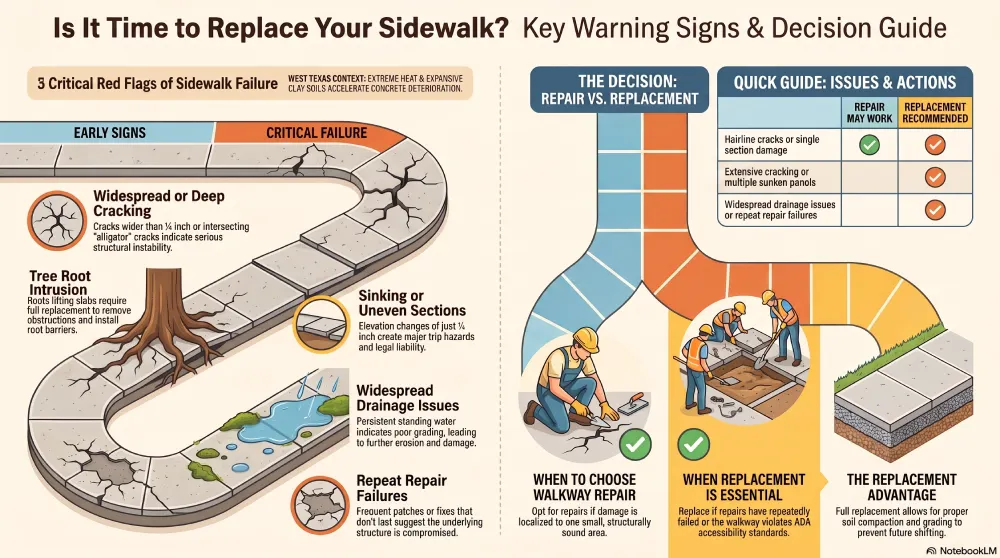
Why Sidewalk Condition Matters More Than You Think
Sidewalks serve more than just a decorative purpose. They provide safe pedestrian access, create clear pathways between buildings and parking areas, and support ADA accessibility standards. When sidewalk damage develops, it can create trip hazards, drainage problems, and potential legal exposure.
In high-traffic environments-such as apartment complexes, retail centers, oilfield facilities, and office parks—damaged walkways can quickly become safety issues. Even residential properties can face problems when a cracked sidewalk causes a fall or reduces curb appeal during a sale.
Addressing walkway repair early can sometimes prevent larger problems. However, there is a point where repairs are no longer effective, and replacement becomes the smarter long-term investment.
1. Widespread Cracking Throughout the Concrete
A single hairline crack does not automatically require sidewalk replacement. Concrete naturally expands and contracts in West Texas’s extreme temperatures, and minor shrinkage cracks can occur over time. The issue arises when cracking becomes widespread or structural.
When Cracks Signal a Bigger Problem
You should take a closer look if you notice:
- Multiple intersecting cracks forming large sections
- Cracks wider than ¼ inch
- Sections of concrete separating or shifting
- Deep cracks that extend through the entire slab
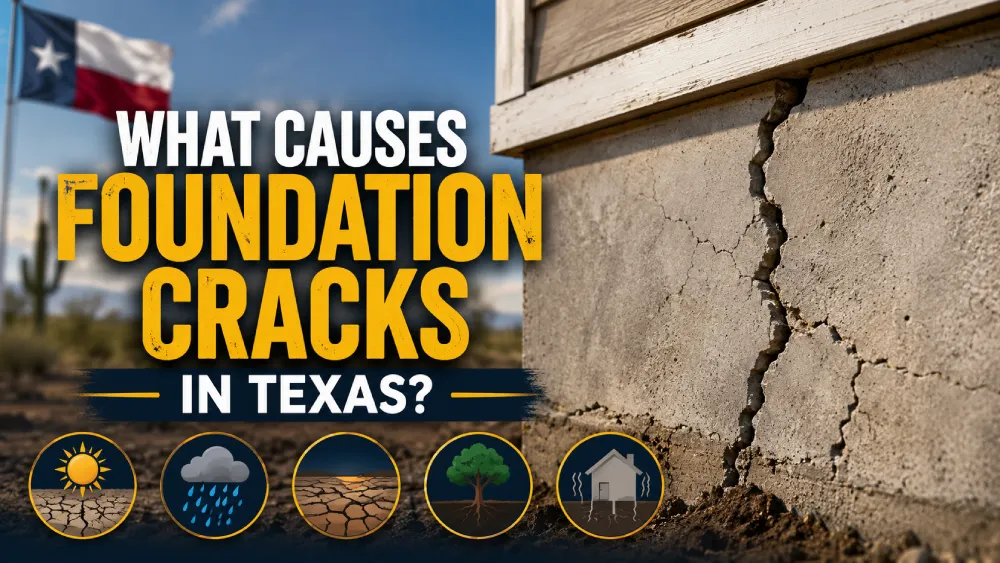
A severely cracked sidewalk often indicates underlying soil movement, erosion, or improper installation. In areas like Midland and Odessa, expansive clay soils can shift significantly with moisture changes. Over time, this movement weakens the slab and leads to recurring structural cracks.
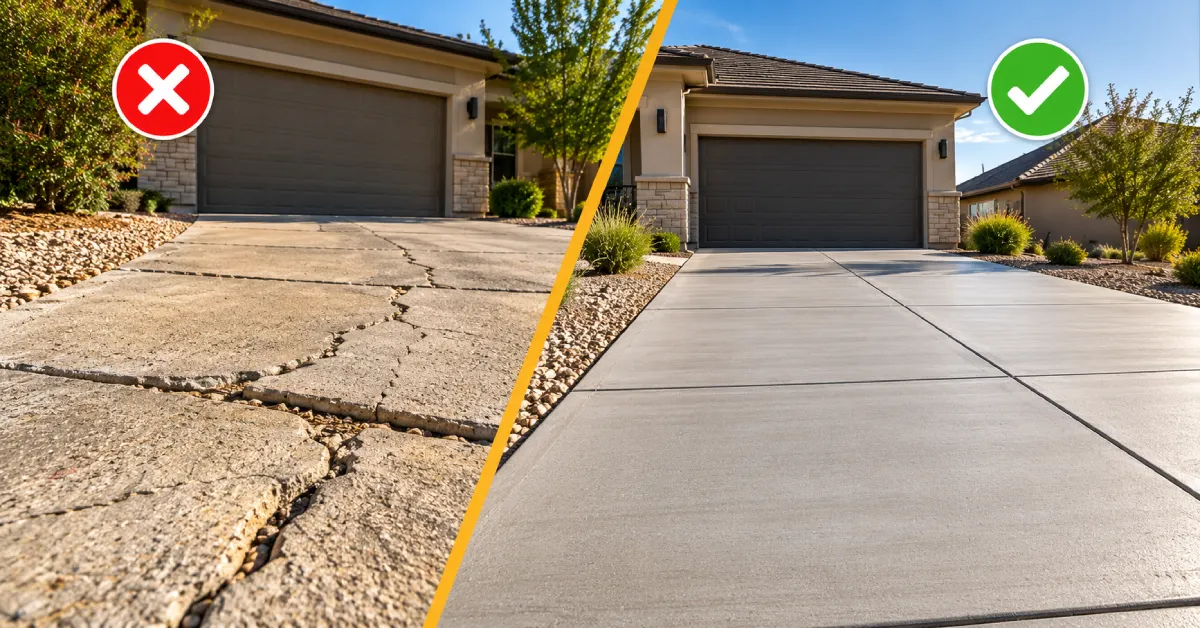
If cracking appears in multiple panels, replacing individual sections may not solve the problem. A qualified concrete contractor can assess the root cause and determine whether full sidewalk replacement is the safest solution.
2. Uneven or Sunken Sidewalk Sections
One of the most common reasons for sidewalk replacement in the Permian Basin is uneven settling. When the ground beneath the concrete erodes or compacts unevenly, the slab can sink or tilt.
Common Causes of Uneven Concrete
- Poor subgrade preparation during original installation
- Soil erosion due to poor drainage
- Plumbing leaks beneath the slab
- Tree root intrusion
- Expansive soil shrink-swell cycles
Even a height difference of half an inch can present a tripping hazard. For commercial properties and public-facing businesses, uneven sidewalks can create liability risks. In certain cases, localized leveling techniques may work, but when multiple sections are affected, full replacement often provides the most reliable and long-lasting result.
3. Pooling Water and Drainage Issues
West Texas may not receive constant rainfall, but when storms hit, drainage becomes critical. If you notice water pooling on your sidewalk after rain or irrigation, it may indicate improper grading or sinking.
Standing water can:
- Accelerate surface deterioration
- Increase freeze-thaw damage during cold snaps
- Create slip hazards
- Erode the underlying soil
Over time, water infiltration weakens the base beneath the slab. Repeated expansion and contraction can cause the concrete to break apart. If drainage issues are widespread across the walkway, repairing individual cracks will likely not fix the underlying slope problem.
A professional concrete contractor will evaluate grading and recommend sidewalk replacement if reshaping and proper slope correction are required.
4. Large Spalls, Chips, and Surface Breakdown
Surface flaking, also known as spalling, occurs when the top layer of concrete begins to peel or chip away. While minor surface damage can sometimes be repaired, extensive breakdown often signals deeper problems within the slab.
Signs Surface Damage Is Beyond Repair
- Large areas of exposed aggregate
- Deep pitting across multiple sections
- Repeated patch failures
- Crumbling edges
In industrial and oilfield environments throughout the Permian Basin, heavy equipment traffic can accelerate surface deterioration. For commercial storefronts or residential properties, extensive spalling also affects visual appeal.
If patches keep failing or the surface continues to deteriorate despite previous walkway repair attempts, it may be time for full sidewalk replacement to restore both safety and appearance.
5. Recurring Repairs That Don’t Last
At some point, constant small repairs become more expensive than starting over. If you’ve called for walkway repair multiple times and the concrete keeps cracking or settling, the underlying issue likely has not been addressed.
Short-Term Repair vs. Long-Term Replacement
| Issue | Repair May Work | Replacement Recommended |
|---|---|---|
| Hairline cracks | ✅ | |
| Single section damage | ✅ | |
| Extensive cracking | ✅ | |
| Multiple sunken panels | ✅ | |
| Widespread drainage issues | ✅ | |
| Repeated repair failures | ✅ |
This comparison highlights an important principle: widespread structural sidewalk damage is rarely resolved with surface-level solutions. Replacement allows the contractor to correct base issues, improve compaction, and install properly reinforced concrete designed for long-term performance.
6. Tree Root Intrusion
Trees add value and shade to properties, but their root systems can wreak havoc on concrete. As roots grow beneath sidewalks, they lift and crack the slab, creating dangerous elevation changes.
Why Root Damage Often Requires Replacement
Tree-related sidewalk damage typically involves vertical displacement, not just cracking. Once the slab has lifted, grinding down the surface may create slope issues or reduce slab thickness below acceptable levels.
A complete sidewalk replacement allows for:
- Removal of root obstructions.
- Installation of a stable subgrade.
- Possible root barriers to prevent future disruption.
Addressing the issue completely helps avoid repeated damage and protects nearby landscaping investments.
7. ADA Compliance and Accessibility Concerns
For business owners and property managers, Americans with Disabilities Act (ADA) accessibility standards must be taken seriously. A cracked sidewalk or uneven walkway can create compliance issues and increase legal exposure.
In commercial and multi-family settings, sidewalks must:
- Maintain stable, slip-resistant surfaces
- Limit vertical height changes
- Provide smooth transitions at joints
- Maintain proper slope
If your existing walkway does not meet accessibility standards, sidewalk replacement may be the most effective way to bring the property up to code while improving appearance and functionality.
The Sidewalk Replacement Process: What to Expect
Understanding the replacement process can help property owners plan timelines and budgets effectively. A reputable concrete contractor will walk you through each stage of the project.
Step 1: Site Evaluation
The contractor inspects the existing sidewalk, evaluates soil conditions, checks drainage, and determines whether replacement is necessary.
Step 2: Removal of Damaged Concrete
The existing slab is carefully demolished and removed. Proper disposal ensures a clean site and prevents leftover debris from affecting new installation.
Step 3: Subgrade Preparation
This step is critical in West Texas. The soil is graded, compacted, and stabilized to reduce future shifting. In many cases, base material is added to enhance stability.
Step 4: Forming and Reinforcement
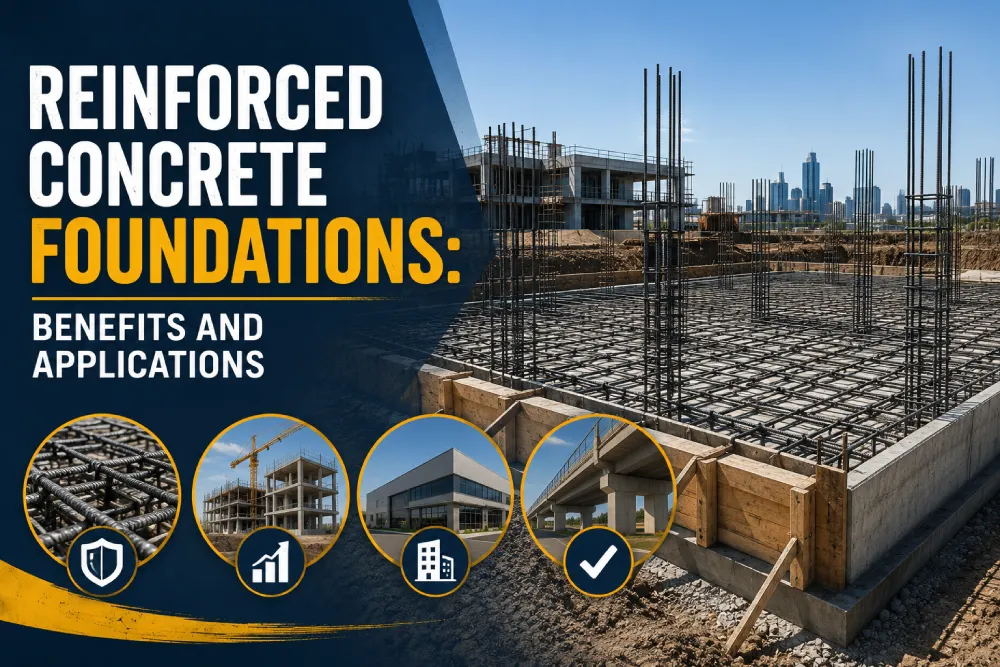
Forms are set to define dimensions and slopes. Reinforcement such as rebar or wire mesh may be installed to improve strength and crack resistance.
Step 5: Pouring and Finishing
New concrete is poured and finished to achieve a smooth, slip-resistant surface. Control joints are added to manage natural expansion and contraction.
Step 6: Curing and Final Inspection
Proper curing strengthens the concrete and reduces premature cracking. After curing, the contractor performs a final walkthrough to ensure quality standards are met.
Repair vs. Sidewalk Replacement: Making the Right Decision
Property owners often ask whether they should repair or replace damaged concrete. The answer depends on scope, structural integrity, and long-term goals.
Choose walkway repair when:
- Damage is localized to one small area.
- The slab remains structurally sound.
- There are no major drainage concerns.
Choose sidewalk replacement when:
- Damage appears in multiple sections.
- The underlying soil is unstable.
- Repairs have repeatedly failed.
- Safety hazards are present.
An experienced concrete contractor can provide an honest assessment and recommend the most cost-effective long-term approach.
Sidewalk Replacement in Odessa, Midland, and the Permian Basin
Concrete in West Texas faces unique environmental stressors. High summer temperatures, expansive soils, occasional heavy rainfall, and industrial traffic all contribute to sidewalk damage over time.
Property owners throughout Odessa, Midland, and the greater Permian Basin region often benefit from replacement designed specifically for these conditions. Proper grading, reinforcement, joint placement, and soil preparation are critical to ensuring the new sidewalk performs well for years to come.
Working with a contractor familiar with local soil behavior and climate patterns can significantly improve the lifespan of your investment.
Frequently Asked Questions (FAQ)
How long does sidewalk replacement take?
Most residential sidewalk replacement projects can be completed within one to three days, depending on size and site conditions. Larger commercial or industrial walkways may take longer due to demolition complexity and reinforcement requirements.
How long before the new sidewalk can be used?
Light foot traffic is typically allowed after 24 to 48 hours. However, full curing takes about 28 days, during which heavy loads should be avoided unless specified by your contractor.
Is it cheaper to repair a cracked sidewalk instead of replacing it?
Minor cracks and localized damage are usually less expensive to repair. However, if the problem is widespread or structural, replacing the sidewalk often saves money in the long run by eliminating repeat repairs.
What causes sidewalk damage in West Texas?
Common causes include expansive clay soil movement, poor drainage, extreme heat, heavy traffic, and improper installation. A thorough site evaluation can identify the specific factors affecting your property.
Do I need a professional concrete contractor for sidewalk replacement?
Yes. Proper excavation, soil compaction, forming, reinforcement, and finishing are essential for durability and safety. Hiring an experienced concrete contractor ensures the project meets structural and accessibility standards.
Get a Free Concrete Project Estimate
If you’ve noticed significant cracking, uneven sections, pooling water, or ongoing walkway repair issues, it may be time to consider professional sidewalk replacement. Permian Basin Concrete provides residential, commercial, and industrial concrete services throughout Odessa, Midland, and the surrounding Permian Basin region.
Our team understands the soil conditions and environmental demands of West Texas. Whether you manage an apartment complex, own a business, oversee an industrial facility, or need a residential sidewalk replaced, we can evaluate your property and provide a clear, detailed estimate.
Contact Permian Basin Concrete today to schedule your free project consultation. Reach out through our website at https://permianbasinconcrete.com or email info@permianbasinconcrete.com to get started. Let’s ensure your sidewalks are safe, durable, and built to last.