When planning any structure, one of the most important yet overlooked factors is concrete footing depth. Whether you’re building a home in Odessa, expanding a warehouse in Midland, or installing equipment pads at an industrial facility in the Permian Basin, the depth of your foundation footings directly impacts safety, longevity, and code compliance.
Concrete footings transfer the weight of a structure into the soil below. If they are too shallow, the building may crack, settle unevenly, or even fail structurally. If they are deeper than necessary, you may spend more money than required. Understanding proper footing depth below grade helps property owners and project managers make informed decisions before construction begins.
In this guide, we’ll break down residential and commercial footing requirements, explain how soil and climate in West Texas affect foundation design, and answer common questions about concrete footings.
What Are Concrete Footings and Why Do They Matter?
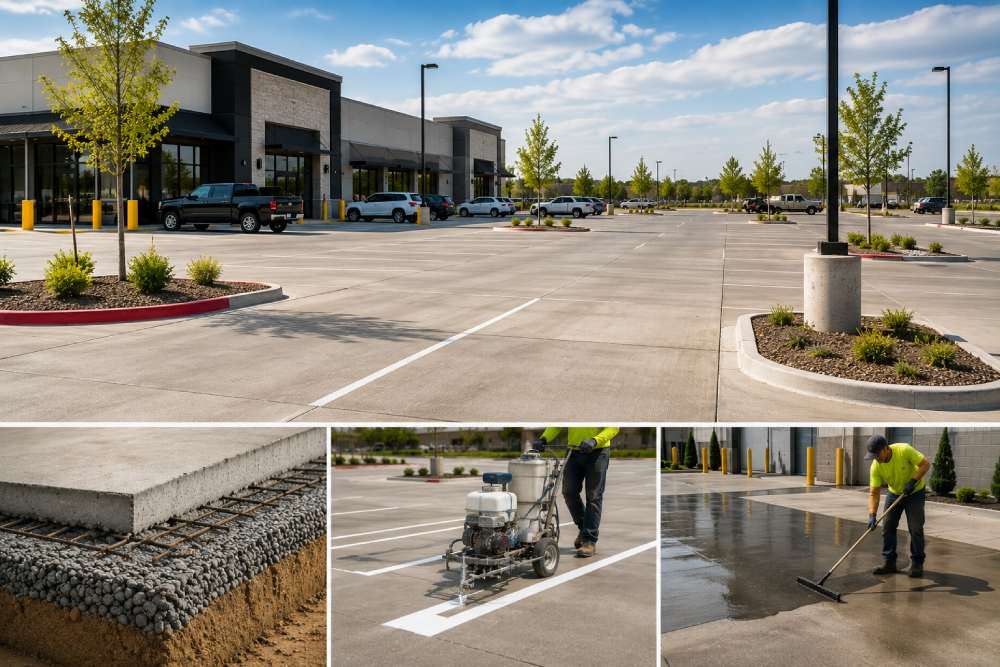
Concrete footings are the lowest part of a foundation system. They are typically wider than the foundation wall or column they support and are poured directly against undisturbed soil. Their primary job is to distribute structural loads over a large surface area so the soil can safely bear the weight.
Without properly designed foundation footings, structures are vulnerable to:
- Differential settlement
- Cracking in walls and floors
- Door and window misalignment
- Slab movement
- Structural instability
In the Permian Basin region, soil conditions vary significantly between job sites. Clay-rich soils, caliche, sandy soil, and disturbed fill each behave differently under load. That is why footing requirements cannot rely on a one-size-fits-all formula.
How Deep Should Concrete Footing Depth Be?
The required concrete footing depth depends on several factors, including building type, soil conditions, local code requirements, and structural loads. In general, footings must extend below the active soil layer that is subject to movement.
Typical Residential Footing Depth
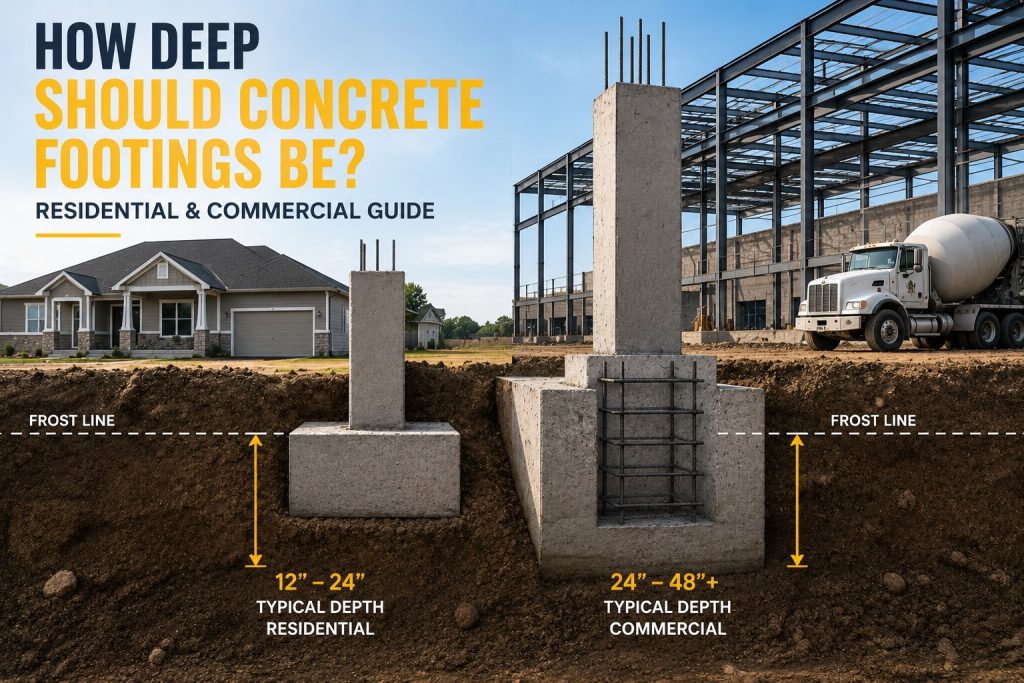
For many residential projects in Odessa and Midland, standard footing depth below grade may range from:
- 12 to 24 inches deep for simple slab-on-grade homes
- Deeper where expansive clay soils are present
- Even deeper if required by engineered foundation design
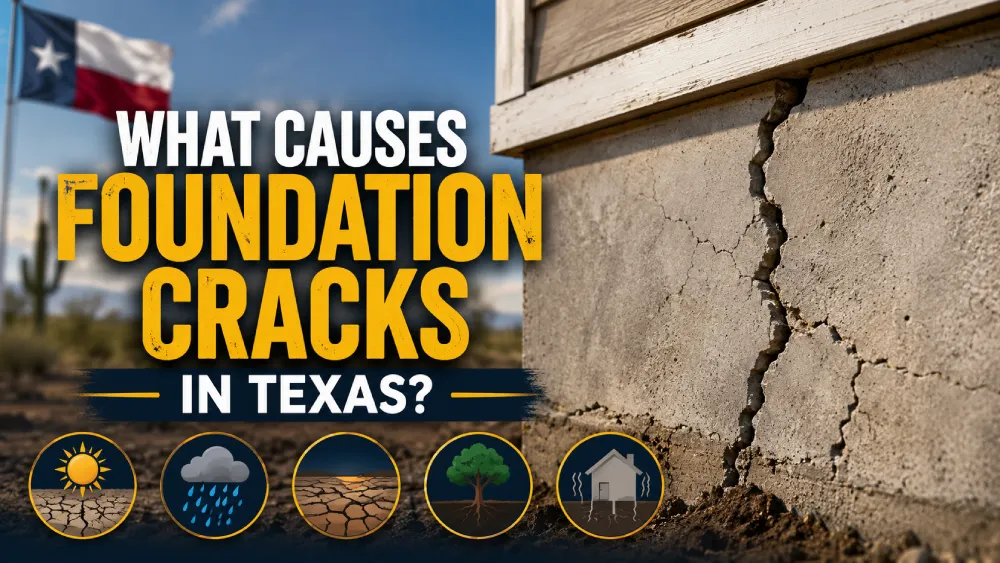
Local building codes often specify minimum depths, but soil conditions frequently dictate actual requirements. In West Texas, expansive clay soils can swell when wet and shrink during dry periods, affecting foundation stability. In these cases, deeper or reinforced foundation footings may be necessary.
Typical Commercial and Industrial Footing Depth
Commercial and industrial concrete footings typically require:
- Greater depth
- Increased width
- Reinforced steel placement
- Engineered load calculations
Heavier loads from steel buildings, tilt-wall panels, oilfield equipment, and storage facilities demand more robust footing systems. It is common for commercial foundation footings to extend 24 inches, 36 inches, or more below grade depending on soil bearing capacity and structural weight.
Ultimately, a geotechnical report and structural engineering plan determine final depth specifications.
Factors That Influence Footing Depth Below Grade
Every construction site in the Permian Basin presents unique challenges. Several key variables affect proper footing depth.
1. Soil Type and Bearing Capacity
Soil bearing capacity measures how much weight the ground can safely support. Different soils behave differently under load.
| Soil Type | Bearing Capacity | Impact on Footing Requirements |
|---|---|---|
| Sandy Soil | Moderate | Standard footing depth may work |
| Clay (Expansive) | Variable | Often requires deeper footings |
| Caliche | Strong but uneven | May require leveling and testing |
| Fill Soil | Unstable | May require over-excavation |
In parts of West Texas, expansive clay is common. These soils expand when saturated and contract when dry. If footings are too shallow, seasonal moisture changes can cause foundation movement.
2. Frost Line Considerations
Although West Texas does not experience the severe freezes seen in northern states, footing depth below grade still must consider frost protection. Footings should extend below the typical frost penetration line to prevent heaving.
In most of the Permian Basin, frost depth is relatively shallow, but local code requirements still apply. Proper depth ensures that freezing temperatures do not compromise foundation footings.
3. Structural Load
Heavier structures require deeper and wider concrete footings. For example:
- A single-story home requires less support than a two-story structure
- Warehouse columns carry concentrated loads
- Industrial equipment pads may require reinforced deep footings
Engineers calculate these loads and determine proper dimensions to prevent overstressing the soil.
4. Moisture and Drainage
Water is one of the biggest threats to foundations. Poor drainage can weaken supporting soil and contribute to movement.
Footings should:
- Be placed on firm, undisturbed soil
- Include proper grading around the structure
- Utilize moisture control measures where necessary
Proper site preparation is just as important as the concrete footing depth itself.
Residential Foundation Footings in West Texas
Most homes in Odessa, Midland, and surrounding communities are built using slab-on-grade foundations. However, even slab foundations rely on properly designed concrete footings.
Slab-On-Grade with Thickened Edge
Many residential slabs use a thickened edge footing built into the perimeter of the slab. This design:
- Reinforces load-bearing walls
- Increases stiffness
- Provides structural continuity
Typical thickened edge depths may range from 12 to 18 inches or more, depending on engineered plans.
Pier and Beam Foundations
In some residential applications, pier footings extend deeper below grade to reach stable soil layers. These foundations help manage movement in expansive soils and provide improved flexibility.
Local Code and Engineering Requirements
Each municipality may have specific footing requirements. In Midland and Odessa, foundation plans for new homes often require engineering approval before permits are issued. Working with a qualified contractor ensures your concrete footings meet:
- Local building codes
- Load calculations
- Soil report recommendations
Skipping these steps can result in costly repairs later.
Commercial & Industrial Footing Requirements
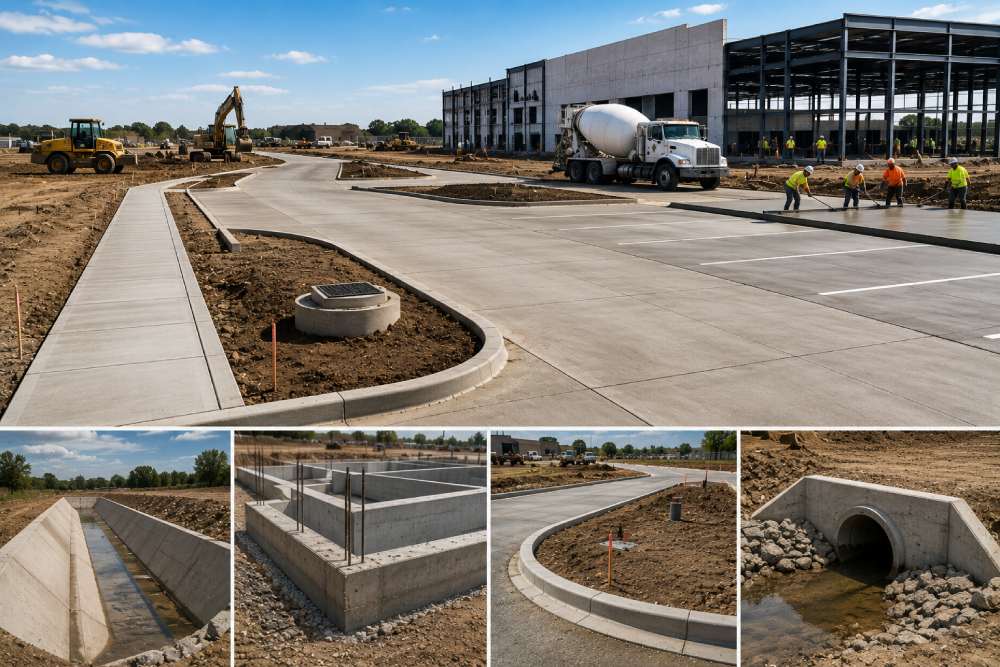
Commercial and industrial projects in the Permian Basin demand higher performance from foundation footings due to heavier loads and stricter building requirements.
Spread Footings for Steel Buildings
Spread footings are commonly used for steel-frame buildings. These footings distribute column loads across a wide area and are often significantly deeper than residential footings.
Depth is determined by:
- Column load calculations
- Soil bearing capacity
- Engineering design
- Equipment loads (if applicable)
Improper concrete footing depth can lead to uneven settlement and structural stress in steel buildings.
Continuous Footings for Load-Bearing Walls
Continuous foundation footings support load-bearing masonry or concrete walls. These footings must be uniform in depth and properly reinforced.
Industrial and oilfield facilities often require continuous footings with engineered reinforcement to handle heavy operations and long-term wear.
Equipment Pads and Specialty Foundations
Specialized industrial facilities in West Texas may require:
- Deeper isolated footings
- Heavy reinforcement
- Anchoring systems
- Vibration-resistant foundation work
Each of these applications demands precise design and experienced installation.
What Happens If Footings Are Too Shallow?
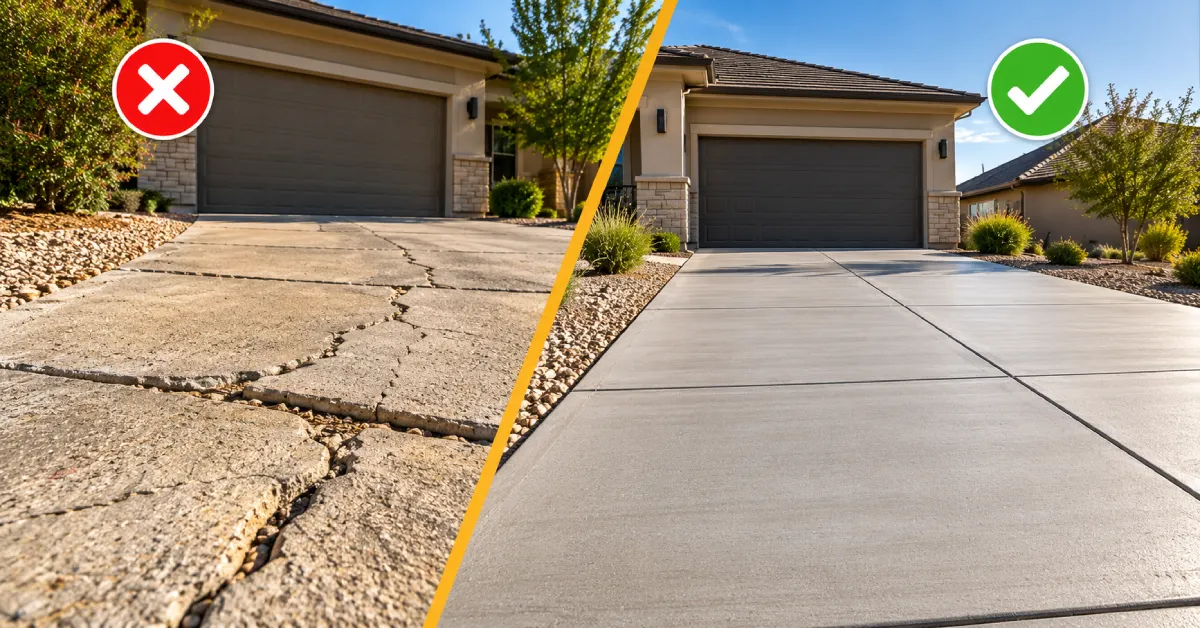
Improper footing depth below grade can cause serious structural and financial consequences. While shallow excavation may reduce upfront costs, it often leads to expensive long-term problems.
Potential issues include:
- Cracks in walls and foundation slabs
- Uneven floors
- Soil erosion beneath the structure
- Structural instability
- Failed inspections or code violations
In the Permian Basin’s fluctuating climate conditions, soil movement is a real concern. Cutting corners on concrete footing depth can compromise the entire project.
How Professionals Determine Proper Concrete Footing Depth
Determining the correct footing depth is a technical process that involves multiple steps.
Step 1: Site Evaluation
Contractors assess:
- Soil conditions
- Drainage patterns
- Existing grading
- Access and construction constraints
Step 2: Soil Testing
A geotechnical report provides data on:
- Soil composition
- Moisture content
- Bearing capacity
- Recommended footing requirements
Step 3: Engineering Design
Structural engineers calculate:
- Dead loads
- Live loads
- Wind loads
- Equipment loads
They then specify exact concrete footings dimensions, including depth below grade.
Step 4: Code Compliance
Before pouring foundation footings, inspections ensure compliance with:
- Local building codes
- Reinforcement specifications
- Excavation requirements
Following this process reduces risk and protects your investment.
Frequently Asked Questions (FAQ)
How deep should residential concrete footings be in West Texas?
In many areas of Odessa and Midland, residential footings may range between 12 and 24 inches deep. However, soil conditions and engineering plans ultimately determine required concrete footing depth.
What is minimum footing depth below grade?
Minimum depth varies by local code, soil type, and frost considerations. While some projects may allow shallow depths, deeper foundation footings are often required in expansive soils.
Do commercial buildings require deeper footings?
Yes. Commercial and industrial structures typically require deeper and wider concrete footings due to increased weight and structural demands.
Can I determine footing depth without a soil test?
While some standard residential projects may follow typical guidelines, a soil test provides valuable insight. For commercial or industrial projects, soil testing is strongly recommended.
What happens during a footing inspection?
Inspectors verify depth, width, reinforcement placement, and soil stability before approving concrete placement. This ensures compliance with footing requirements and structural plans.
Get a Free Concrete Project Estimate
If you are planning a residential, commercial, or industrial construction project in Odessa, Midland, or anywhere in the Permian Basin, proper concrete footing depth is critical to long-term performance.
Permian Basin Concrete provides professional concrete services throughout West Texas, including foundation footings, slabs, structural concrete, and industrial foundation work. Our team understands local soil conditions and works closely with engineers, inspectors, property owners, and developers to ensure every project meets required footing requirements.
Whether you’re building a new home, expanding a commercial property, or constructing an oilfield facility, we can help you plan and execute your foundation correctly from the ground up.
Contact Permian Basin Concrete today for a free project consultation and estimate.
Email: info@permianbasinconcrete.com
We proudly serve Odessa, Midland, and the surrounding Permian Basin region with reliable, high-quality concrete footings and structural foundation services designed to last.