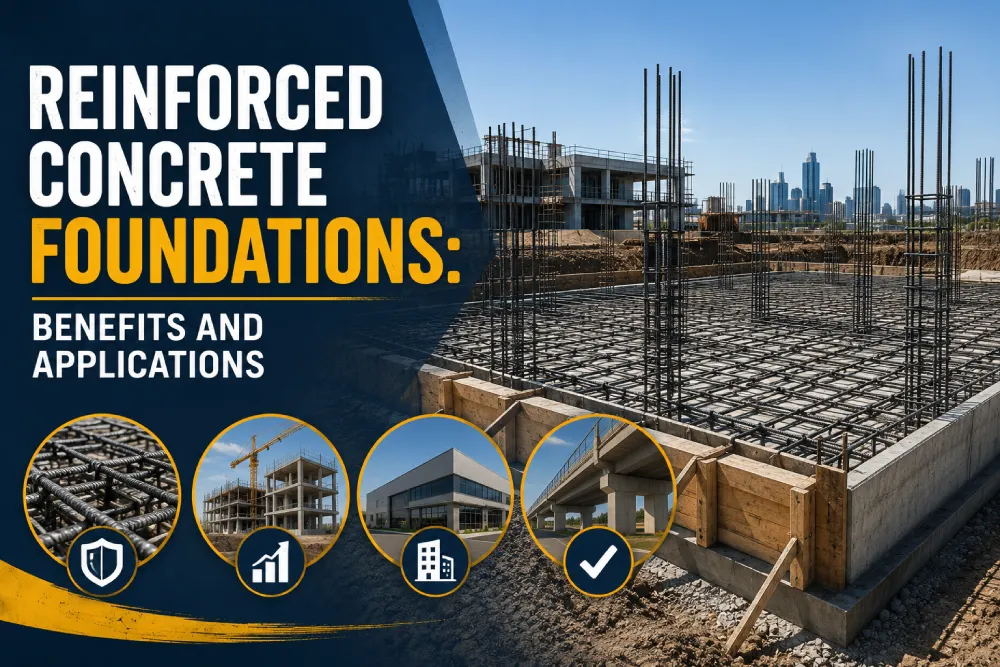
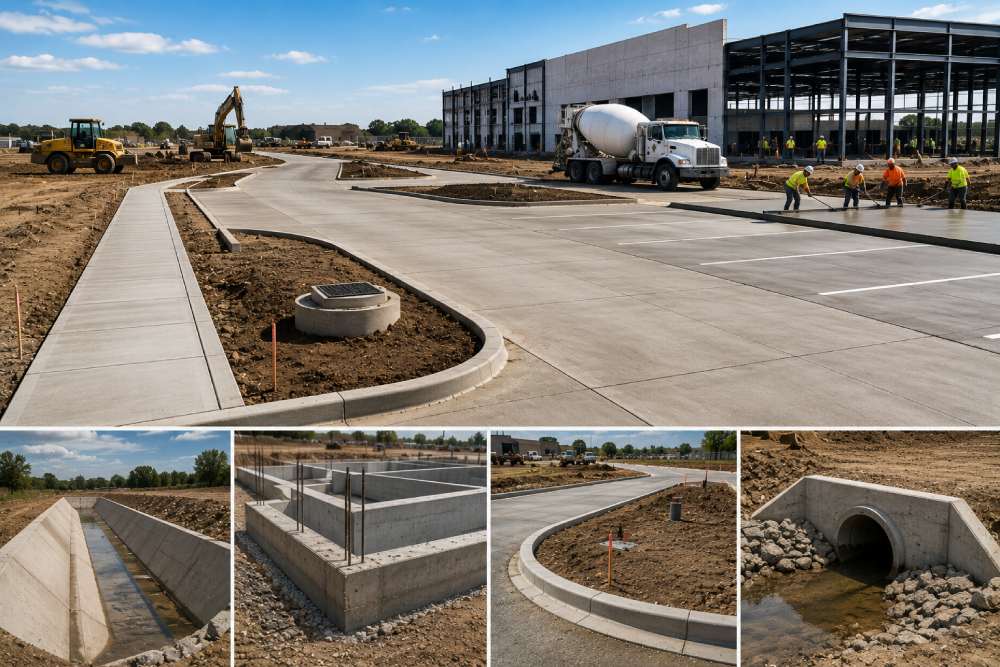
When planning a new commercial construction site, one of the most critical components of the entire project is commercial site concrete. From building pads and parking lots to drainage systems and heavy-duty paving, concrete forms the backbone of modern site development. Without properly designed and installed concrete infrastructure, even the most well-designed building can face long-term structural, drainage, and accessibility problems.
In growing areas like Odessa, Midland, and across the Permian Basin, commercial and industrial development continues to expand. Retail centers, oilfield facilities, warehouses, and office buildings all rely on precise concrete installation to ensure durability in West Texas’ demanding climate. Understanding how commercial concrete is used in site development helps property owners and project managers make better decisions from the start.
What Is Commercial Site Concrete in Site Development?
Commercial site concrete refers to the structural and flatwork concrete elements installed during the early phases of a construction project. These elements prepare the land for buildings, vehicles, utilities, and long-term use. Unlike residential concrete work, commercial site development typically involves larger load demands, engineered specifications, and strict compliance with city codes and inspections.
Concrete infrastructure in site development commonly includes:
- Building pads and foundations
- Paving for parking lots and drive lanes
- Sidewalks and ADA-compliant access paths
- Curbs and gutters
- Loading docks and ramps
- Storm drainage structures
- Equipment pads and containment areas
Each of these components must be carefully engineered and installed to perform under heavy traffic, fluctuating temperatures, and the unique soil conditions of West Texas.
The Role of Concrete in Early Site Development
Concrete work begins long before vertical construction starts. During the site development phase, contractors prepare raw land for future building and occupancy. This phase sets the tone for the entire commercial construction site.
Land Preparation and Subgrade Stabilization
Before any concrete installation takes place, the site must be:
- Cleared and graded
- Compacted to proper density
- Tested for soil stability
- Prepared with appropriate base materials
In the Permian Basin, expansive clay soils and shifting ground conditions require careful subgrade preparation. If this step is rushed or done improperly, concrete slabs and paving may crack or settle prematurely. Proper soil testing and compaction protect the long-term performance of commercial site concrete systems.
Utility Coordination and Embedded Infrastructure
Concrete in site development often integrates with underground infrastructure. This includes:
- Water lines
- Sewer systems
- Electrical conduits
- Stormwater drainage
Contractors must coordinate closely with engineers and utility installers before pouring concrete. Once installed, these elements are difficult to access without demolition. Precision in layout and scheduling prevents costly change orders later in the project.
Building Pads and Structural Foundations
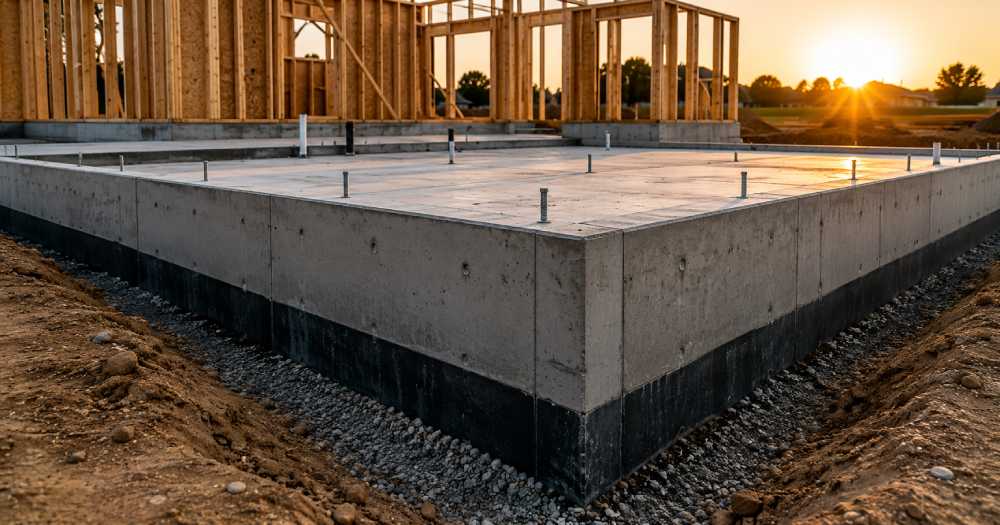
Every commercial construction site depends on a properly constructed foundation system. Concrete building pads and structural slabs serve as the support base for the entire structure.
Engineered Foundations for Commercial Properties
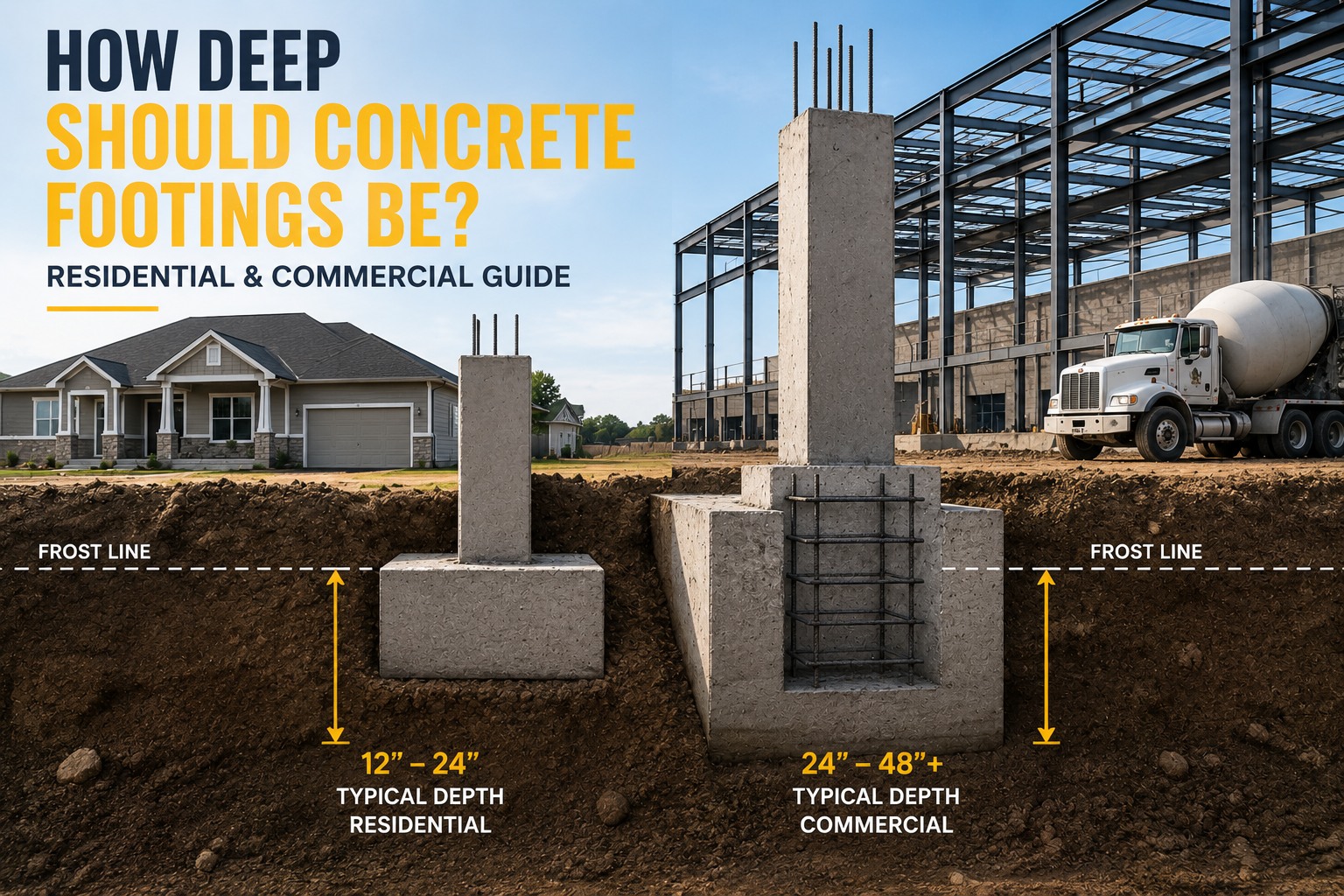
Commercial foundations are typically more complex than residential slabs. They may include:
- Reinforced slab-on-grade systems
- Pier and beam foundations
- Post-tension slabs
- Frost-protected foundations where required
Engineering specifications account for soil bearing capacity, building load, and environmental conditions. In industrial applications common throughout Midland and Odessa, foundations may need to support heavy machinery or frequent truck traffic.
Load-Bearing Strength and Reinforcement
Reinforcement strategies often include:
- Steel rebar grids
- Wire mesh
- Fiber reinforcement
- Increased slab thickness in high-load areas
Careful concrete installation ensures proper curing, joint placement, and stress distribution. Without these measures, cracks, settlement, and structural failures can develop over time.
Parking Lots and Pavement Systems
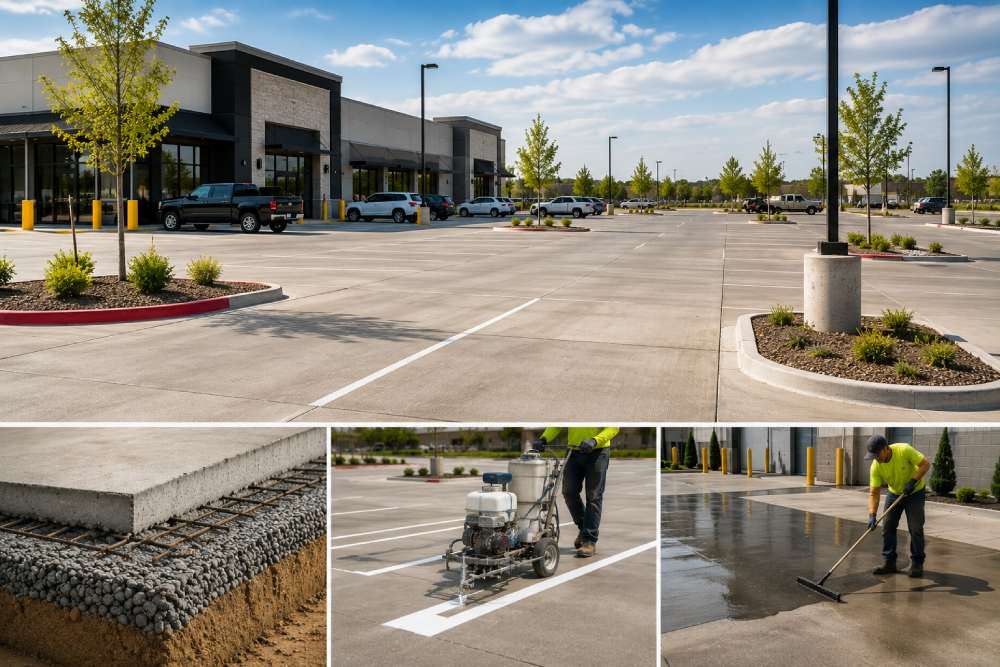
One of the most visible examples of commercial site concrete in site development is parking lot construction. A well-designed concrete pavement system enhances safety, accessibility, and property value.
Why Concrete Is Preferred for Commercial Parking
Concrete parking lots offer several advantages over other materials:
- Long service life
- High load-bearing capacity
- Lower long-term maintenance costs
- Resistance to oil spills and chemical exposure
- Improved reflectivity for nighttime visibility
In areas with intense heat like West Texas, concrete’s lighter color can also reduce surface temperatures compared to darker paving materials.
Key Components of Parking Lot Concrete Installation
A complete commercial parking lot involves:
- Proper grading and drainage design
- Base preparation and compaction
- Reinforced concrete paving
- Control and expansion joints
- Striping and ADA compliance features
Failure to properly design drainage can lead to ponding water, which accelerates deterioration. Experienced contractors design slopes and stormwater paths to prevent long-term damage.
Curbs, Gutters, and Drainage Systems
Stormwater management is a major consideration in any site development project. Concrete infrastructure plays a critical role in directing and controlling water flow.
The Importance of Drainage Planning
Improper drainage can cause:
- Erosion
- Foundation damage
- Pavement failure
- Flooding during heavy storms
Concrete curbs and gutters guide runoff toward storm drains and detention systems. In commercial construction sites throughout the Permian Basin, compliance with local regulations often requires engineered drainage solutions.
Common Concrete Drainage Structures
Commercial projects may include:
- Valley gutters
- Catch basins
- Concrete swales
- Retention pond linings
- Reinforced culverts
These structures must be carefully integrated into the site grading plan. Precision during concrete installation ensures long-term reliability and minimal maintenance.
Sidewalks, Ramps, and ADA Compliance
Pedestrian access is a critical component of commercial site development. Sidewalks, ramps, and entry approaches must meet ADA (Americans with Disabilities Act) guidelines to ensure accessibility.
ADA Requirements in Commercial Projects
Compliance includes:
- Proper slope and cross-slope
- Detectable warning surfaces
- Ramp angle limitations
- Transition smoothness
Failure to meet compliance standards can delay inspections and create liability issues. Professional commercial site concrete contractors understand these requirements and incorporate them into project planning.
Enhancing Safety and Durability
Commercial sidewalks must withstand:
- Heavy foot traffic
- Weather exposure
- Occasional vehicle loads
Air-entrained concrete mixtures and proper curing techniques help prevent cracking and surface deterioration, especially under West Texas temperature fluctuations.
Industrial and Heavy-Duty Concrete Applications
Industrial site development often demands higher performance from concrete infrastructure. Oilfield facilities, warehouses, and manufacturing plants in the Permian Basin require specialized design considerations.
Heavy Equipment Pads and Truck Aprons
Industrial concrete installation may include:
- Compressor pads
- Tank foundations
- Loading docks
- Reinforced aprons for semi-truck traffic
These areas experience concentrated loads and vibration. Engineers specify thicker slabs and advanced reinforcement techniques to resist stress.
Chemical Resistance and Environmental Protection
In oilfield and industrial settings, concrete may come into contact with:
- Fuels
- Oils
- Chemical byproducts
Specialized concrete mixes and protective sealants increase durability and environmental protection. Proper installation minimizes the risk of contamination and surface breakdown.
The Commercial Concrete Installation Process
Understanding the typical process helps project managers plan budgets and timelines effectively.
Step 1: Planning and Engineering
This stage includes:
- Site surveys
- Soil testing
- Engineering design
- Permitting coordination
Detailed planning reduces surprises during construction.
Step 2: Site Preparation
Crews perform grading, compaction, and base installation to ensure structural integrity. Inspections often occur before concrete placement.
Step 3: Formwork and Reinforcement
Forms define the shape and elevation, while reinforcement ensures strength. Careful alignment prevents uneven surfaces.
Step 4: Concrete Placement and Finishing
Concrete is poured, leveled, and finished according to specifications. Control joints are cut to manage cracking.
Step 5: Curing and Final Inspection
Proper curing time is essential for strength development. Final inspections verify compliance with local codes and design plans.
Concrete vs. Other Paving Materials in Site Development
Below is a comparison often considered during commercial site planning:
| Feature | Concrete | Asphalt |
|---|---|---|
| Lifespan | 30+ years | 15–20 years |
| Maintenance | Low | Moderate to High |
| Heat Resistance | Excellent | Can soften in extreme heat |
| Initial Cost | Higher | Lower |
| Long-Term Value | Strong ROI | Higher lifecycle costs |
While budgets vary, many developers in Odessa and Midland choose concrete infrastructure for its longevity and structural reliability.
Choosing the Right Commercial Concrete Contractor
Selecting the right contractor directly impacts the success of a site development project. Property owners and developers should evaluate:
- Experience with similar commercial projects
- Knowledge of local soil conditions
- Familiarity with city codes in Midland and Odessa
- Ability to coordinate with engineers and general contractors
- Proven quality control procedures
Commercial site concrete requires precision, scheduling discipline, and technical expertise. Working with an experienced team reduces costly delays and structural issues.
Frequently Asked Questions (FAQ)
How long does commercial site concrete last?
Properly installed commercial concrete can last 30 years or more. Longevity depends on soil preparation, reinforcement, drainage design, and maintenance practices.
Is concrete better than asphalt for commercial parking lots?
Concrete generally offers longer lifespan and better resistance to heavy loads. Although the upfront cost may be higher, long-term maintenance costs are often lower.
How long does concrete need to cure before use?
Light foot traffic may be allowed within a few days, but full curing can take up to 28 days. Heavy vehicle use should follow engineering recommendations.
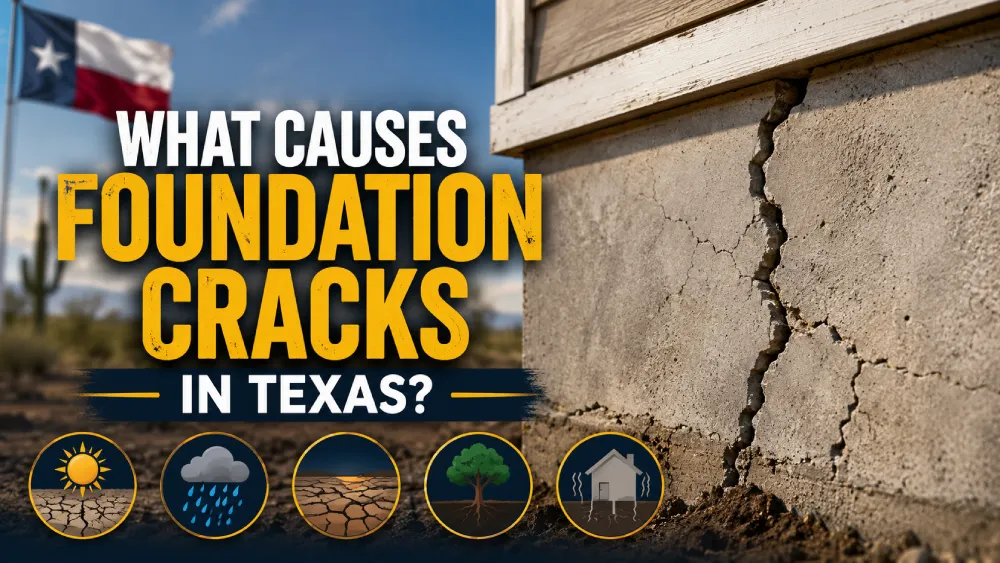
What causes cracks in commercial concrete?
Cracks can result from soil movement, improper curing, inadequate joint placement, or heavy loads beyond design limits. Control joints help manage natural expansion and contraction.
Do I need permits for commercial concrete installation in West Texas?
Most commercial construction site projects require permits and inspections. Local codes in Odessa, Midland, and surrounding Permian Basin communities dictate specific requirements.
Get a Free Concrete Project Estimate
If you are planning a commercial construction site or large-scale site development project, professional concrete installation is essential for long-term success. Permian Basin Concrete provides residential, commercial, and industrial concrete services throughout Odessa, Midland, and the surrounding Permian Basin region.
Whether you need parking lot paving, heavy-duty industrial pads, curbs and drainage systems, or complete commercial site concrete solutions, our team delivers dependable craftsmanship built for West Texas conditions. We work closely with property owners, developers, general contractors, and facility managers to ensure each project meets engineering standards and local regulations.
Contact Permian Basin Concrete today at permianbasinconcrete@gmail.com to schedule a free project consultation and estimate. Let’s build concrete infrastructure that supports your investment for decades to come.