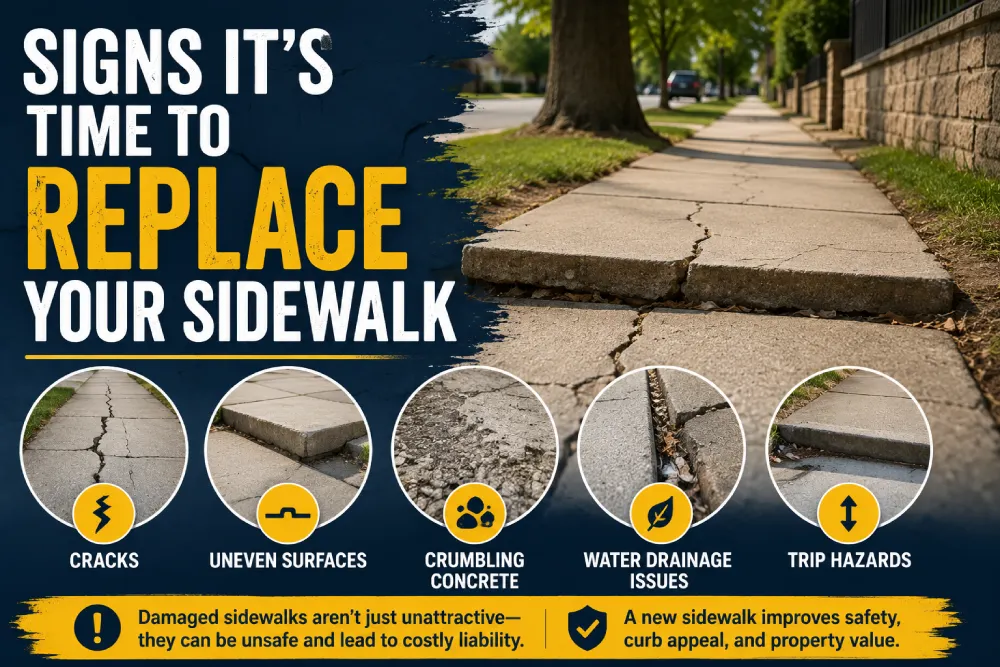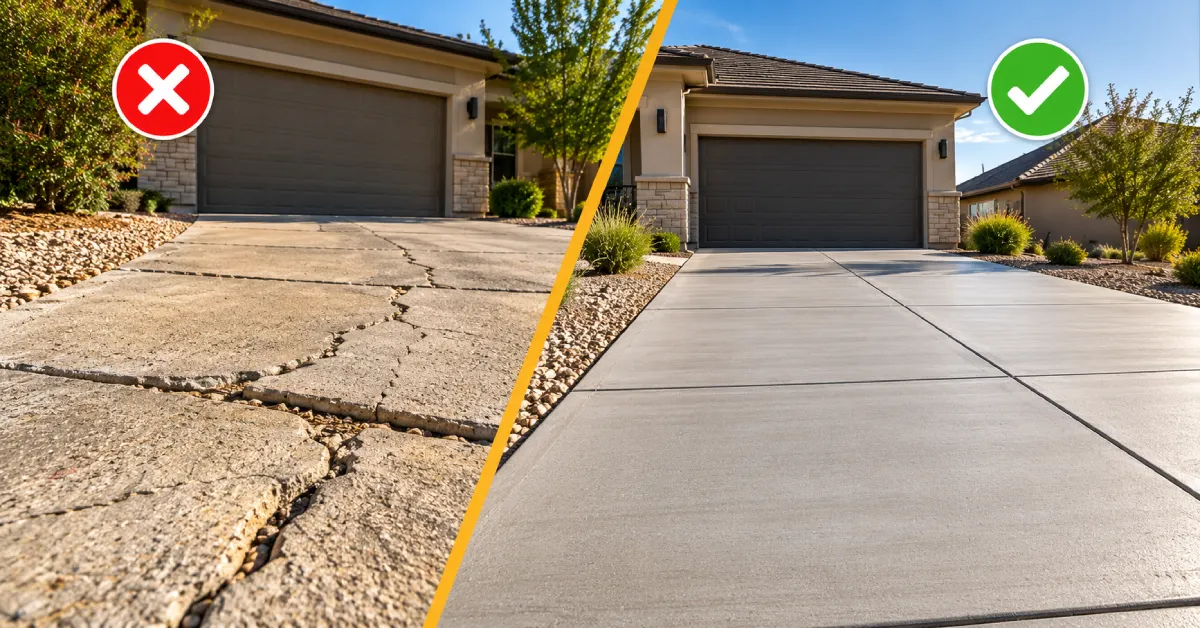
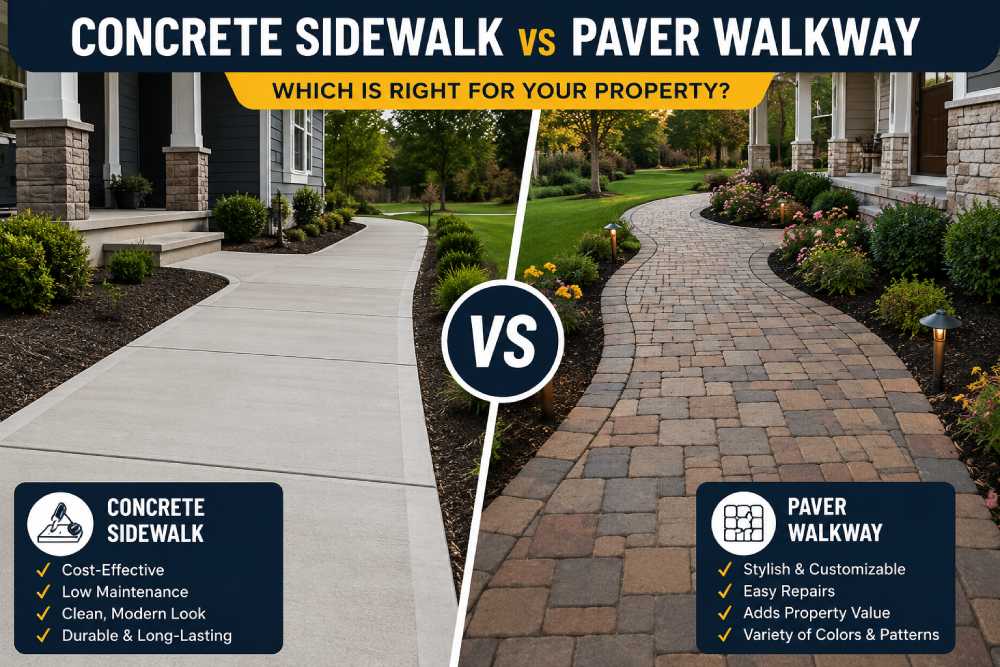
Choosing between a concrete sidewalk vs pavers is a common decision for property owners planning new outdoor pathways. Whether you are improving curb appeal at your home in Odessa, upgrading a commercial property in Midland, or building pedestrian access for an industrial site in West Texas, the right walkway materials can affect maintenance costs, durability, and long-term value.
Both options have clear advantages, but the best choice depends on your goals, budget, soil conditions, traffic demands, and overall design preferences. This in-depth sidewalk comparison will walk you through performance, cost, aesthetics, maintenance, and suitability for residential, commercial, and industrial applications across the Permian Basin.
Understanding the Basics: Concrete Sidewalks and Paver Walkways
Before comparing performance, it helps to understand how each system is built and why that matters in West Texas conditions.
What Is a Concrete Sidewalk?
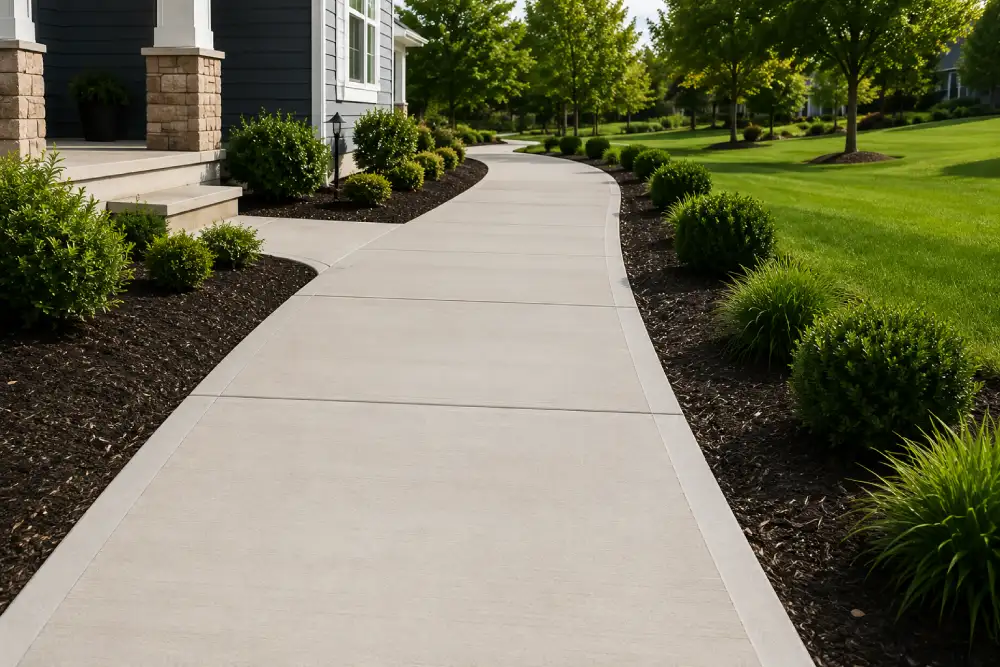
A concrete sidewalk is a continuous slab of poured concrete, typically reinforced with rebar or wire mesh. It is installed over a properly compacted base, then finished smooth, broom-textured, or stamped depending on the desired look.
In areas like Midland and Odessa, concrete sidewalks are popular because they:
- Handle heavy sun exposure
- Perform well in expansive clay soils when properly installed
- Offer long-term durability with minimal upkeep
- Provide compliance with ADA and commercial access requirements
Modern concrete can also be colored, stained, or stamped, offering more design versatility than many property owners realize.
What Is a Paver Walkway?
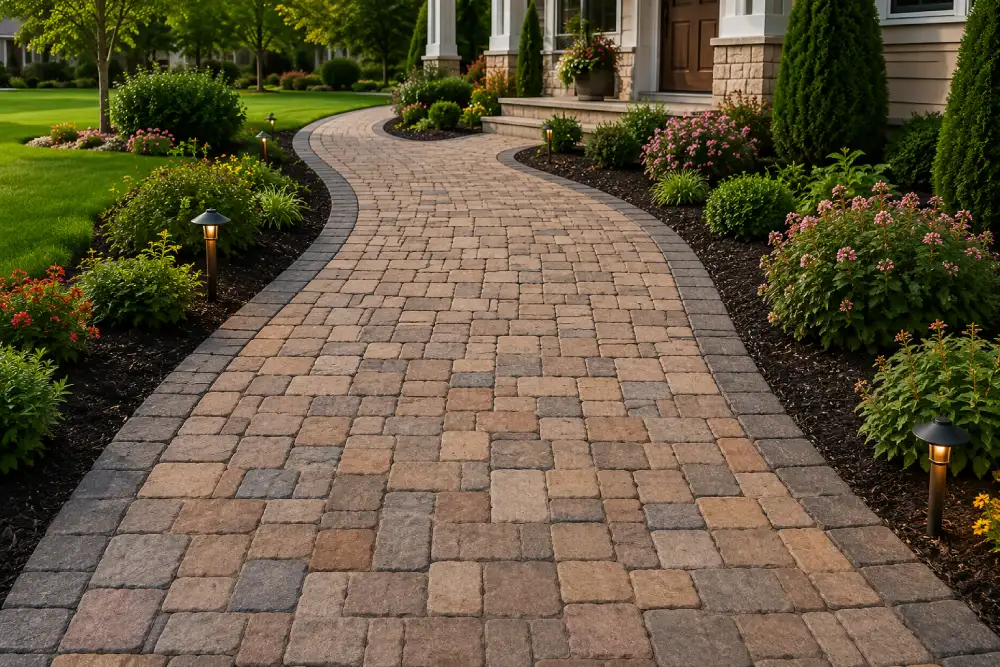
A paver walkway is made up of individual interlocking pavers laid over a compacted gravel and sand base. These pavers may be concrete, brick, or natural stone and are installed pattern by pattern to create decorative outdoor pathways.
Paver walkways are often chosen for:
- Decorative patios and garden paths
- Upscale residential projects
- Landscape-focused designs
- Areas where design flexibility is a priority
Because the system consists of individual units, pavers allow for sectional repairs without removing the entire walkway.
Concrete Sidewalk vs Pavers: A Side-by-Side Comparison
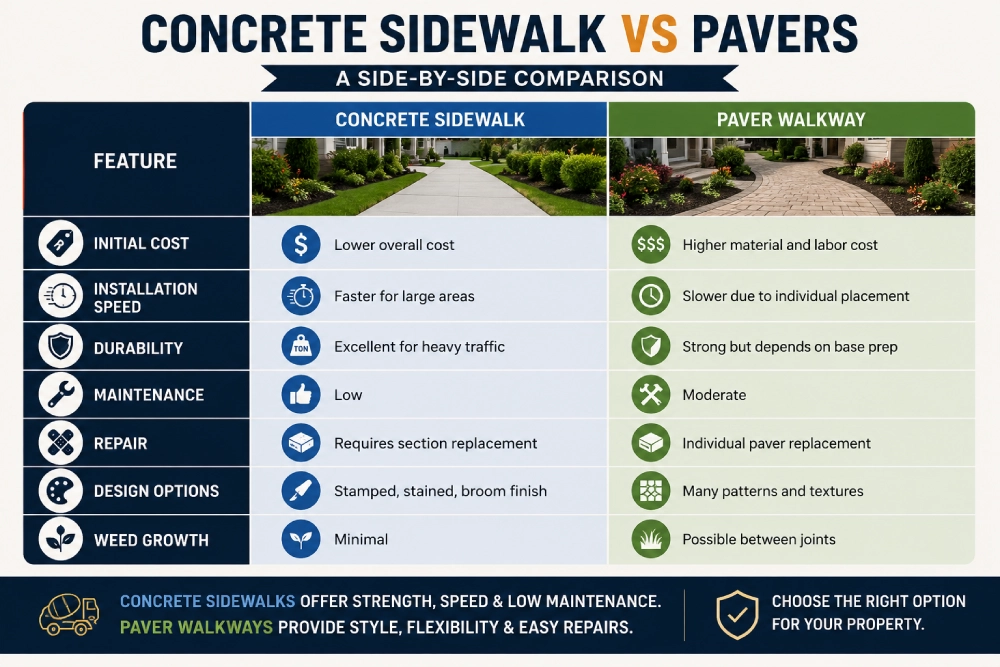
When evaluating a concrete sidewalk vs pavers, it helps to look at the performance categories that matter most to property owners and developers.
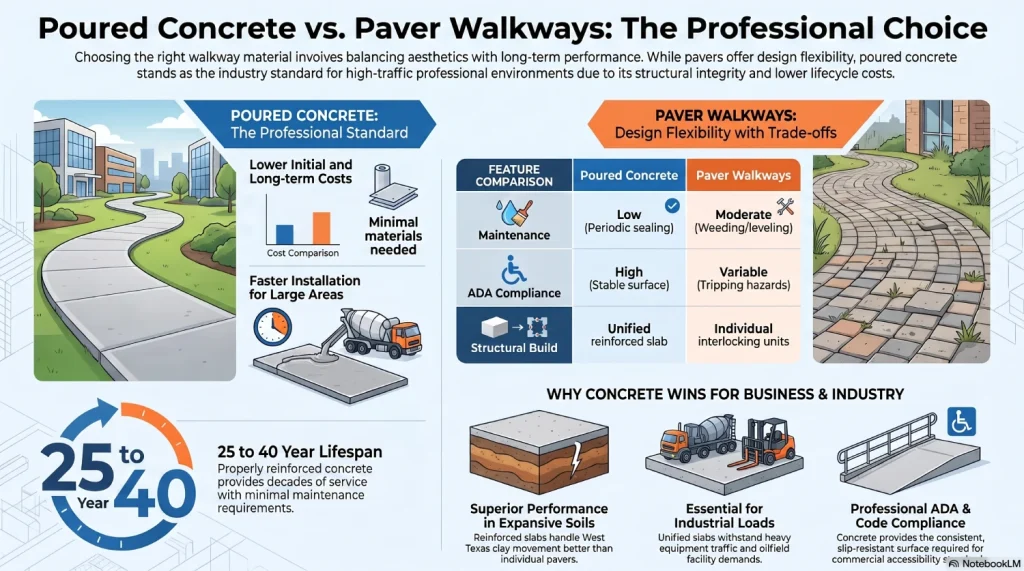
| Feature | Concrete Sidewalk | Paver Walkway |
|---|---|---|
| Initial Cost | Lower overall cost | Higher material and labor cost |
| Installation Speed | Faster for large areas | Slower due to individual placement |
| Durability | Excellent for heavy traffic | Strong but depends on base prep |
| Maintenance | Low | Moderate |
| Repair | Requires section replacement | Individual paver replacement |
| Design Options | Stamped, stained, broom finish | Many patterns and textures |
| Weed Growth | Minimal | Possible between joints |
Each project has different priorities. A commercial apartment complex in Odessa will have different needs than a backyard courtyard in Midland.
Installation Process and Structural Performance
Installation quality matters more than the choice of material itself. In West Texas, soil movement and temperature fluctuation play a significant role in long-term performance.
Concrete Sidewalk Installation Process
A properly constructed concrete sidewalk typically involves:
- Excavation to proper depth
- Subgrade compaction
- Gravel base installation
- Formwork setup
- Reinforcement placement
- Concrete placement and finishing
- Control joint cutting
- Proper curing
When installed by experienced professionals, concrete provides a solid, uniform surface capable of handling pedestrian traffic, bicycles, carts, and even light vehicle crossings.
In industrial settings around the Permian Basin, reinforced concrete sidewalks are often preferred for durability and regulatory compliance.
Paver Walkway Installation Process
Installing a paver walkway involves:
- Excavation
- Compacted gravel base
- Sand bedding layer
- Paver placement
- Edge restraints
- Joint sand compaction
The strength of a paver system depends heavily on base preparation. If the base shifts due to soil expansion, heavy rain, or inadequate compaction, the pavers can settle unevenly over time.
In West Texas clay soils, base preparation is especially critical.
Cost Considerations in West Texas
Budget is often one of the first deciding factors in a sidewalk comparison.
Initial Installation Costs
In most cases, poured concrete sidewalks cost less upfront than a paver walkway of similar size. Concrete is faster to install and typically requires less manual labor.
Pavers involve:
- Higher material costs
- Increased labor time
- Additional edge restraint systems
- Joint sand maintenance
For large commercial properties in Midland or Odessa, these cost differences can add up quickly.
Long-Term Cost Factors
Over time, consider:
- Maintenance expenses
- Repair costs
- Surface cleaning
- Sealing requirements
Concrete typically requires occasional sealing and minor crack repair. Pavers may require joint sand replacement, weed control, and leveling if sections shift.
Maintenance Requirements and Longevity
Maintenance is a major deciding factor for property managers and owners responsible for long-term upkeep.
Concrete Sidewalk Maintenance
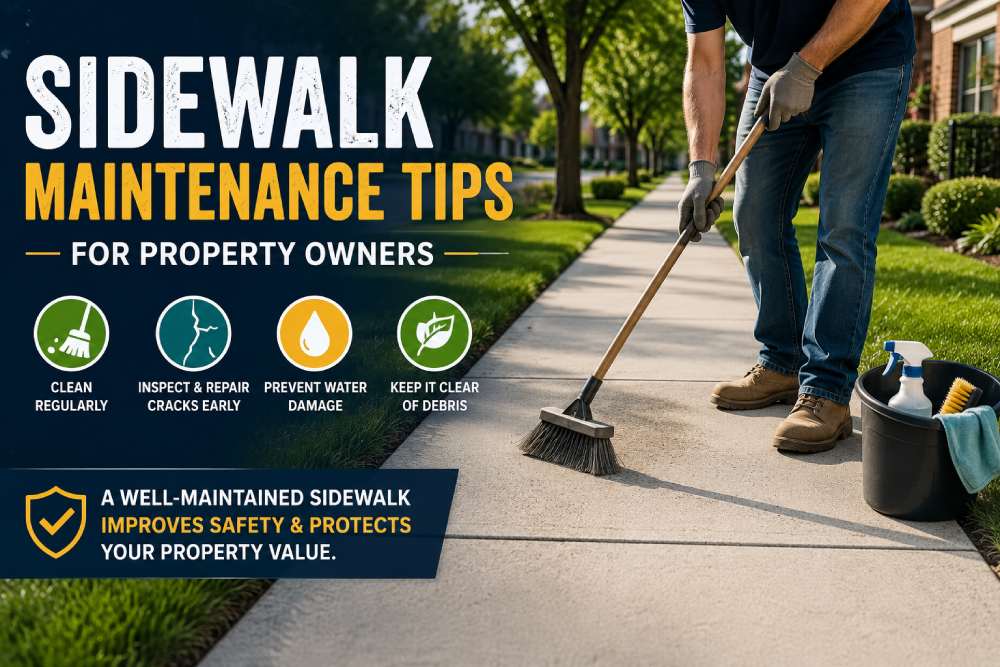
Concrete sidewalks are relatively low-maintenance when installed correctly. Basic care includes:
- Periodic pressure washing
- Sealing every few years
- Filling minor cracks if they occur
With proper base preparation and reinforcement, concrete sidewalks can last 25 to 40 years or more in West Texas conditions.
Paver Walkway Maintenance
Paver walkways require more routine attention. This often includes:
- Replacing joint sand
- Addressing weed growth
- Leveling settled sections
- Sealing to prevent fading
While individual pavers are durable, the system as a whole depends on consistent maintenance to retain its appearance and structural integrity.
Design Flexibility and Aesthetic Appeal
For many homeowners, the decision between concrete sidewalk vs pavers is heavily influenced by appearance.
Decorative Concrete Options
Modern concrete offers several customizable options:
- Stamped patterns
- Integral coloring
- Surface staining
- Exposed aggregate finishes
These techniques allow property owners in Odessa and Midland to achieve a high-end look while maintaining the strength of traditional concrete.
Stamped concrete, for example, can mimic:
- Brick
- Stone
- Slate
- Tile
This makes it a strong contender when comparing walkway materials for decorative outdoor pathways.
Paver Design Options
Pavers excel in design flexibility. They come in:
- Various shapes and sizes
- Multiple color blends
- Custom layout patterns
- Contrasting borders
For residential landscaping projects, a paver walkway can create a highly customized look that enhances gardens and outdoor living spaces.
However, aesthetic appeal should be balanced against long-term maintenance expectations.
Performance in Commercial and Industrial Settings
The right choice for a backyard is not always the right choice for a commercial or industrial site.
Commercial Properties
Commercial sidewalks must meet:
- ADA slope and accessibility standards
- Slip resistance requirements
- Heavy foot traffic demands
In many cases across the Permian Basin, reinforced concrete sidewalks are preferred because they provide a consistent, stable walking surface with fewer tripping hazards.
For retail centers, office buildings, and apartment complexes, concrete is often the best balance of cost, durability, and code compliance.
Industrial and Oilfield Facilities
Industrial sites in West Texas require:
- Heavy-duty durability
- Minimal maintenance disruption
- Long service life
Concrete sidewalks generally outperform pavers in industrial environments due to heavy loads, equipment traffic, and challenging soil movement conditions.
Climate and Soil Considerations in the Permian Basin
West Texas presents unique environmental conditions.
Heat Exposure
Summer temperatures in Odessa and Midland regularly exceed 100 degrees. Concrete handles high heat well when properly cured and sealed. Pavers also withstand heat, but joint sand may dry out and erode over time.
Expansive Clay Soils
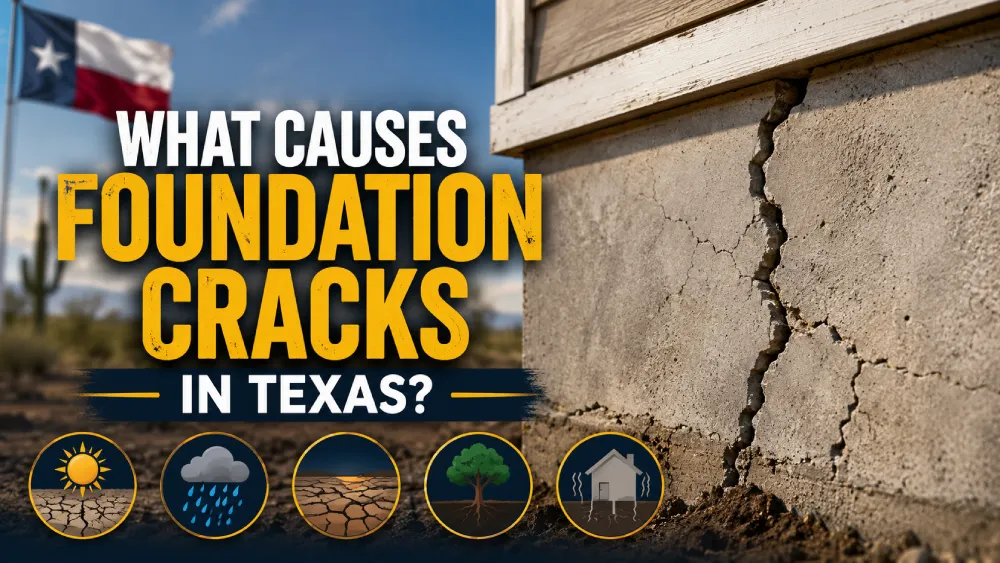
Soil movement is a major factor in the Permian Basin. Expansive clay can shift significantly with changes in moisture.
Concrete sidewalks installed with proper control joints and reinforcement can accommodate minor soil movement. Pavers may shift unevenly if the base is not thoroughly compacted or if drainage is inadequate.
For many property owners, this becomes a deciding factor in the concrete sidewalk vs pavers debate.
When Is Concrete the Better Choice?
Concrete sidewalks are typically the better option when:
- Budget is a primary concern
- Large surface areas are required
- ADA compliance is critical
- Low maintenance is preferred
- The setting is commercial or industrial
- Long-term durability is the top priority
For developers and business owners in Midland and Odessa, concrete often provides the best overall return on investment.
When Are Pavers the Better Choice?
Paver walkways may be preferable when:
- Decorative landscaping is the focus
- Unique design patterns are desired
- Small residential spaces are being upgraded
- Sectional repairs are a priority
For homeowners prioritizing aesthetics over long-term maintenance simplicity, pavers can offer appealing customization.
Frequently Asked Questions (FAQ)
Are pavers stronger than concrete sidewalks?
Individual pavers are strong, but a concrete sidewalk typically provides greater structural strength as a unified slab. In heavy-use commercial and industrial environments, concrete generally outperforms paver systems.
Do pavers increase property value?
Well-designed outdoor pathways with pavers can enhance curb appeal, which may positively affect property value. Decorative concrete can also provide similar visual benefits at a lower cost.
Which option lasts longer in West Texas?
Both can last decades if properly installed. However, reinforced concrete sidewalks often require less long-term adjustment and maintenance in expansive clay soil conditions common in the Permian Basin.
Are pavers more expensive than concrete?
Yes, in most cases. Paver materials and labor typically cost more than poured concrete for the same square footage.
Which is easier to repair?
Pavers allow individual replacements, which can be convenient. Concrete repair usually involves removing and replacing a full section of slab.
Get a Free Concrete Project Estimate
If you are deciding between a concrete sidewalk vs pavers for your home, commercial property, or industrial facility, professional guidance can help you avoid costly mistakes.
Permian Basin Concrete provides residential, commercial, and industrial concrete sidewalk installation services throughout Odessa, Midland, and the surrounding Permian Basin region. From standard sidewalks to decorative stamped concrete and large-scale commercial flatwork, our team understands the soil conditions, climate challenges, and regulatory requirements specific to West Texas.
To discuss your project or request a free consultation and estimate, contact Permian Basin Concrete today at:
Email: info@permianbasinconcrete.com
Website: https://permianbasinconcrete.com
Whether you are installing new outdoor pathways or upgrading existing walkway materials, we are here to help you build a durable, long-lasting solution tailored to your property’s needs.