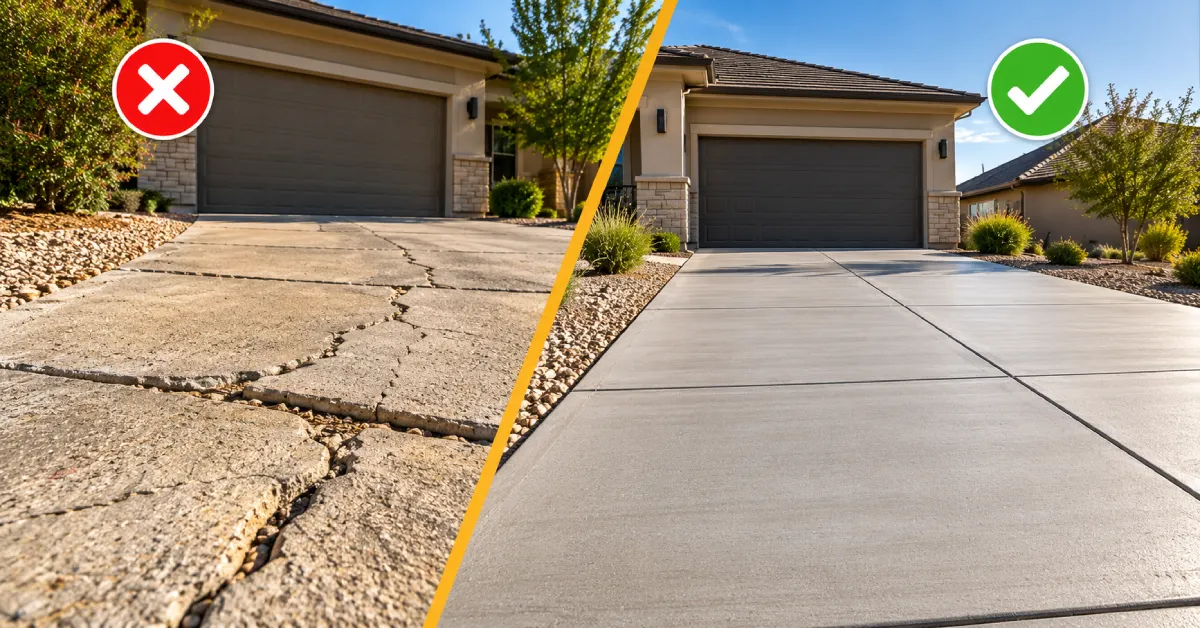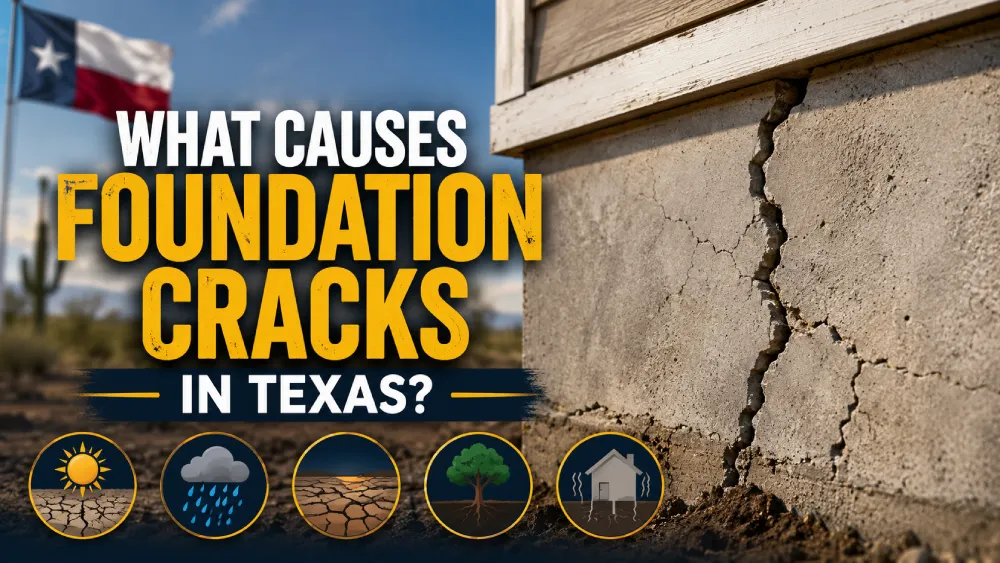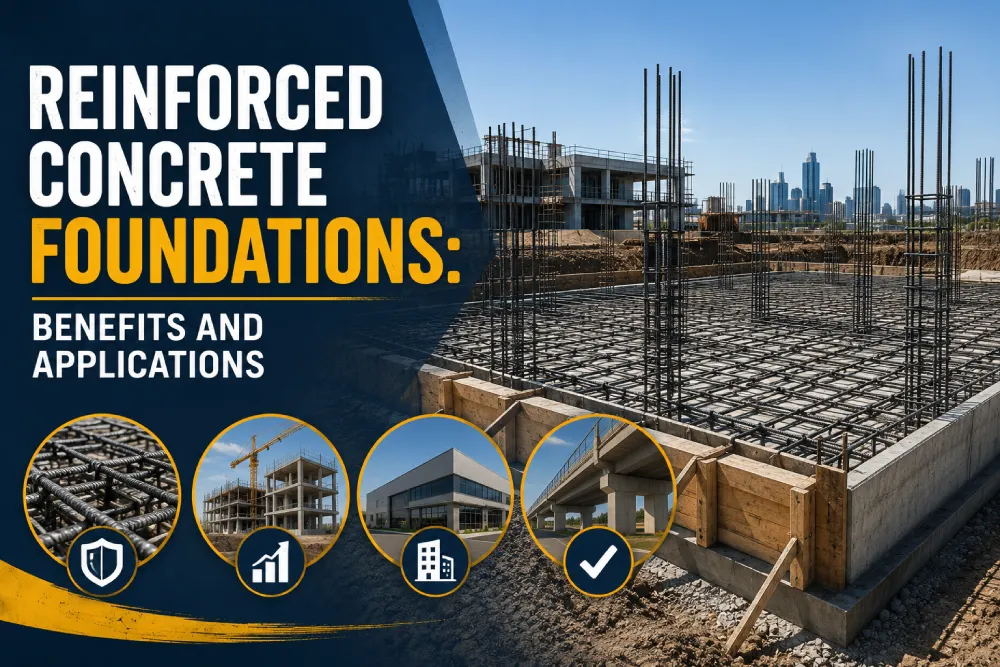
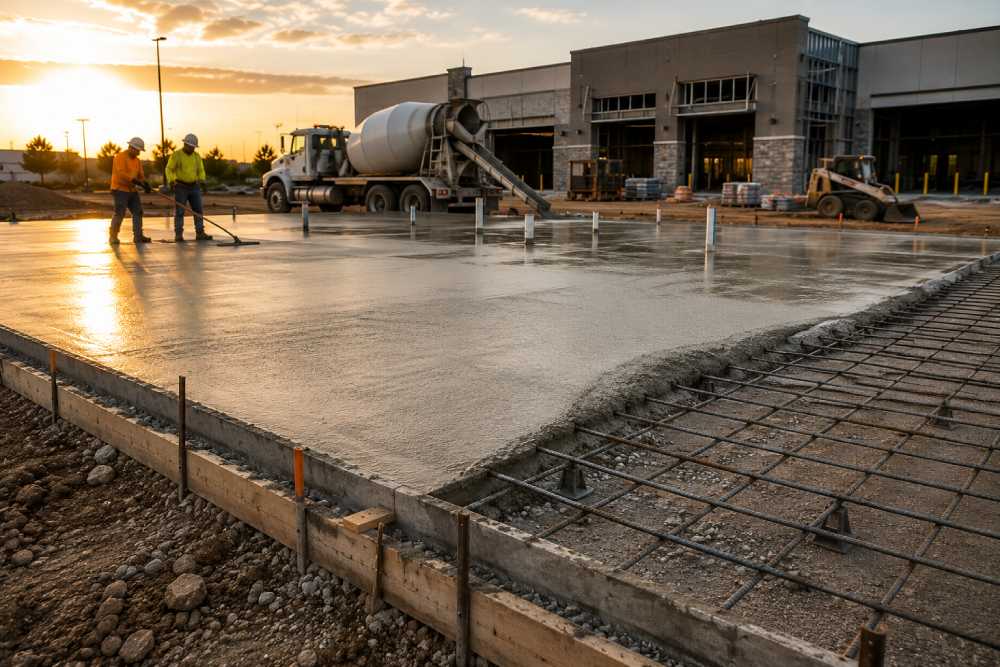
Concrete slabs are the foundation of countless residential, commercial, and industrial structures across West Texas. From home foundations in Odessa to large industrial pads in Midland oilfield facilities, slabs must be built correctly to perform under extreme heat, expansive soils, and heavy loads. Unfortunately, concrete slab mistakes are more common than most property owners realize—and they often lead to expensive repairs, safety risks, and long-term structural problems.
Understanding the most common causes of slab failure can help homeowners, property managers, and developers make informed decisions before a project begins. In this guide, we’ll break down the most frequent construction errors, how they lead to slab cracking and structural issues, and what steps you can take to avoid costly problems by hiring an experienced concrete contractor.
Why Concrete Slab Mistakes Are So Costly
A concrete slab is more than just a flat surface. It serves as the structural base for homes, offices, warehouses, equipment yards, and industrial sites. When slab installation is done improperly, the consequences can escalate quickly.
Even minor construction errors can result in:
- Uneven floors
- Structural settlement
- Excessive slab cracking
- Moisture intrusion
- Foundation movement
- Premature slab failure
In the Permian Basin, the combination of highly expansive clay soils and intense temperature swings makes precision even more important. Concrete expands and contracts in response to moisture and temperature conditions, and the soil beneath it does the same. Without proper preparation and reinforcement, small installation mistakes can magnify over time.
1. Poor Site Preparation and Soil Compaction
One of the most common concrete slab mistakes occurs before the concrete is ever poured. Poor site preparation is a leading cause of slab failure in both residential and commercial construction.
Why Subgrade Preparation Matters
The soil beneath the slab—known as the subgrade—must be properly graded, compacted, and stabilized. If the soil is loose or inconsistent, the slab will not have uniform support. This leads to settling, shifting, and cracking.
In West Texas, expansive clay soils are especially problematic. When moisture levels change, these soils swell and shrink, placing pressure on the slab.
Signs of Poor Compaction
- Interior cracks running across finishes
- Doors and windows sticking
- Noticeable dips or uneven floors
- Separation at expansion joints
How to Avoid This Mistake
To prevent slab failure due to soil issues:
- Conduct a soil evaluation when appropriate.
- Remove unsuitable fill material.
- Use moisture conditioning procedures.
- Compact subgrade in controlled lifts.
- Add a properly installed base course if required.
An experienced concrete contractor in Odessa or Midland understands local soil characteristics and adjusts preparation methods accordingly.
2. Skipping Proper Reinforcement
Concrete is strong in compression but weak in tension. Without reinforcement, it is prone to slab cracking under stress.
Common Reinforcement Construction Errors
- Using insufficient rebar
- Incorrect spacing of reinforcement
- Placing reinforcement directly on the ground
- Omitting fiber additives when appropriate
If reinforcement is improperly positioned, it cannot effectively control cracking. Steel rebar or welded wire mesh must be correctly supported and placed within the slab—not resting at the bottom.
Best Practices for Reinforcement
Depending on the project type, reinforcement may include:
- Rebar grid systems
- Post-tension cables
- Welded wire fabric
- Fiber-reinforced concrete
For industrial facilities in the Permian Basin, slabs supporting heavy equipment or oilfield machinery require engineered reinforcement designs. Cutting corners in this area is one of the most expensive concrete slab mistakes a project can make.
3. Incorrect Concrete Mix Design
Another leading cause of slab failure is using the wrong mix for the project’s structural demands and environmental conditions.
Why Mix Design Is Critical
Concrete strength is determined by:
- Water-to-cement ratio
- Aggregate size and quality
- Cement content
- Additives and admixtures
Too much water weakens concrete and increases shrinkage. Too little water makes finishing difficult and may result in poor bonding.
Effects of Improper Mix
| Problem | Likely Cause | Result |
|---|---|---|
| Excessive slab cracking | High water content | Shrinkage |
| Dusting surface | Weak cement ratio | Surface deterioration |
| Early structural damage | Low compressive strength | Slab failure |
In West Texas heat, evaporation rates are high. A knowledgeable concrete contractor adjusts mix design and placement timing to account for temperature and wind conditions in Midland and Odessa.
4. Poor Drainage Planning
Water is one of concrete’s biggest enemies. While concrete itself is durable, trapped moisture beneath or around the slab can undermine soil stability.
Drainage-Related Construction Errors
- Flat grading with no runoff slope
- Clogged or missing drainage systems
- Improper vapor barrier installation
- Ignoring water flow patterns
Standing water increases soil movement, which contributes to slab cracking and settlement.
How to Prevent Drainage Issues
Effective drainage strategies include:
- Sloping slabs away from structures
- Installing perimeter drains where necessary
- Using vapor barriers under enclosed slabs
- Ensuring proper gutter and downspout design
In the Permian Basin, flash storms can deposit large amounts of water quickly. Planning for stormwater management is essential in preventing long-term slab movement.
5. Improper Joint Placement
Concrete expands and contracts as temperatures change. Control joints are intentionally placed to guide cracking along predetermined lines.
What Happens Without Proper Joints?
If joints are:
- Too far apart
- Cut too late
- Cut too shallow
- Omitted entirely
Cracks will form randomly. These uncontrolled cracks can affect both structural integrity and appearance.
Control Joint Guidelines
While exact spacing depends on slab thickness and design, common best practices include:
- Cutting joints at intervals equal to 24–36 times slab thickness
- Cutting within 6–12 hours after finishing
- Ensuring cuts reach appropriate depth
Skipping this step is one of the most avoidable concrete slab mistakes, yet it frequently causes unsightly slab cracking.
6. Poor Curing Practices
One of the most overlooked construction errors is improper curing. After concrete is placed and finished, it must retain moisture long enough to gain strength.
Why Curing Matters
Without proper curing:
- Surface cracking increases
- Strength development slows
- Durability decreases
- Long-term slab performance declines
High temperatures in Odessa and Midland accelerate moisture loss. This makes curing especially critical in West Texas climates.
Effective Curing Methods
Options include:
- Water curing
- Curing compounds
- Wet coverings
- Plastic sheeting
The curing method should match the project scale and environmental conditions. Commercial and industrial projects often require more structured curing protocols due to load demands.
7. Hiring an Inexperienced Concrete Contractor
Many slab problems can be traced back to hiring based solely on price. While budget considerations are important, experience and technical knowledge should never be overlooked.
Risks of Choosing the Wrong Contractor
- Unpermitted work
- Ignoring soil conditions
- Improper site grading
- Inconsistent finishing
- Poor reinforcement placement
Slab failure rarely happens immediately. Problems develop months or even years later, long after short-term savings are forgotten.
What to Look for in a Contractor
Before moving forward with a project, ask about:
- Local project experience
- Knowledge of Permian Basin soil conditions
- Reinforcement standards
- Mix design specifications
- Drainage planning approaches
An experienced concrete contractor understands how to tailor techniques for residential driveways, commercial foundations, and industrial pads in West Texas environments.
Warning Signs of Slab Failure
Even with preventative measures, it’s important to recognize early signs of trouble. Early intervention can prevent more extensive structural damage.
Common Indicators
- Large or widening cracks
- Uneven flooring
- Visible gaps at walls
- Water pooling around slab edges
- Joint separation
Some slight slab cracking is normal as concrete cures. However, wide cracks, stair-step patterns, or differential settlement may indicate structural issues that require evaluation.
How Proper Planning Prevents Concrete Slab Mistakes
Avoiding problems begins before construction ever starts. A clear project plan should include:
- Site evaluation
- Soil assessment when necessary
- Engineering guidance for load requirements
- Detailed reinforcement planning
- Drainage design
- Weather considerations
- Curing protocols
When these steps are handled systematically, the likelihood of slab failure drops significantly.
Across Odessa, Midland, and the broader Permian Basin, projects must account for:
- Expansive clay soils
- High summer temperatures
- Heavy industrial loads
- Rapid weather changes
Proper planning aligns materials, labor, and design to local conditions.
Frequently Asked Questions (FAQ)
Are small cracks in my slab normal?
Hairline cracks are common as concrete cures and settles. However, large cracks wider than 1/4 inch, uneven surfaces, or cracks that continue expanding should be evaluated by a qualified concrete contractor.
How long should a properly installed slab last?
When properly designed and installed, a concrete slab can last 30 to 50 years or more. Longevity depends heavily on soil conditions, drainage, reinforcement, and curing methods.
What causes slab cracking the most?
The most common causes of slab cracking include soil movement, improper water content in the mix, poor reinforcement placement, and inadequate joint spacing.
Can slab failure be repaired?
Many slab issues can be repaired, but the repair cost varies depending on severity. Early detection is critical to minimizing expenses and preventing further damage.
How do I prevent construction errors on my project?
Work with an experienced contractor who understands local soil conditions and follows industry best practices for site preparation, reinforcement, and curing.
Get a Free Concrete Project Estimate
Avoiding costly concrete slab mistakes starts with choosing the right team. Whether you need a new driveway, a commercial foundation, or a heavy-duty industrial slab, proper planning and professional execution are essential.
Permian Basin Concrete provides residential, commercial, and industrial concrete services throughout Odessa, Midland, and the surrounding Permian Basin region. Our team understands West Texas soil conditions, temperature challenges, and structural demands for oilfield and commercial applications.
If you’re planning a new project or concerned about potential slab failure, contact Permian Basin Concrete for a free project consultation and estimate.
Email: permianbasinconcrete@gmail.com
Website: https://permianbasinconcrete.com
Let’s build it right the first time.